Safety in politics this month, so far

Occupational health and safety (OHS) discussions in the various Parliaments in Australia rarely get much media attention, but the debates continue and occasionally there is an interesting suggestion. Here are some of the recent parliamentary discussions that SafetyAtWorkBlog found interesting

Quad Bikes in Tasmania

In response to a question on August 8 2019 Liberal Party politician, Leonie Hiscutt, provided an outline of the budget allocated to the rebate scheme being applied to quad bikes and their safety accessories, but of more interest is the question from Independent Ruth Forrest. She asked:

Subscribe to SafetyAtWorkBlog to continue reading.
Subscribe Help
Already a member? Log in here

Chinese Whispers on drugs and alcohol at work

Evidence-based policy making needs make sure that the evidence is accurate and valid. Evidence is also the foundation of the state of knowledge of the occupational health and safety (OHS) professional, action and regulations. To achieve and sustain these aims and requirements, evidence needs to be questioned in order to verify it.

On July 17 2019 WorkSafe Victoria distributed an email newsletter which stated that

“… 15% of workplace injuries worldwide are caused by alcohol and drug use”

and referencing Comcare as its source. But that source says something significantly different.

Subscribe to SafetyAtWorkBlog to continue reading.
Subscribe Help
Already a member? Log in here

Grab bag of OHS issues – politics, dust, occupational violence and international HR

Workforce lifecycle framework

Over the last week or so, as the Australian Parliament resumes operating, the Liberal/National Government is trying to reduce the influence of “militant” unions through its “Ensuring Integrity” Bill but opponents say this may affect the management of occupational health and safety (OHS).


The Federal Department of Health has established a National Dust Disease
Taskforce
to develop a national approach to the prevention, early identification, control and management of dust diseases in Australia largely, it seems in response to silicosis but Black Lung had to have some influence.


Subscribe to SafetyAtWorkBlog to continue reading.
Subscribe Help
Already a member? Log in here

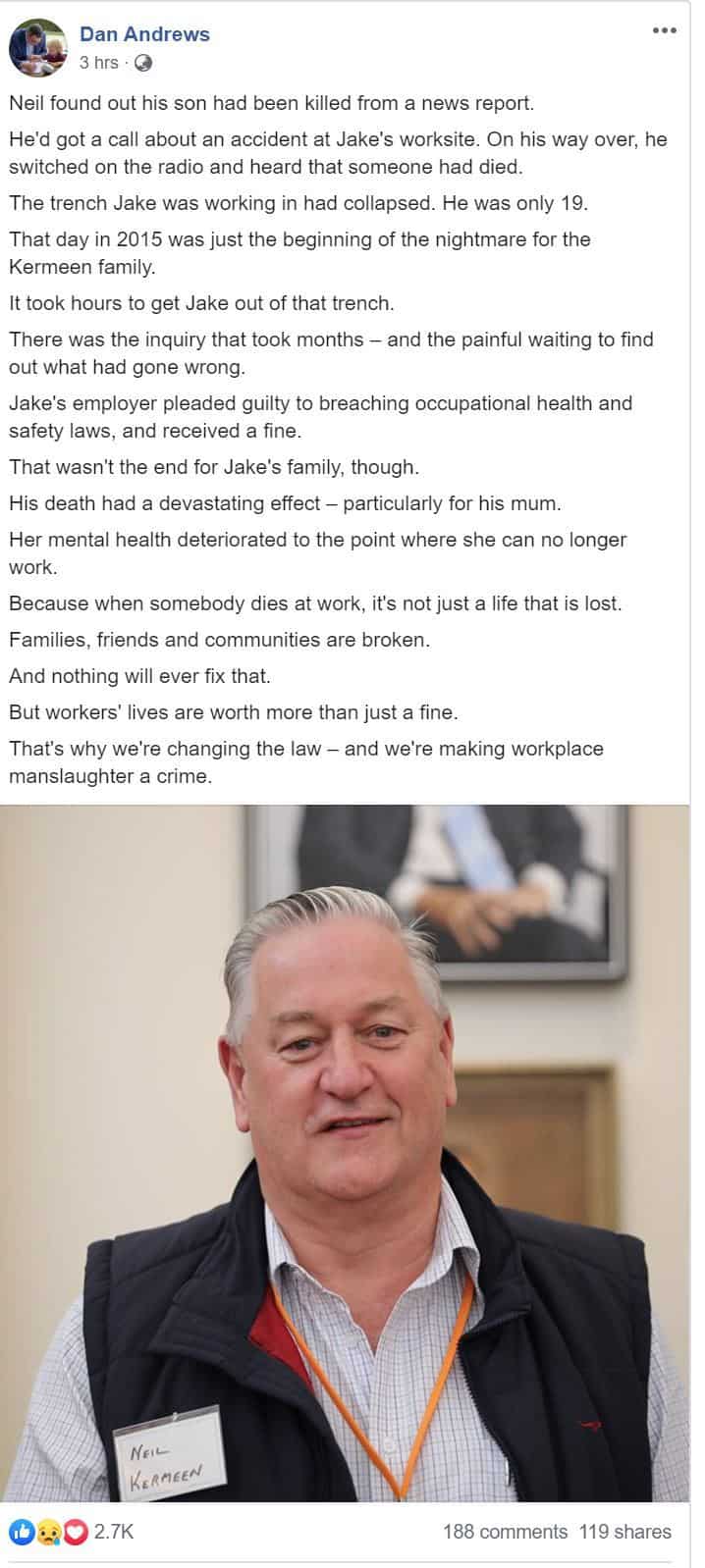
Industrial Manslaughter concerns of the Victorian government taskforce

In April this year the Victorian Government’s Workplace Manslaughter Implementation Taskforce raised the following issues in its Criminal Law Reform Consultation Paper, seen by the SafetyAtWorkBlog:

  • the definition of “person” in the OHS and proposed Industrial Manslaughter laws
  • the establishment of negligence and the standard of care expected by the reasonable person
  • the extension of Industrial Manslaughter offence to the deaths of members of the public
  • whether a decision or act causes the death or only contributes to it
  • exceptions to the laws beyond just volunteers
  • inter-agency cooperation and coordination for effective prosecutions.
If you have any information about safety-related issues or incidents, remember that SafetyAtWorkBlog operates a confidential and anonymous information line at https://safetyatworkblog.whispli.com
Subscribe to SafetyAtWorkBlog to continue reading.
Subscribe Help
Already a member? Log in here

Hopefully prevention of mental injuries at work will emerge in this Royal Commission

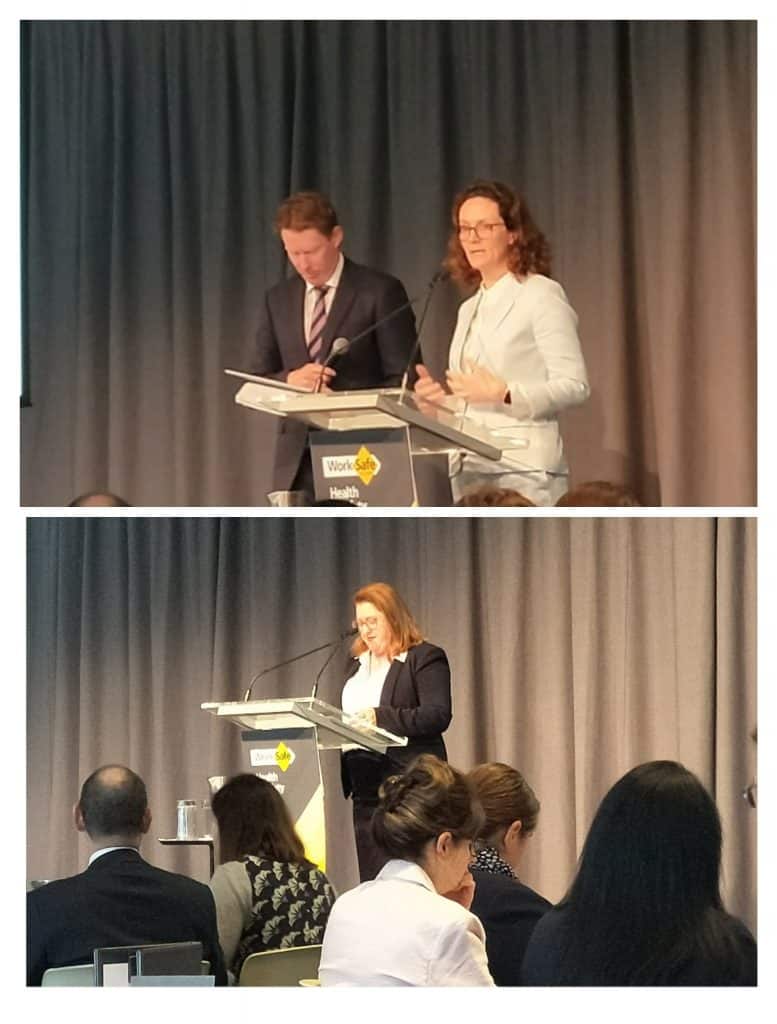
LtoR: Professor Bernadette McSherry, Prof. Allan Fels, Penny Arnytage, Dr Alex Cockram

The first week of media coverage of Victoria’s Royal Commission into Mental Health is very thin on the roles and impacts of workplaces and work activities on people’s mental health, but it is part of the conversation.

The Public Hearings on July 4-5 had Prevention and Early Intervention as their theme. Prevention as occupational health and safety (OHS) people would apply was mostly absent. Prevention, in OHS terms, is usually about the elimination of a risk or hazard whereas the impression from the discussion in the Royal Commission over the last few days is that mental health is something that appears, strikes an individual (with ripples to relatives), is treated and a new psychological normal, a functional/social normal is established. Analysis of the social, occupational and environmental precursors, elements that OHS investigations are obliged to consider, seems missing, at the moment.

According to the Commission’s transcript Chair Penny Armytage said on July 2, 2019:

“We start these hearings with a wide lens. Not in hospitals or clinics, but in our homes, our sporting fields and our workplaces.”

Subscribe to SafetyAtWorkBlog to continue reading.
Subscribe Help
Already a member? Log in here

Be part of the Mental Health conversation

Public submissions for Victoria’s Royal Commission into Mental Health close on July 5 2019. If you believe that work-related mental health is important, tell the Royal Commission through its, very easy, online submission process. Below is the text of the submission I made earlier this week.

The website asks you questions, many more than I answered, so you just have to think a little bit, and comment. If you don’t have time for a detailed submission, there is a Brief Comments option.

What is already working well and what can be done better to prevent mental illness and to support people to get early treatment and support?

Employers have had legislative obligations to provide safe and healthy work environments for many decades, but the inclusion of psychological health has been largely overlooked in preference to those hazards that have a direct relationship to traumatic injury and death.  It is only since 2000, and the various campaigns since to prevent and reduce stress and bullying, that psychological risks have been on the workplace agenda.

Subscribe to SafetyAtWorkBlog to continue reading.
Subscribe Help
Already a member? Log in here

Robbing Peter to pay Paul – the “WorkSafe Tax” is challenged

More details of the “WorkSafe Tax” and WorkSafe Victoria’s new infringement notices and specialist construction inspectors emerged with the appearance of the Minister for Workplace Safety, Jill Hennessy, at the Public Accounts and Estimates Committee hearing on June 14 2019.

Liberal Member of Parliament Richard Riordan went to town on the Minister. He opened with this question:

“….I refer to budget paper 5, page 23, which shows you are ripping $700 million out of the WorkCover Authority over the forward estimates. How does taking such a massive dividend tax to the government help workplace safety?”

page 5, Verified Transcript

But this issue has been bubbling along since at least 2011 when the now Premier, Daniel Andrews, vehemently opposed it.

Subscribe to SafetyAtWorkBlog to continue reading.
Subscribe Help
Already a member? Log in here
Concatenate Web Development
© Designed and developed by Concatenate Aust Pty Ltd