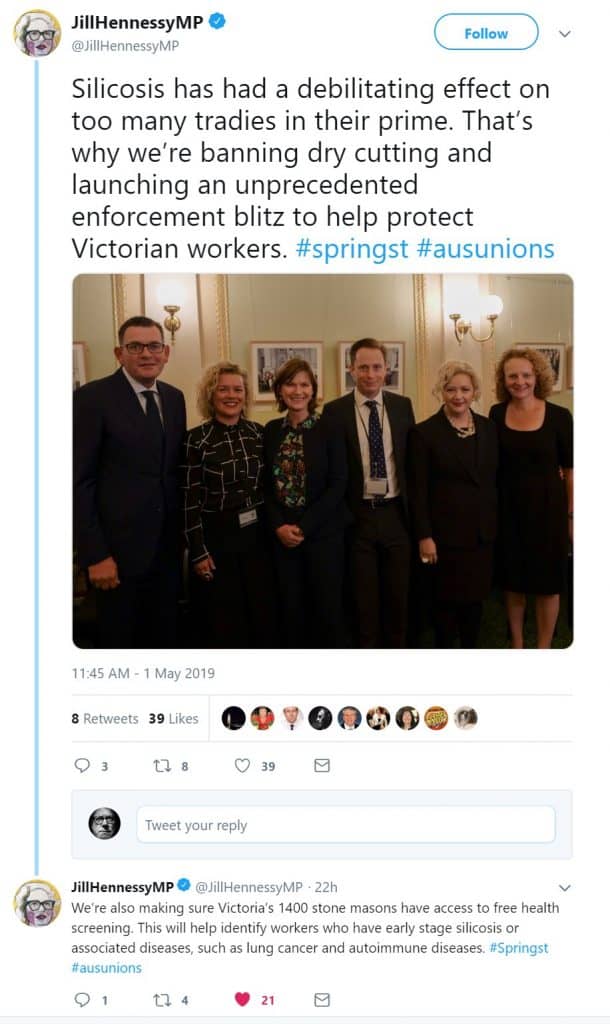
Victoria’s Minister for Workplace Safety, Jill Hennessy, has released a media statement about the occupational health and safety (OHS) context of family violence, referencing a WorkSafe Victoria guidance note from January 2018.
Hennessy is quoted saying:
“Employers have a legal obligation to provide a safe workplace for their employees – and that includes doing whatever they can to support workers experiencing family violence.”
But what level or type of support is expected from employers? Family violence is damaging and insidious but also a crime. It is also a subset, or maybe a special type, of workplace violence as is evident by WorkSafe’s reference to its broader violence publication at the end of the family violence guidance note. The publication, A guide for employers Preventing and responding to work-related violence, outlines the employers duty of care, which includes prevention.


In 2017 the Victorian Government reviewed and revised its
This article is part two of an edited version of a keynote presentation I made at the a special WHS Inspectors Forum organised by WorkSafe Tasmania. The audience comprised inspectors from around Australia and New Zealand. I was asked to be provocative and challenging so posed some questions to the audience about how occupational health and safety (OHS) is managed, regulated and inspected.
Some readers have asked for more information about the “Share Solutions” program mentioned in a previous article. The initiative started in 1988 but this article is based on the second edition from 1995.
The