Root Cause is always found in decisions not things

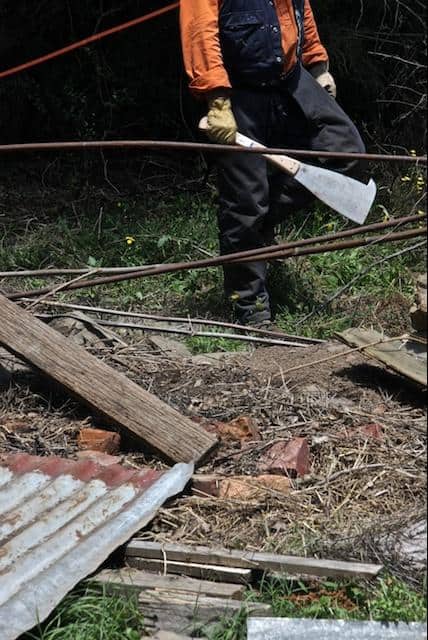
Australian unionists are justifiably angry at the death of a worker at the construction site of a desalination plant in South Australia last week.  The worker was crushed when a beam slipped from a sling on a crane and crushed him.  The soft sling was being used so that the beams would not be scratched according to one report in The Australian newspaper.

It is hard to understand the sacrificing of the safety provided by the standard practice of chains for the aesthetics of the beams.

The media attention on the death is increased due to the incident occurring on a desalination plant site as many oppose the use of desalination plants to ease Australia’s water shortages. Continue reading “Root Cause is always found in decisions not things”

I felt the job was driving me nuts: Stressors and Stress

For two decades now the occupational stressors/stress regulatory debate in Australia has limped along with the same arguments, same objections, same type of discussions.  The same largely impractical documents mentioning psychological effects, physical effects, ‘good stress’ and what is or isn’t a disease and, of course, finger-wagging advice about risk assessments.

Exactly how has all this benefited workers?  So far as I can see across many industries very little indeed.  I can actually identify individual workplaces where 20 year old stressors have still not been eliminated nor controlled, others are worse even though managers have come and gone.

There was a period in this debate when the bio-medical models were prominent (The Fluid Phase) with a focus on the ‘stress hormones’ – adrenaline, noradrenaline, cortisol and dopamine.  Melatonin and serotonin were also discussed, but not nearly as much.  Result?  No benefit to workers.  There was a period of debate about words (The Semantic Phase): what exactly did ‘stress’ mean?  What about ‘strain’?  Or ‘eustress’ (euphoric stress)?  What about ‘distress’?  Or the more insidious ‘good’ or ‘positive stress’ and ‘hardiness’, remember them?  Result?  No benefit to workers at the job.  Then there was forensic interest in ‘which exactly contributes more to occupational stress: life generally, genetics, personality or things at work’ (The Multiplex Phase)?

Changes in organisation, in numbers of workers, in rosters, in workloads (vis a vis process and machinery changes) have resulted in improvements, but these have been rare.  The matters of shorter shifts, longer breaks (say, at 3 am), genuine reductions in levels of fatigue and fear of job loss have generally become worse. Continue reading “I felt the job was driving me nuts: Stressors and Stress”

OHS law reform should not rely on Courts for clarification

Since the early 1970’s OHS law has been “de-lawyer-fied”.  The intention of the law is to empower workers and employers to manage safety in the workplace to meet basic human rights – the right not to be injured at work, the obligation not to hurt others.  Good law allows for the basic legislative tenets to be readily understood.  Poor law is difficult to understand and leads to increased business and personal costs in order to determine compliance.

I would argue that Australia’s recent aim of the national harmonisation of OHS laws will lead to complexity and cost – the opposite of what was intended – and a disempowerment of the workforce as the legal imperative overrides the safety management obligation.  The major weakness in the law is its seeming reliance on the Courts to clarify the laws, their application and their relevance.

Legal commentators on the laws have stated publicly that the impact of the law will not be clear for several years and that many questions about the laws will only be answered when prosecutions are brought and the Courts hand down decisions.  This process is sloppy, should not be accepted unquestionably by OHS professionals and does almost nothing to help the vast majority of Australian businesses to comply. Continue reading “OHS law reform should not rely on Courts for clarification”

BHP Billiton receives minimal OHS penalty – time for a new approach

Some time ago a penalty concept circulated in Australia where OHS penalties were implemented as a percentage of as company’s revenue or profit.  The concept gained renewed topicality in mid-July 2010 as BHP Billiton was penalised $A75,000 after the death of a worker, Scott Rigg. (Video report available)

The fine seems paltry for a fatality and more so when the company’s OHS record is taken into account.  As the video report states, BHP Billiton could have been penalised $A200,000 but even this is a relatively small fine for such a company.

The Australian Government has been willing to apply a 40% tax on the mining industry’s profits but is unlikely to apply a percentage penalty in relation to OHS.   Continue reading “BHP Billiton receives minimal OHS penalty – time for a new approach”

A gut feeling for workplace risk

We all do it, we use language to both inform and at times mislead.  However, when the latter happens in the field of OHS it can be a very damaging to standards.  I’d like to draw attention to one such (class of) circumstance but I’m not sure that the very language I need to use as demonstration will be acceptable within this communication domain.

Some years back I tried to provide a means for linguistic interaction between some academic language and that of workers.  I hoped that parcels of theory and practice could interact to highlight strengths and weaknesses, as a kind of OHS reality check.  Once a word or a concept is understood communication has only started as an approximation.  I was trying to allude to other, subtler tools of language that must also be understood.  For example, it’s important to take note of tone, irony, sarcasm, analogy and metaphor.  These are all tools used in ordinary conversations, they not only deliver information, but may in fact provide pointers to essential meanings intended.  It’s hardly news to state that even a pause or a comma can make all the difference.  Try, “What is this thing called ‘Love’?” and “What is this thing called, Love?”

I asked a worker on a large demolition project (that within a year killed a man) how good was the local OHS system and how well was it supported by management.  The response was less than enthusiastic.  I then tried to get a sense for actual OHS practice, I needed a real example.  I asked this measured, neck-tattooed forklift operator of about 56 how he decided what size and type of forklift to use for which load.  Was there a policy?  Was there a standard operating procedure (SOP)?  Was there any written document…….. or what?  He was sitting at the time in one of the heavy forklifts on the site, a large machine about to lift and shift a huge load. Continue reading “A gut feeling for workplace risk”

Montara oil spill report still not released and restlessness is increasing

At least one state government in Australia is becoming annoyed with the delayed release of the investigation report in to the Montara oil spill in the Timor Sea in 2009.  The Federal Government has had the final report for almost one month.

In an ABC media report:

“The Country Liberals environment spokesman Peter Chandler [said] “There’s only one reason that anyone would want to stall releasing a report [and that] is because the report’s damning of perhaps both the Territory Government and the Federal Government in this matter,”….

The Australian Greens are also pursuing the final report.

Although the report will be of direct relevance to the oil and gas industries in Australia, the international significance from parallels with the BP Gulf of Mexico leak cannot be ignored.  This resonance could also be part of the report’s delay as the government refines a media strategy for the release.

The need for cautious assessment is understandable but it is just possible that an early release of the final report will assist in the United States’ control and remediation measures in the Gulf, the prevention of similar incidents in the hundreds of existing and planned deep sea oil rigs in the US and avoid the Federal election hoo-ha that seems to have already begun in Australia.

Kevin Jones

A radicalised OHS profession may meet future social needs

The Australasian Faculty of Occupational and Environmental Medicine (AFOEM) has uploaded to the internet an hour-long discussion of their Position Statement on “Realising the Health Benefits of Work“.

Firstly  AFOEM should be congratulated for sharing such a resource.  Although the paper itself was launched in May 2010, to have access in July 2010 is a great achievement and an indication of the openness of the organisation and the importance the organisation places on the document.

Dr Robin Chase, President of AFOEM, says in his launch introduction that the dominant social perspective is that work is somehow bad for one’s health.  This is a perspective that OHS professionals will struggle to counter as they are always on the look-out for hazard, the potential for harm, risks.  Similarly HR people often are seen as providing services to assist workers in coping with workloads and workplace issues. Continue reading “A radicalised OHS profession may meet future social needs”