

All occupational health and safety (OHS) advocates should be reading the work of Jordan Barab. His latest article on “blaming the workers” for their own incidents is a great example of his writing. The article also illustrates one of the things about OHS that really gets up the noses of employers – if we don’t blame the workers, we have to blame the employers. An Australian answer to the situation would be Yeah, Nah.
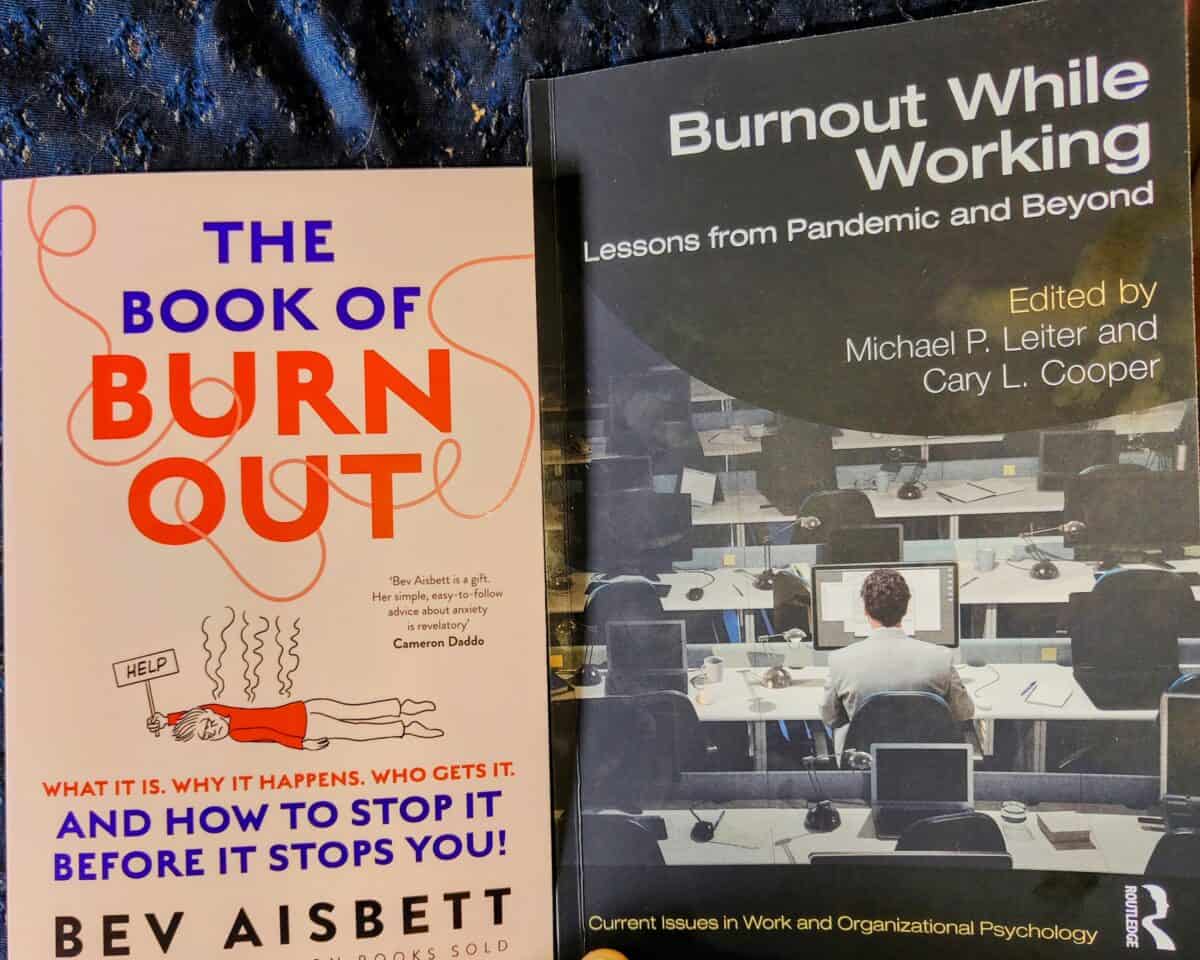
The two extremes of managing burnout
Two new books about burnout arrived on my doorstep this week. They could not be more different. They reflect the mess of approaches to this type of psychosocial injury. Only one provides valid, useful evidence and advice.
Bev Aisbett released a book that I found unreadable – partly because of the advice offered but mostly because of the atrocious formatting where she YELLS almost all the time in the most annoying social media way. Below is a random example.
Revisiting the sociology of work
I am always surprised how few people who talk about workplace and safety cultures seem not to have read the great sociologists of culture. Raymond Williams was important when I studied sociology and literature at university in the 1980s. I was reminded of his importance by this article in Catalyst.
As neoliberalism experiences a decline in influence on governments and corporations, it is useful to look at the sociology of culture from the pre-neoliberalism days, even if only dipping into my bookshelves. The Catalyst article opens with this:
“Raymond Williams hasn’t survived the cultural turn intact. Even though he was instrumental in foregrounding the significance of culture in human affairs, his materialist methodology and commitment to socialism jarred against the textualism and cultural relativism of the last three decades. The rise of neoliberalism had an effect as well. It undercut the values of cooperation and solidarity that were key to postwar radical intellectuals like Williams. But a Williams revival is finally underway.”
Sometimes marketing gets in the way of OHS information
The internet and social media are peppered with articles that are ostensibly about occupational health and safety (OHS) and psychosocial health and wellbeing but are really marketing exercises. These things pop up frequently on LinkedIn. A recent example is from Lyra Health called “Workforce Mental Health Trends for 2023: Top 3 Predictions“. You can see from the title why I would be interested in obtaining the full survey report.
I chose not to download the company’s survey for the following reasons.

Give me a young worker, and I can make them safer for life*
Trade union membership in Australia has declined to its lowest level ever of 12.5%, according to an article in The Age newspaper (paywalled) on January 6 2023. The experts mention several demographic factors that have resulted in the persistent decline. Even though trade unionists publicly state that worker health and safety is often their top priority, they never seem to use occupational health safety (OHS) in their marketing of union membership.
This article does not suggest that OHS be bastardised for commercial purposes or that the primary responsibility for safe work does not reside with the employer. Still, union membership may be purchased for a young worker, in particular, perhaps by parents or concerned relatives to assist in keeping their loved ones safe at work.

Zombies, Ghosts and OHS
This holiday season, in between new Val McDermid and Michael Connelly detective novels, I have dipped into a small book called “Zombie Ideas – Why Failed Policy Ideas Persist” in my quest to understand why occupational health and safety (OHS) is not as influential on companies and public policies as I think it should be.
The book is less than 60 pages but dense with ideas that I need a discussion group to fully understand, but there are some useful concepts that may help clarify the policy role, settings and effects of OHS and workers’ compensation.

C-Suite is disinterested in OHS
Consulting firm KPMG has released its annual survey report on the concerns of corporate executives called “Keeping us up at night – The big issues facing business leaders in 2023”. Occupational health and safety (OHS) fails to get a mention. (So much for the attitudinal impact of Industrial Manslaughter laws!) But then neither does “mental health” nor “sexual harassment“.
The KPMG report may accurately reflect executive priorities, but it may also reflect a denial of reality.