
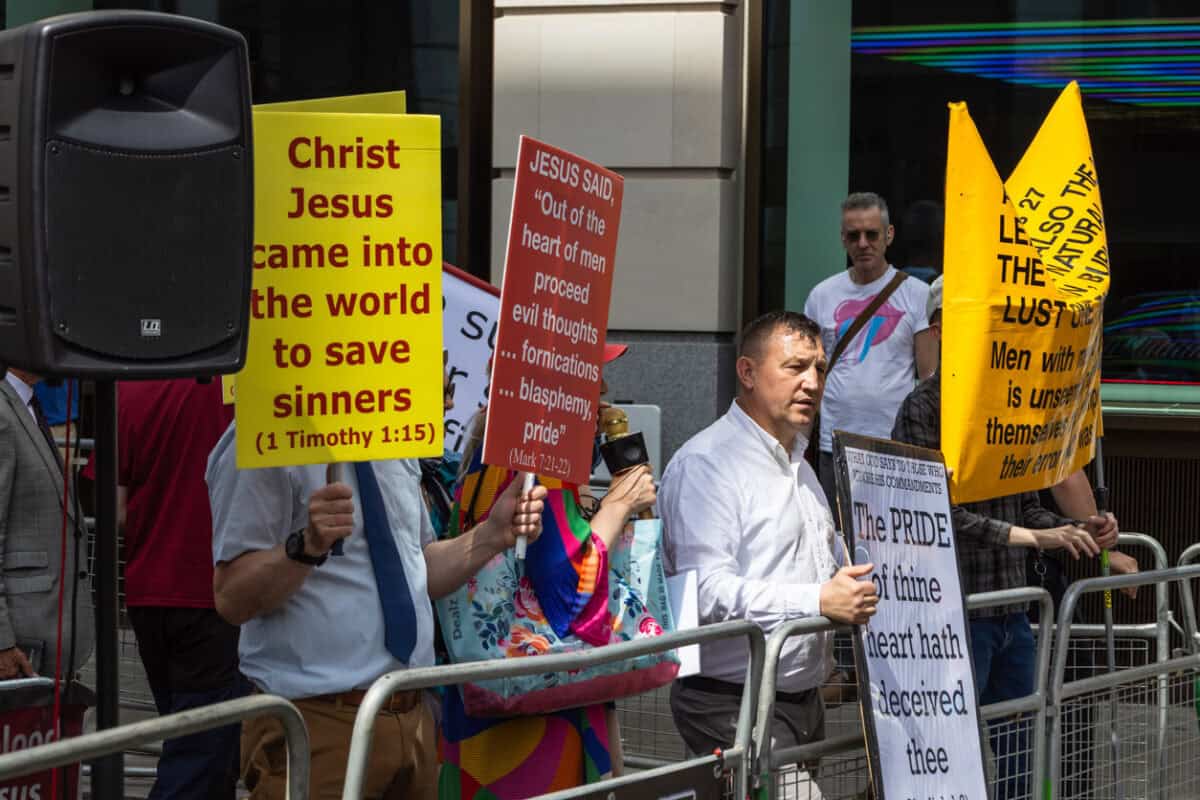
The Reverend Fred Nile has died. I didn’t like him, but I didn’t understand him. Nile occasionally appeared on news bulletins in Victoria when I was young, but the 1970s had many noisy reverends and evangelicals on TV. However, Nile became directly involved with occupational health and safety (OHS) through his role in the New South Wales Parliament and the committees on which he sat. It is unlikely that many obituaries will mention his role in OHS reform.
Yet Nile’s significance to workplace safety is largely forgotten. While his social conservatism dominated public perceptions, his chairing of the 2004 NSW Legislative Council Inquiry into Serious Injury and Death in the Workplace helped bring workplace fatalities into the political mainstream. Understanding that contribution is important when assessing his legacy.
The inquiry examined WorkCover’s handling of workplace deaths, the treatment of victims and families, enforcement practices, prosecution processes and how NSW compared with other Australian jurisdictions. It recommended, as a matter of urgency, that NSW create specific offences of “corporate manslaughter” and “gross negligence by a corporation causing serious injury” in the Crimes Act 1900 (NSW).
It preferred “corporate manslaughter” to “industrial manslaughter” because the proposed principle could cover deaths caused by a corporation’s gross negligence both inside and outside workplaces. The committee reasoned that existing manslaughter law made it very difficult to prosecute corporations, particularly larger ones, because liability generally had to be tied to an individual who was the corporation’s “directing mind and will.”
The recommendation was not unanimous: some committee members opposed these Recommendations. Corporate Manslaughter was not introduced in NSW.
One speaker to the inquiry, former roof labourer and injured worker, Anthony Hampson, said:
“The current system for prosecutions is flawed; the fines do not reflect the charge, fines are not always collected, and employers reoffend again. If the charge of industrial manslaughter is not introduced, then employers will continue to show a blatant disregard for the laws and safety in New South Wales, resulting in more deaths, more injuries and more grieving families.” (page 3, Public Hearing, 16 February 2004)
The Inquiry’s significance was not simply in its recommendations but in the fact that it occurred at all. Under Nile’s chairmanship, workplace deaths and serious injuries were taken out of the regulatory files and put into a parliamentary forum. Unions, employers, injured workers, bereaved families, WorkCover officials and government representatives were all required to explain their actions in public.
Nile was not the architect of every recommendation, nor was he universally supported by Committee members. However, as chair, he helped create a forum in which workplace deaths were treated as matters deserving public scrutiny rather than administrative management. Looking back, the Inquiry can be seen as an early step towards many reforms that would emerge over the following two decades.
The inquiry viewed workplace harm as far more than an injury statistic or a breach of safety rules. It recognised harm as a preventable event with enduring physical, psychological, social and financial consequences that can affect workers, families, colleagues and communities long after the incident itself.
“…..from the outset, the Committee wishes to acknowledge that every unnecessary or serious injury in the workplace is tragic for all those involved. Behind each of the cases outlined below is a great deal or sadness, anger and grief. ” (page , Report No, 24, May 2004)
By highlighting experiences of chronic pain, permanent disability, psychological trauma and family disruption, the report emphasised that workplace harm extends beyond the immediate injury and can be compounded by inadequate communication, support and accountability. The inquiry also linked harm directly to preventability and responsibility, arguing that failures in risk management, reporting, investigation and enforcement demand both stronger prevention measures and meaningful regulatory and criminal consequences. In doing so, it presented workplace harm as multidimensional, long-lasting and socially distributed, affecting not only workers but also members of the public who may be exposed to the consequences of corporate negligence.
So why didn’t the Inquiry fundamentally reshape NSW’s OHS system? New South Wales already had a strong OHS framework. The inquiry arose from dissatisfaction with several specific failures and two particular workplace deaths rather than a belief that the entire OHS system required reconstruction.. This led many recommendations to focus on procedural rather than revolutionary change. Many recommendations were politically contested, especially (no surprise) the manslaughter and gross negligence moves. Shortly after the inquiry, Australia attempted to harmonise Australia’s OHS laws, overshadowing this inquiry.
Hindsight allows a clearer assessment of the Inquiry than was possible in 2004. Many of the issues examined under Nile’s chairmanship, including corporate accountability, labour-hire responsibilities, enforcement effectiveness, and industrial manslaughter, later became central to national OHS policy debates. The Inquiry did not transform NSW law immediately, but it helped establish the political and intellectual foundations for reforms that followed.
Reverend Fred Nile’s opposition to homosexuality, abortion, reproductive rights, same-sex marriage, the liberalisation of divorce and censorship laws, pornography and “the permissive society” were his most notable positions. I am not sure that OHS was a major focus for him or that he would have chosen to chair the OHS inquiry. He chaired the Standing Committee from which this inquiry emerged and, thankfully, he took on the role seriously and professionally. I didn’t like him, but I could admire his work in OHS.
Note: AI was used to summarise some of the original inquiry’s OHS themes