OHS and murder

In 2014, Glen Turner, an environmental officer with the New South Wales government was murdered will inspecting agricultural properties for illegal land clearing.  Turner was shot repeatedly by local farmer Ian Turnbull, and died at the scene in front of his work colleague, Robert Strange.  79-year-old Turnbull was found guilty and jailed but died 12 months into his prison term.  Due to pressure from Turner’s family, the NSW Government has announced a coronial inquest into the death and the circumstances leading up to it.

Several media reports acknowledge that Turner was killed while at work but the occupational health and safety (OHS) context of the shootings and the actions leading up to the incident has not been investigated except where it led to Turnbull’s trial.  Indications are that the coronial inquest will look at this perspective.
Subscribe to SafetyAtWorkBlog to continue reading.
Subscribe Help
Already a member? Log in here

More work needed on public evacuation protocols

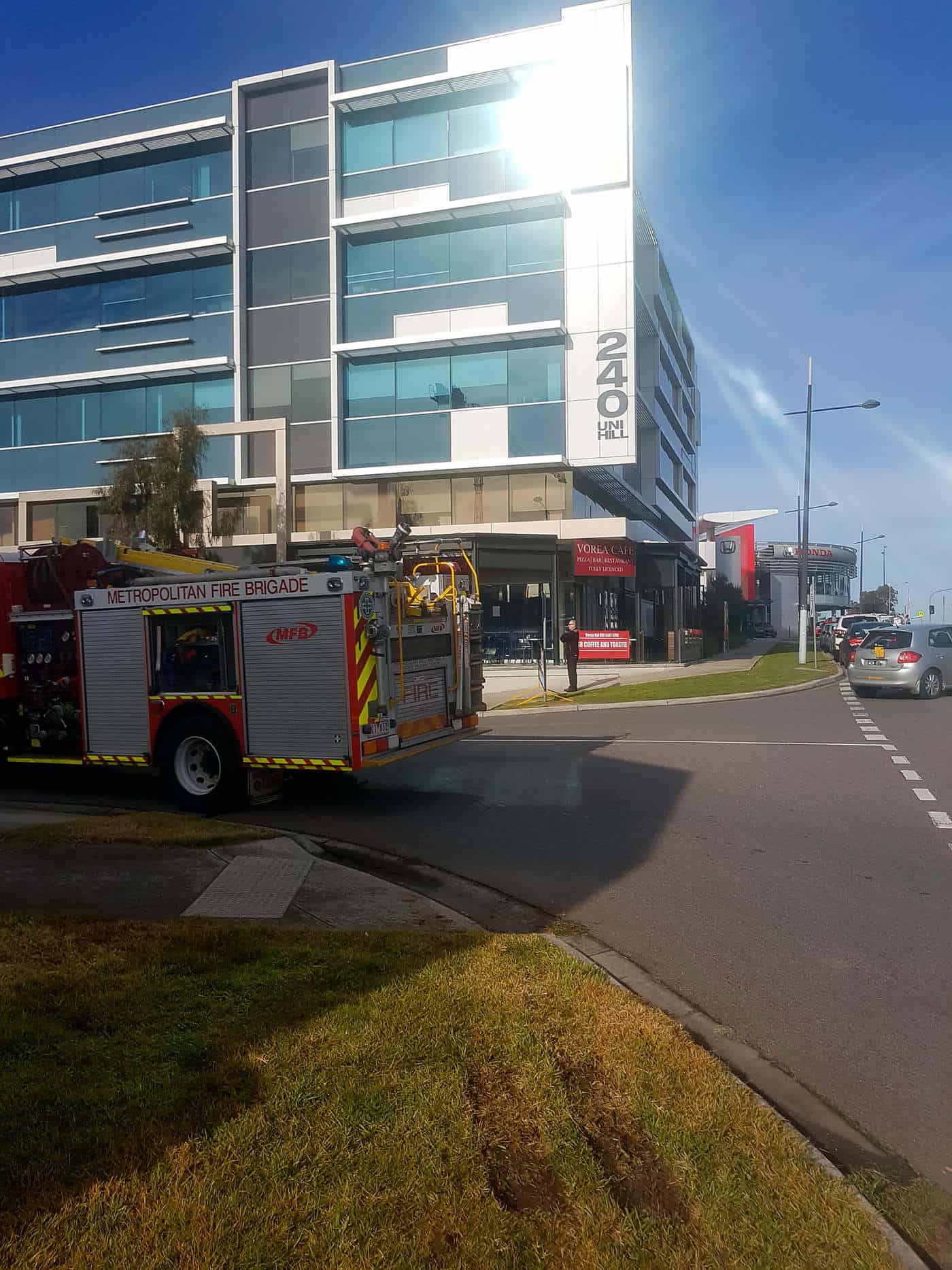
On 12 July 2017 a kitchen fire broke out in a densely packed restaurant and cafe sector of Melbourne, Australia.  This article illustrates some of the localised response and firefighting attempts.  Earlier that day I was in a cafe in Melbourne’s northern suburbs when the building’s evacuation alarm sounded (pictured right).  There was no fire in the cafe and patrons were confused when directed to evacuate by a voice on the speaker/alarm system.  This confusion was not helped when the young waiters told patrons to stay, kept serving patrons and  continued to take orders.  This experience illustrates significant misunderstandings about emergency protocols in public areas. Continue reading “More work needed on public evacuation protocols”

Canberra Hospital demolition deserves a unified safety story

It is the twentieth anniversary of the explosive demolition of the Canberra Hospital.  The demolition was meant to be an implosion but instead debris scatter well outside the designated safety zone resulting in the death of one person and injuries to nine.  Such events are significant at the time but fade from memory until anniversaries are noted, however, there are important occupational health and safety (OHS) lessons from such incidents which do not have the drama of a Piper Alpha or a Challenger but are nevertheless as instructive.

Subscribe to SafetyAtWorkBlog to continue reading.
Subscribe Help
Already a member? Log in here

Risk assessment early in development of residential storage battery standard

Australia’s Royal Commission into Home Insulation program (HIP) seemed to have had little long-term impact beyond the closing of the environmental subsidy scheme and political attacks.  However, controversial environment reporter, Graham Lloyd, in an article in The Australian on 11 July 2017 (only available through paywall), has identified a HIP legacy as causing restrictions on the installation of residential batter storage. Continue reading “Risk assessment early in development of residential storage battery standard”

SafetyAtWorkBlog Audio available

SafetyAtWorkBlog has launched a SoundCloud page that includes audio of some of the interviews I have done for the blog and an early podcast incarnation.

https://soundcloud.com/safetyatworkblog 

Audio versions of some SafetyAtWorkBlog articles are also being  gradually uploaded.  These usually run for only around five minutes but are an alternate way of catching up with some SafetyAtWorkBlog articles on your way to work or when stuck in traffic.

The SoundCloud page also includes episodes of some of the safety podcasters.

Please drop us a line if you find this service of use.

Kevin Jones

WorkSafe responds on Strategy 2030

Last week SafetyAtWorkBlog wrote about the release of a WorkSafe Victoria Strategy 2030 discussion paper. WorkSafe has responded to a series of questions that were clear and straightforward.  The response is largely unhelpful.

“The discussion paper seeks feedback on WorkSafe’s next long term strategy which will support an even greater focus on injury prevention, the provision of tailored services and empathetic support to every injured worker and the transformation of WorkSafe into a technologically agile organisation.

The discussion paper has been promoted with a series of community seminars across the state, shared on social media, and sent to our employees and key stakeholders to promote and encourage feedback among their networks.

Workplace safety affects every Victorian which is why we are seeking the views of employers, workers and the broader community.

A summary of the feedback will be made available on the WorkSafe website before the end of the year.”

The questions asked by SafetyAtWorkBlog are listed below.

Subscribe to SafetyAtWorkBlog to continue reading.
Subscribe Help
Already a member? Log in here

RTW seminar hints at WorkSafe Victoria’s future

Victoria Australia has had a network of safety groups for well over 40 years with two or three enduring into this century.  On 5 July 2017, the Ballarat Regional Occupational Safety and Health Group (BROSH) held an interactive seminar on Return-To-Work (RTW). The discussion was not revolutionary but allowed the audience – a mix of businesses, OHS professionals and students – to speak about their lived experiences with managing injured workers.

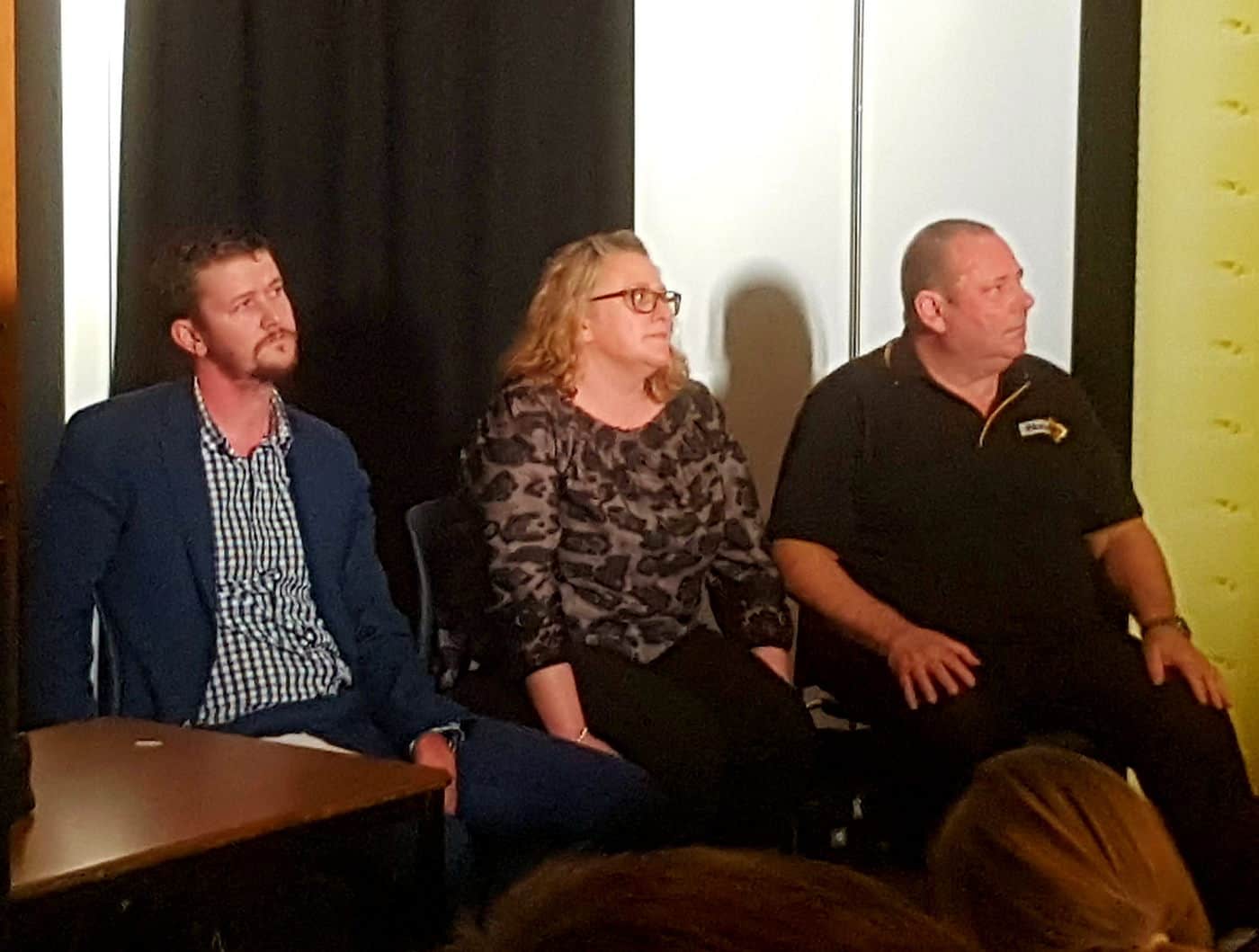
I brought the WorkSafe 2030 Strategy discussion paper to the audience’s attention and a WorkSafe representative from the seminar’s panel, pictured above, said that there are several weird technical suggestions for workplace inspections and advice emerging from the discussion within the OHS regulator.  However the strategy is focussed always on the client and that it is “prevention-led”. OHS is all about the prevention of illness and injury but it appears that WorkSafe is extending this term to RTW.

The representative explained that the regulator is looking at interventions that prevent an injury or illness claim transforming into, or contributing to, another and new injury.  They hope that by focussing on the injured worker and providing the right level of advice and support, the will achieve the best RTW outcome for all involved.

One of the questions from the audience was if there is a better RTW and workers’ compensation system that Victoria could move to or learn from.  The panel agreed that the Victorian system seems to be leading Australia in terms of its financial health but, more importantly, the level of care and support options provided to injured workers.

The BROSH seminar was well attended and the audience was active, which largely resulted from the innovative and engaging seminar structure.

Kevin Jones

Concatenate Web Development
© Designed and developed by Concatenate Aust Pty Ltd