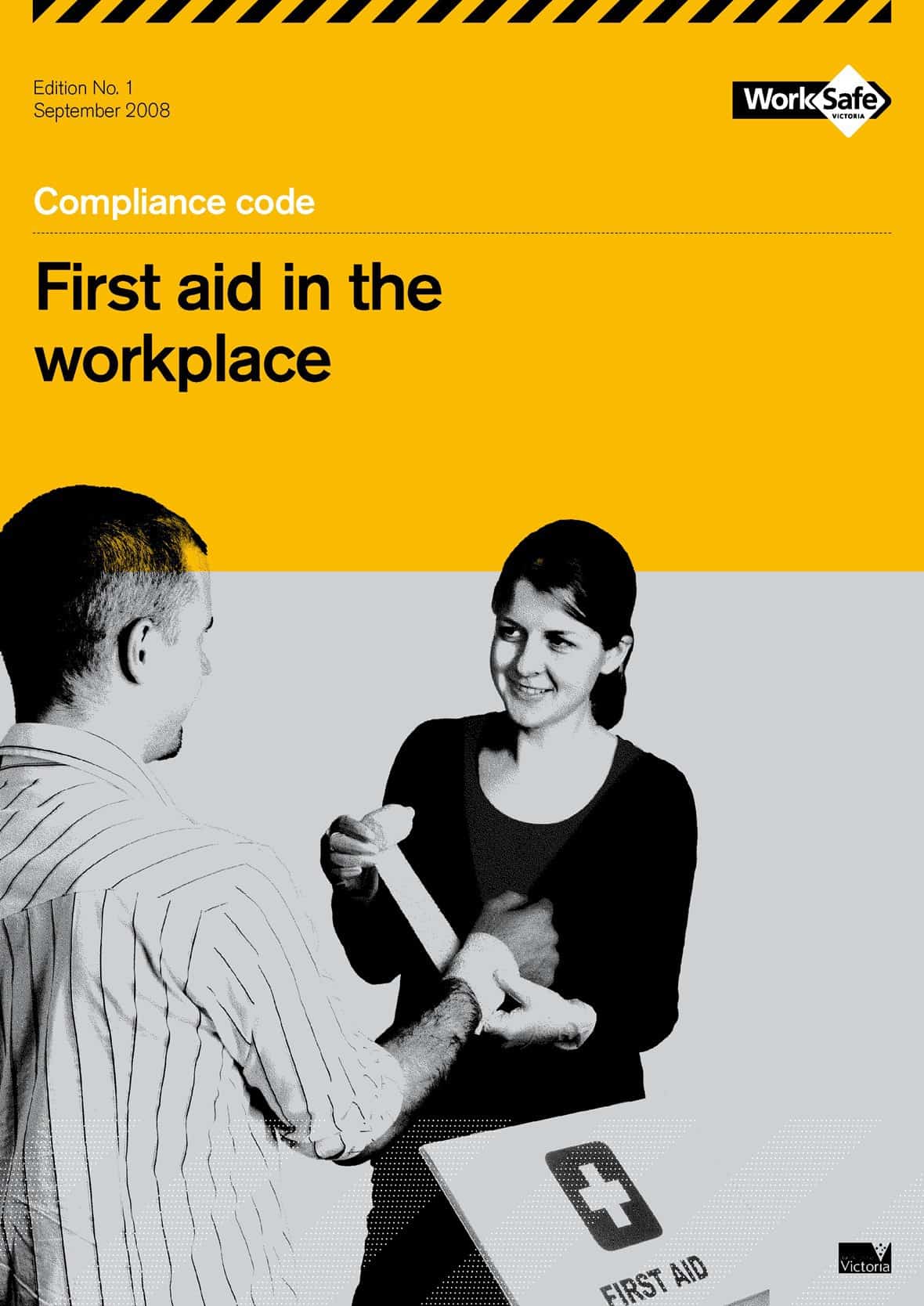
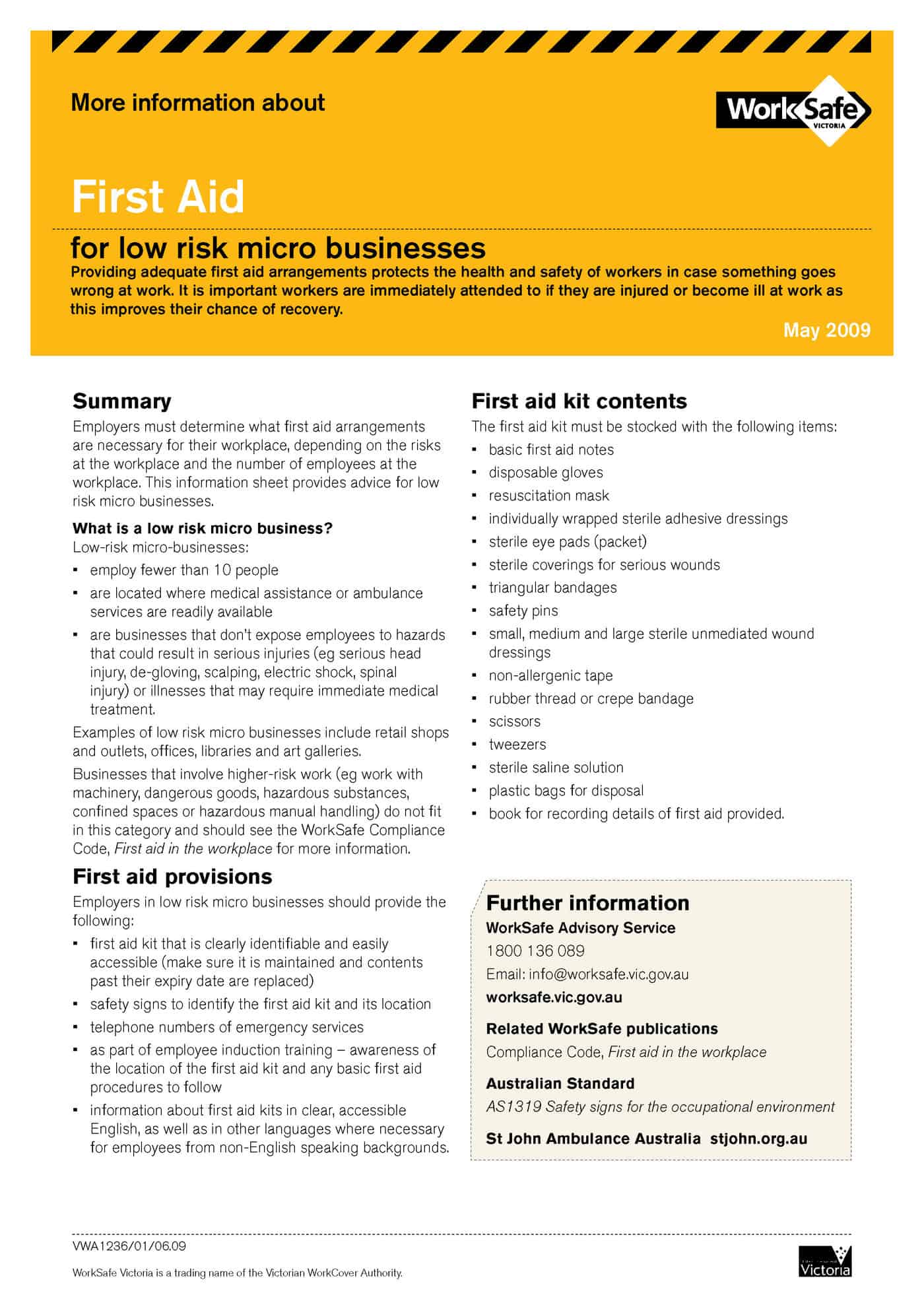
Presenteeism and swine flu

Craig Donaldson interviewed Joydeep Hor, managing partner of Australian law firm Harmers on employment issues related to the swine flu outbreak.  Joydeep rightly points out that HR and OHS processes should not differentiate between swine flu and other workplace illnesses.  Hor briefly discusses the employers duty of care and how to question one’s traditional approaches to the “sniffles” at work.

Of course there is also the much under-enforced obligation of the employee not to put their work colleagues at risk – the major argument against presenteeism.

Kevin Jones

Trade union OHS protests are shortsighted

On the eve of the ACTU Congress, the construction unions have threatened disruptions to building sites in, not surprisingly, New South Wales. This State was always going to be the one with the most to give up for the sake of national harmonisation of OHS laws.

It is reported in the Australian Financial Review on 2 June 2009 (page 11, not available online) that the CFMEU acting state secretary, Jim Tulloch, has said

“This is a line in the sand issue for trade unions……There’s a lack of leadership at the federal level and lots of states have been coerced into signing something that they are going to be held accountable for.”

This may be the case and the CFMEU may be positioning themselves prior to the ACTU Congress but the disruption is a risky strategy.  Not only would any of the action be illegal, the Federal Government has yet not abolished the draconian Australian Building & Construction Commission (ABCC).  Union protesters are likely to find themselves again in front of the ABCC being forced to answer questions.

The national OHS system is still being finalised but the union action will serve little purpose other than confirming the political perspective that the New South Wales government is overly influenced by the union movement.  Surely by now the union movement has learnt there are other ways to achieve aims than by confrontation.

Kevin Jones

Safety In Action Conference 2008

The 2008 Safety In Action Conference in Melbourne Australia included a single-day stream of prominent CEO’s talking about safety.

I suggested to the stream host that it would be a good idea to have each of them respond to a question-without-notice in order to personalise each speaker. This video shows Dr Ziggy Switkowski‘s response.

Kevin Jones

[vodpod id=ExternalVideo.831833&w=425&h=350&fv=%26rel%3D0%26border%3D0%26]

more about “Safety In Action Conference 2008“, posted with vodpod

Offshore industry regulator performance

Australia’s National Offshore Petroleum Safety Authority (NOPSA) has released a report of its own OHS performance based on data from 2005 to 2007.  NOPSA has been in the public eye far more than normal due to the Varanus Island explosion and the various investigatory reports.

The report seems to indicate that, as a regulator, NOPSA is performing to expectations.  NOPSA’s CEO John Clegg has acknowledged that the  industry is below the level of its overseas counterparts.  This is peculiar given that other Australian resources industries, like mining, are ahead of other countries and that safety in the offshore industry has had a high profile ever since Piper Alpha.

The report identifies challenges that are difficult but not very surprising:

  • improving leadership – strong leadership is required for the Australian industry to move to the next level
  • dealing with a shortage of skilled personnel
  • managing ageing facilities and minimising gas releases

It will be very interesting to watch the benchmarking of NOPSA and its future role through the OHS harmonisation process that Australia is undergoing.

Below is the full report and the performance summary.

Kevin Jones

NOPSA 2007-08 cover

   NOPSA summary 2007-08

The latest OHS advice on managing swine flu

Some time ago SafetyAtWorkBlog was critical of OHS regulators releasing swine flu information because the advice was not being easily translated in the workplace, and some of the advice was just silly. 

Workplace_Guide_to_Managing_an_Influenza_Pandemic_Page_1Much better advice is available from the New South Wales government however, curiously, the Workplace Guide to Managing Influenza Pandemic has been issued by the Department of Commerce.  The department’s Office of Industrial Relations has released the document which makes more sense however the release seems to be contrary to WorkCover New South Wales who defers to the NSW Health Department, surely the most logical central point for communication on this public health issue.

There are too many “experts” on the workplace impact of swine flu influenza and pandemics.  SafetyAtWorkBlog has kept out of this issue as we share the position of WorkCover NSW – defer to the State or National authorities.

However, some companies feel obliged to be seen to be doing something, anything, about swine flu and their half-cocked measures are discrediting their overall process of safety management.

One national company recently issued a new policy advice to all staff on swine flu.  The policy was little more than a cut and paste from an official fact sheet.  It added little to the employees’ knowledge of the hazard and in no way answered staff questions such as 

  • If my child’s school is closed due to a swine flu threat, what type of leave am I entitled to take?
  • The company has provided annual influenza vaccinations.  Will I need re-vaccinating in the event of swine flu and will the company cover this cost?
  • In what circumstances can my employer send me home?

Not only was it next to useless, the company had the cheek to include its own corporate logo on the policy.  Public health and OHS information is usually flexible in its reuse but somebody in the company looks like they are empire-building rather than managing their staff.

People want advice on how swine flu will disrupt their lives and working lives, not information on swine flu itself.  Employers should leave the health information to the health authorities and concentrate on the management of the disruption and potential health threats within their area of expertise, their own workplaces.  

If employers raise expectations by issuing policies in areas outside of their expertise, they begin a spiral of the demand for information that it may be impossible to satisfy.

Kevin Jones

A slap on the wrist – Varanus prosecution

The West Australian government has finally decided to prosecute Apache Energy over the Varanus Island explosion in 2008.  Many people are asking if the effort is worth the bother as the maximum penalty possible is a measly $A50,000.

Comparing the disruption to the state’s gas supply to the Esso-Longford explosion, which generated a Royal Commission in Victoria, it illustrates the difference in having an explosion in an isolated area, that does not kill or injure, and that allows a government to ensure domestic gas supplies.  One could argue that a major difference was also that WA did not rely solely on a single gas source.

According to one media report

Apache spokesman David Parker said it would vigorously defend the matter. “The explosion was an unfortunate and unforeseen event”.

Explosions often are unfortunate and usually unforeseen but adequate maintenance requirements of pipelines are foreseeable, just not often profitable.

Apache Energy, a subsidiary of the US energy giant Apache, has not been the most transparent and helpful corporate citizen as it has taken Federal Court action that impedes the government’s investigations.

Kevin Jones

More on the Varanus pipeline can be read by searching for “Varanus” in the search function to the right of this blog page

Worst Case Scenarios and Pandemics – 2005 interview

In 2005 I had the great opportunity to spend some time with Peter Sandman, a world renowned risk communicator.  We spoke about worst case scenarios and risk communication in those times of avian influenza and smallpox threats.  The interview has gained additional poignancy in this time of swine flu.  

Although the audio is “noisy” as Collins St in Melbourne had more traffic on a Sunday morning than I expected, I think some readers may find this excerpt very useful at the moment.

Click on the magazine’s cover image below to download the interview transcript.

[For Peter Sandman’s current commentary on swine flu, see http://www.psandman.com/index-infec.htm#swineflu1 and especially http://www.psandman.com/col/swinecomm.htm]

or Peter Sandman’s current commentary on swine flu, see
http://www.psandman.com/index-infec.htm#swineflu1 and especially
http://www.psandman.com/col/swinecomm.htm. 


Kevin Jones

6i11 cover

Concatenate Web Development
© Designed and developed by Concatenate Aust Pty Ltd