Is OHS suffering from policy AND structural capture?

The Grattan Institute has released a report about the political influence of lobbyists.  Understandably the media is giving the report a lot of attention, particularly as it identifies lobby groups that have more access to politicians than other groups and how public interest policies have failed after intense lobbying. But the report also addresses the matter of “policy capture”.  Although the report analyses the activities of lobbyists, perhaps research could be undertaken into the high level of policy influence on workplace health and safety matters from a tripartite consultative structure that no longer reflects the Australian workforce.

In its Overview the Grattan Institute writes:

Subscribe to SafetyAtWorkBlog to continue reading.
Subscribe Help
Already a member? Log in here

New reporting standard reflects the social licence

Inaccurate or insufficient data about occupational health and safety (OHS) plagues the decision-making of governments and business, and OHS professionals.  Technology has provided some hope on better datasets but only for the analysis of data, not necessarily the quality of that data. Workplace incidents and issues continue to be under-reported, especially non-traumatic incidents. The Global Reporting Initiative (GRI) offers a framework for better reporting of OHS issues and incidents which also improves the credibility of companies, helping to regain the trust of the community.

Recently, GRI released its latest

Subscribe to SafetyAtWorkBlog to continue reading.
Subscribe Help
Already a member? Log in here

The risks of having an OHS policy

If you ask a lawyer for advice about any issue related to occupational health and safety (OHS) their first piece of advice is likely to be “write a policy”.  There are good legal reasons for advocating a policy, but policies can also create major problems.  Policies are both a reflection of a workplace and the base on which improvements can be created.

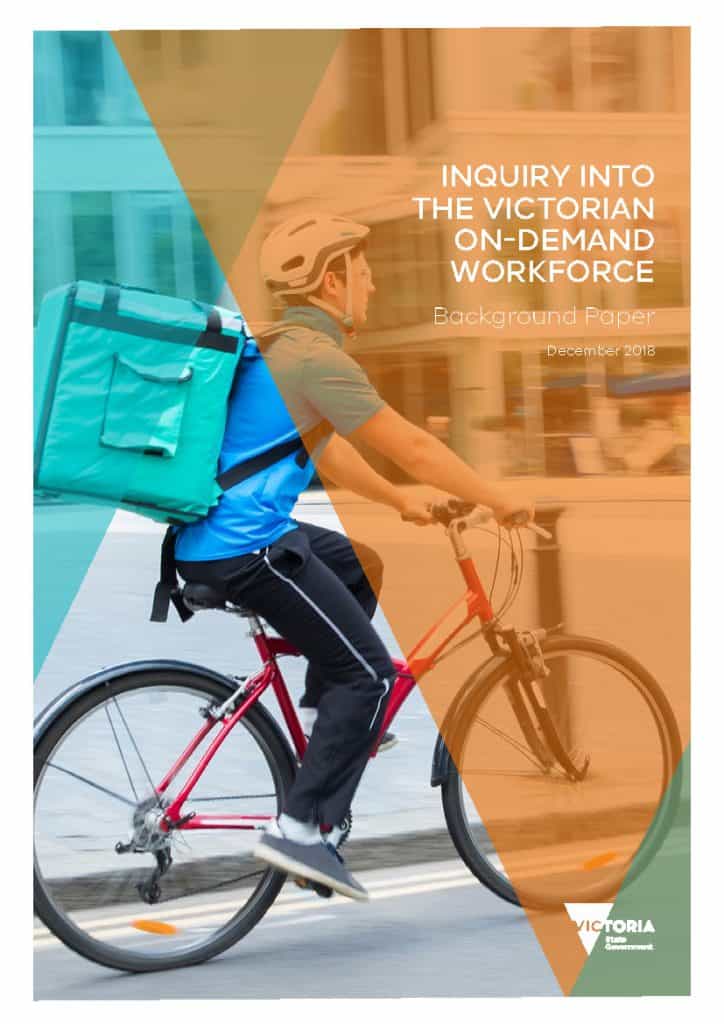
Search for OHS policy guidance from the Victorian Government  and it takes you to a page that describes an OHS policy as

“Laws, regulations and compliance codes which set out the responsibilities of employers and workers to ensure that safety is maintained at work.”

NO it’s not.  The page also directs you to a WorkSafe page about insurance!

WorkSafe Tasmania

Subscribe to SafetyAtWorkBlog to continue reading.
Subscribe Help
Already a member? Log in here

HR and OHS need to be playmates now more than ever

One of the fascinating elements of this year’s National Comcare conference is the conflict between the Human Resources (HR) approach to occupational health and safety (OHS) and workers compensation, and the OHS approach to psychosocial hazards.  This is not the fault of Comcare as the audience is a peculiar mix of both professions.

The difference was on display when some presenters focused on the post-incident care and, almost entirely, on interventions on the individual.  Other presenters focused on the prevention of physical and psychological injuries – the OHS approach.  The former seemed warmly embraced by the HR professionals.  There were other speakers, or parts of their presentations, where prevention was almost mentioned as an afterthought and even then omitting references to their organisation’s own OHS publications.

There has always been a structural and ideological separation of the professions

Subscribe to SafetyAtWorkBlog to continue reading.
Subscribe Help
Already a member? Log in here

Where is the Senate Inquiry into Industrial Deaths heading?

As readers would realise, the transcripts for the Australian Senate inquiry into industrial deaths are fascinating. It is worth looking at the other presentations and questions on the day when the Australian Chamber of Commerce and Industry received a grilling as this provides insight into how to present to a government inquiry addressing occupational health and safety.

The Senate Committee has probably heard more from relatives of deceased workers than has any other similar inquiry, perhaps even the Workplace Bullying inquiry in which this Committee’s member Deborah O’Neill participated.  This is an indication of the shift in OHS over the last few years where the human impacts of workplace safety failures, what some describe as the “lived experience”, gain an influence that used to sit with professionals and acknowledged subject matter experts.

Source: istockphoto, Credit: jotily – https://www.engel.ac/
Subscribe to SafetyAtWorkBlog to continue reading.
Subscribe Help
Already a member? Log in here

A possible licence to be safe

The Victorian Parliament continues to consider the Building Amendment (Registration of Building Trades and Other Matters) Bill 2018. According to one interpretation in the unofficial Hansard:

“This bill’s objectives are to deliver better outcomes for domestic building consumers and building practitioners through further improvements to the practitioner registration and disciplinary system, improve compliance with swimming pool and spa barrier standards and implement some recommendations of the Victorian Cladding Taskforce and the Coroners Court.”

There are many aspects to this Bill, one of which is occupational health and safety (OHS).

Subscribe to SafetyAtWorkBlog to continue reading.
Subscribe Help
Already a member? Log in here
Concatenate Web Development
© Designed and developed by Concatenate Aust Pty Ltd