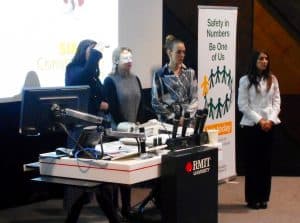
Can flexible work arrangements apply in the construction sector?

On 30 October 2017, the Safety Institute of Australia and RMIT University held their annual OHS Construction Forum.  This year’s theme was flexible working arrangements – a brave choice that did not really work but was indicative of safety in the construction industry generally.

Several speakers discussed well-being generally and how flexible working arrangements were critical to fostering an appropriate level of  wellness.  One, a labour lawyer, outlined the legislative obligations that companies have to those types of arrangements with reference to equal opportunity laws, industrial relations and anti-discrimination obligations – sadly the workplace safety laws and obligations were not mentioned.  In all of the wellbeing-themed discussions, the application to the on site construction workers was rarely, if ever, mentioned.
Subscribe to SafetyAtWorkBlog to continue reading.
Subscribe Help
Already a member? Log in here

Industry group expresses concerns about new safety Standard

An odd media statement was released by the Australian Chamber of Commerce and Industry (ACCI) on 23 October 2017 regarding the new international occupational health and safety (OHS) management system Standard ISO45001.  Several days later Standards Australia released a statement that supported and clarified ACCI’s position

ACCI states that

“….the draft standard is still several months away from being finalised”.

Subscribe to SafetyAtWorkBlog to continue reading.
Subscribe Help
Already a member? Log in here

Important little OHS steps in latest Productivity Commission report

Australia’s Productivity Commission (PC) released a 5 year productivity review called “Shifting the Dial“. It is one of those large government reports from which lots of people draw lots of conclusions. Chapter 3 in this report addresses Future Skills and Work within which occupational health and safety (OHS) is mentioned in a useful and important context.

The PC acknowledges the changing types of work that have been written about copiously elsewhere with varying degrees of alarmism.  The Commission contextualises this rate of “transformative” change as the latest in a continuum of change and recommends this policy approach in relation workplace safety:

Subscribe to SafetyAtWorkBlog to continue reading.
Subscribe Help
Already a member? Log in here

The big accounting firms are due to shake up the OHS sector

On 15 August 2017, the Australian Financial Review (AFR) ran an article (paywalled) that should have sent shivers up the spines of occupational health and safety (OHS) professionals throughout Australia. The article titled “Audit chief sound warning on big four rush to consulting work” in the hard copy newspaper discussed the future consulting strategies of the “big four – Deloitte, Ernst Young, KPMG and PricewaterhouseCoopers (PwC):

“The four firms are all aggressively chasing growth by moving into management and technology consulting work. They are also hedging their bets by branching out into other types of professional services ranging from law through to strategy work and even marketing advisory.”

Subscribe to SafetyAtWorkBlog to continue reading.
Subscribe Help
Already a member? Log in here

Discussion of corporate culture includes OHS even when it doesn’t

The political debate about the dysfunctional culture of Australia’s banking sector has diminished to a discussion, and that discussion continues to bubble along, mostly, in the Australian Financial Review (AFR).  The discussion is important for the occupational health and safety (OHS) profession to watch as any change in safety management systems will occur within the corporate or organisational culture.

Two (possibly paywalled) articles appeared this week in the AFR – “

Subscribe to SafetyAtWorkBlog to continue reading.
Subscribe Help
Already a member? Log in here

Industrial manslaughter debate reveals commitment and misunderstandings

Industrial manslaughter laws passed through the Queensland Parliament on October 12 2017.  The debate about the laws on that day is an interesting read as it illustrates some of the thoughts about workplace safety in the minds of policy decision makers, business owners, industry associations, trade unions and safety advocates.

Lawyer for Herbert Smith Freehills, Steve Bell, has said in a LinkedIn post that:

“Will [industrial manslaughter laws] make workplaces safer? In my view probably not, but it will certainly affect the manner in which businesses respond to workplace incidents and external investigations.”

This perspective is understandable and valid when one considers the laws to be a part of the post-incident investigation and prosecution.  A similar view was expressed in Queensland’s Parliament by the  Liberal National Party’s David Janetzki, based on the submission by the Chamber of Commerce and Industry Queensland: Continue reading “Industrial manslaughter debate reveals commitment and misunderstandings”

Industrial Manslaughter arguments cover old ground

The Queensland Government is in the middle of a debate in Parliament and the media about the introduction of industrial manslaughter as an offence related to serious occupational health and safety (OHS) breaches.  It is both a good and a bad time for this debate. The laws are likely to pass but the debate is showing old arguments, weak arguments, political expediency and union-bashing but not a lot about improvement in workplace safety.

Timeline

Following two major fatal workplace incidents, in April 2017 the Government established an

Subscribe to SafetyAtWorkBlog to continue reading.
Subscribe Help
Already a member? Log in here
Concatenate Web Development
© Designed and developed by Concatenate Aust Pty Ltd