MP wants to close a dodgy loophole but vision is what’s needed

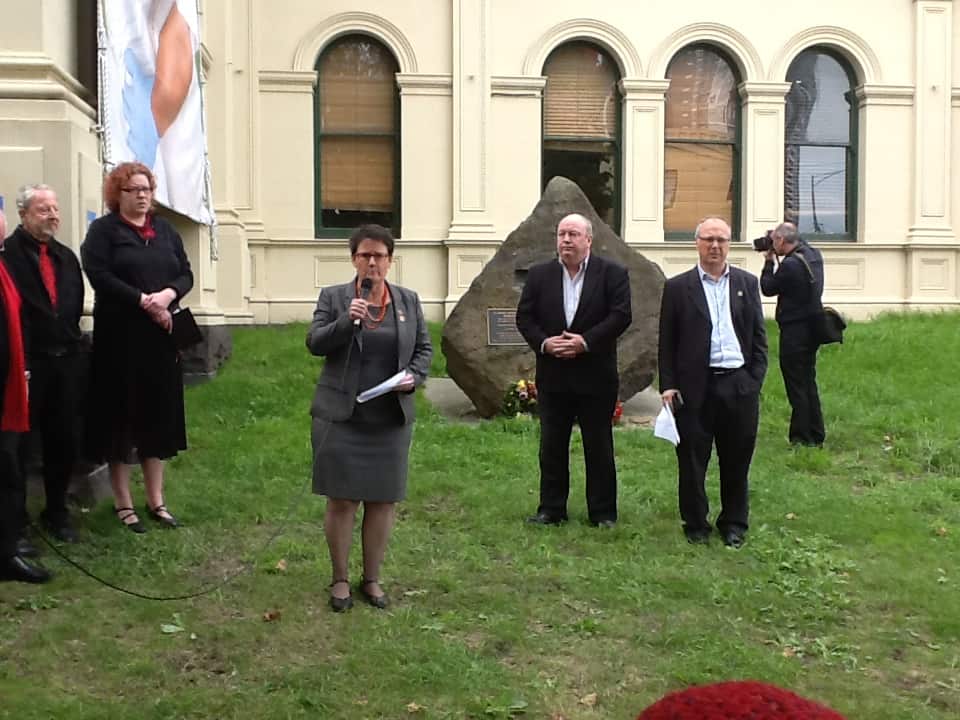
One of the most discussed posts on this blog concerned an insurance company that paid the fines awarded against a company director. The company director had been found guilty of OHS breaches that led to the death of a worker. Yesterday, South Australia’s Deputy Premier and Minister for Industrial Relations. John Rau, said that he will be taking action to close the loophole that allows for this situation. But this is unlikely to succeed and may be a distraction from the more significant issue of new penalties for deterrence.

In a media release, not yet available online, Rau states that

“Insurance should not be the preference over safe equipment and safe workplace standards….

Whilst most employers do the right thing, this dodge effectively means that the incentive for a company to provide a safe environment for its workers is diminished or eliminated.”

Rau’s current strategy for closing this loophole, which is not really a legal loophole at all, is weak. Rau, a Labor Party politician, says that he will bring the matter to the attention of the Federal Minister for Workplace Relations, Bill Shorten. However, Australia is ten days away from an election that the current (Labor) government is tipped to lose.

Continue reading “MP wants to close a dodgy loophole but vision is what’s needed”

Judicial inquiry into insulation dominated by election campaign politics

Australia’s conservative opposition leader, Tony Abbott, has announced that he intends to conduct a judicial inquiry into the government’s handling of the home insulation program (HIP) that resulted in the deaths of four workers in Queensland and New South Wales in 2009 and 2010.

Such a call would, normally, be very welcome but the timing of Abbott’s announcement brings a level of political baggage that weakens his commitment. Continue reading “Judicial inquiry into insulation dominated by election campaign politics”

Focus on Safety and compliance will come

Everyone wants clarity.  We want the comfort of knowing we are doing the right thing or that we are meeting the targets we and others set.  Workplace safety is no different but it has been complicated to an extent that clarity is unachievable and so uncertainty has come to dominate.

Occupational health and safety (OHS) consultants are often asked by business, small business in particular, “just tell us how to comply”.  Once upon a time this could be done but now the best a consultant can do is say something like “I reckon you’ll be okay, ……. if you follow through with the commitments needed, and keep your state of knowledge up to date, and take out as many liability insurances as you can, and become a member of an industry association ….and……..and…..”

The cult of “reasonably practicable” has been a major cause of this uncertainty but even prior to this was the move in Australia in the 1990s from a prescriptive regulatory structure to performance-based.

OHS compliance is now at the stage of the “best guess” or an “educated guess”, if one is lucky.  Continue reading “Focus on Safety and compliance will come”

Labour productivity is “soaring” in a period of IR/OHS variability

Mental health, happiness, well being, safety, red tape …. each of these have been linked to productivity recently in Australian discourses but, as has been mentioned previously, productivity has a flexible definition depending on one’s politics and political agenda. There is multi-factor productivity and labour productivity.  Each measure provides different results.  So where does OHS sit?

An article in The Weekend Australian on 27 July 2013 illustrates the flexible definitions and includes a rare acknowledgement on labour productivity.

“On the measure of labour productivity, which captures the output of each worker, productivity growth is in fact soaring, hitting 3.4 per cent in 2011-12. [emphasis added]

But on the broader measure, which includes the use business makes of capital equipment, growth is still a negligible 0.1 per cent and has declined on average 0.7 per cent a year ever since Labor was elected.”

The labour productivity figure is important to remember when one hears about excessive workloads, excessive hours of work and other potential causes for psychosocial hazards.   Continue reading “Labour productivity is “soaring” in a period of IR/OHS variability”

A busy week in Victoria – politics, reviews and common law

Victorian Workcover Authority (VWA),was in the pages of the Australian Financial Review in July 2013 over several issues –

  • CEO Denise Cosgrove told staff of her wonderful holiday in  Daylesford in the same email in which she advised of a review of operating budgets “including people costs” and of job losses,
  • Former Minister for Workcover, Roger Hallam, has been appointed to undertake a review of the Victorian Workcover Authority ,
  • Hallam is said to have been on the panel that appointed Cosgrove recently to the CEO post,
  • Cosgrove has pushed for a change in common law (Common law was controversially dropped during Roger Hallam’s time as Minister).

There seems to be many issues bubbling away at VWA – common law, declining profitability, “dividends” and a secret review. Continue reading “A busy week in Victoria – politics, reviews and common law”

How good intentions can lead to workplace deaths

The recent coronial finding into three workplace deaths related to an Australian government economic stimulus package in 2009 has muddled the safety profession over the political context and the OHS context of these deaths.  But the finding and resulting discussions could be the catalyst for a much-needed analysis of how decisions made with good intentions in Canberra can lead to the tragic personal and shopfloor decisions in the suburbs.

Nanny State

The Home Insulation Program (HIP) could have been interpreted as government “interference” in the market and been badged as “nanny state” economics.  However it may be possible to argue that Prime Minister Rudd could have been an economic hero if the Home Insulation Program had continued without any deaths. Continue reading “How good intentions can lead to workplace deaths”

Insurance over OHS prosecution hits the deterrence effect

In response to proven breaches of occupational health and safety laws, judges usually apply financial penalties to companies and individuals.  These penalties, like all court-ordered punishments are to deter the offenders from re-offending but also to show others the consequences of their actions.  But what if an insurance company would pay for that penalty in return for regular premium payments?  If the offender does not pay the penalty, deterrence is gone.

On 27 June 2013, a company and its director were fined $A200,000 each in relation to workplace incident that resulted in the gruesome death of one man and a near miss for another but the director had taken out a general  insurance policy and the insurance company paid out!!??.  A fine of $A200K awarded but the offender may pay no more than $A10K. Continue reading “Insurance over OHS prosecution hits the deterrence effect”

Concatenate Web Development
© Designed and developed by Concatenate Aust Pty Ltd