Creating jobs is a waste unless those jobs are safe

Coming out of recession or, at least, a global financial crisis seems to mean that the creation of jobs is the only driver of economic growth.  Governments around the world seem obsessed with employment creation but rarely is the quality of the employment ever considered.

The drive for jobs at the cost of other employment conditions such as safety was illustrated on 11 March 2011 in an article in The Australian newspaper.  New South Wales’ election is only a short while away and, as it is widely considered to be an easy win for the conservative Liberal Party, government policies are already being discussed.

“Industrial relations spokesman Greg Pearce, a former partner at Freehills, said he was aware that concerns about the workplace safety system had emerged in the legal profession.

But the Coalition’s main goal was to minimise uncertainty to encourage job creation.”

The push for jobs is also indicative of short-term political thinking. Continue reading “Creating jobs is a waste unless those jobs are safe”

One person’s red tape is another’s due diligence

Australian business is soon to be required to apply the concept of “due diligence” to occupational health and safety.  One would have expected the agency that is coordinating the changes to provide detailed guidance on what is expected from “due diligence”.  That is not the case and so, inevitably, lawyers have stepped in (some stepped in some time ago).

Part of the due diligence obligation is that it is necessary to “verify… compliance with the business’ safety obligations” and this is unavoidably achieved by audits and subsequent paperwork.  In fact, paperwork is a vital element of support for “evidence-based decision-making”.  So it is with some concern that one sees the New South Wales WorkCover Authority is number three on the NSW Business Chamber’s list of “top 5 red tape offenders”(?), released on 9 March 2011 . Continue reading “One person’s red tape is another’s due diligence”

Australian Football’s corporate approach to OHS

Recently the CEO of the Australian Football League (AFL), Andrew Demetriou addressed a breakfast gathering in Melbourne on the issue of “OHS in the AFL”.  He spoke almost entirely about policy initiatives without specifically addressing occupational health and safety but after a while we came to understand he was speaking of OHS from his senior executive perspective rather than the level where traditional control measures are implemented.

This was a legitimate approach to OHS but one that is rarely heard, perhaps because the AFL is a unique sporting body.  There was no mention of concepts dear to the hearts of CEOs such as Zero Harm or Safety Culture.  In fact there was hardly even a mention of Leadership.

Continue reading “Australian Football’s corporate approach to OHS”

OHS harmonisation to result in a substantial increase in costs to business

Australian lawyer Andrew Douglas has provided a frank assessment of the OHS harmonisation process instigated by the Australian government to reduce red tape and administrative costs of safety.  In Smart Company on 1 March 2011, Douglas wrote:

“…the Model Act, the regulations and documents that flow from it will dramatically increase state-based businesses legislative compliance, will massively increase the paperwork proving compliance and will inevitably lead to a substantial increase in costs to business in managing safety and OHS.”

Most State governments continue to support the harmonisation process, in almost all its elements, as a positive for business. So what’s the story here?

Andrew Douglas’ opinion needs serious consideration as it is one of the few contrary positions expressed to date. Continue reading “OHS harmonisation to result in a substantial increase in costs to business”

Rolling the sleeves up – a good OHS technique.

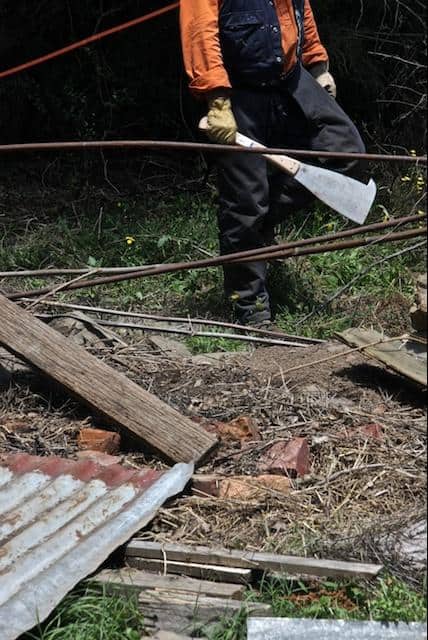
My father has a smallish block up in the bush, north-east Victoria in the Ovens Valley.  He can’t live there safely anymore, but since he built the place himself and with all the family history it has, it’s a place that has to be retained, and protected from bushfire as much as we reasonably can manage.

My partner and I, plus Dah (and a coupla friends) spent a few weeks there around Christmas and New Year doing lots of scrub clearing, garden things and general tidying up in readiness for the predicted return to hot dry summers after that naughty La Nina begins to fade.   These sort of work trips have been going on over quite a few summers.

The big range of jobs on these tidying-up trips range from trimming large branches, working up on roofs, scrub clearing, lots of load shifting, burn-offs, using lots of different powered equipment (chainsaw, scrub-cutters) and dragging out cut scrub with the ute etc etc.

Doing this work has me often giving lots of thought to doing the job efficiently and safely, and observing my own safety stuff-ups.  It gives me a chance to reflect on the safety system stuff we spend lots of time lecturing punters on and how practical it all is when there is limited time to get the job done, it’s 30 degrees Celsius, and the humidity is at a zillion; in other words, in work conditions lots of people have to deal with all the time. Continue reading “Rolling the sleeves up – a good OHS technique.”

You can lead a stressed horse to water……

England’s Trades Union Congress (TUC) released results of a survey of union representatives on 24 February 2011 that shows that workplace stress is

“now by far the most common health and safety problem at work.”

Even taking into consideration the inherent bias of such union surveys of reps, the figures are significant.  The 24 February 2011 media release states:

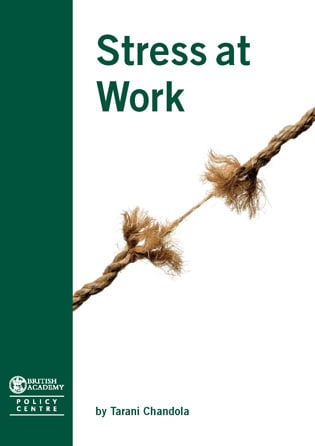
“Nearly two thirds (62%) of reps say that stress is in the top five problems faced by the workers they represent and more than a quarter of reps (27%) pick out stress as the hazard at work that most concerns them.  Another recent report from the British Academy states that the global economic downturn is to blame for the soaring stress levels due to the sharp rise in job strain and job-insecurity; both determinants of work-related stress. In the last 2 years, work stress levels rose by more than 4%, compared to the previous rises of 0.1% from 1992 to 2009.” [link added]

So what can be done to reverse this trend?

If the global economic downturn has generated increased stress levels, OHS practitioners and activists need to look at the big picture and begin pushing for better economic health – an action that, outside of the union movement, hardly ever gets a mention.

If OHS principles are based around the need to eliminate hazards then OHS professionals should be strong advocates of sustainable development where the mental health of workers needs as much support for sustainability as the environment receives, if not more. Continue reading “You can lead a stressed horse to water……”

A new safety professional association for Australia

It looks like the safety profession in Australia is to become lively with competition coming from a new starter.  SIWA Limited became a reality this week.  SIWA describes itself as :

“…a new professional association and Australia’s first truly National ‘Member’ Organisation dedicated to providing professional support for, and service to, persons and corporate entities engaged across the Australian Safety and Health industry.”

Those in the safety industry in Australia would perceive some “digs” at the Safety Institute of Australia (SIA) in the quote above and this is not surprising as some the SIWA’s leadership comes from former SIA members in Western Australia.  However, safety professionals should embrace the chance for diversity and choice in their professional membership options. Continue reading “A new safety professional association for Australia”

Concatenate Web Development
© Designed and developed by Concatenate Aust Pty Ltd