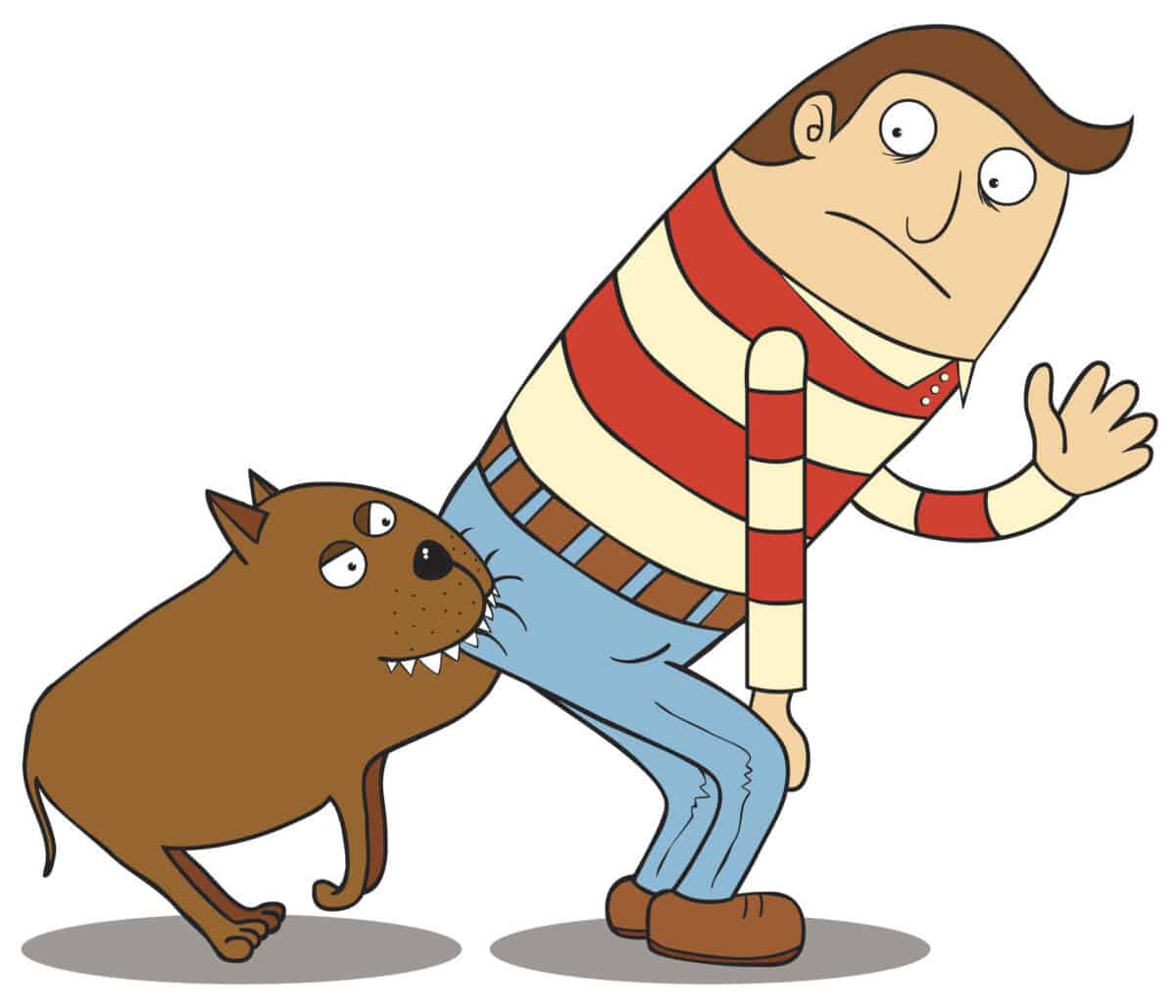
Now there is too much mental health information, and it’s like toothpaste

Australia is experiencing a boom in occupational health and safety (OHS) information about work-related psychological harm, including sexual harassment at work. This level of information is long overdue, but a consequence of this “boom” is that employers can be very confused about which information to use and which source they should trust or even what relates to their specific circumstances, especially after years of denying there is a problem.

Putting on my consultant hat, I would advise any State-based organisation to comply with the OHS guidances issued by that State’s OHS regulator. If a national company, look towards the guidance of Comcare or Safe Work Australia for the national perspective. The challenge is greater for companies that operate in multiple States, but these have been rumoured to be less than 10% of Australian businesses. If multi-State, they should be big enough to have the resources for OHS compliance.

However, some State-based mental initiatives have evolved into a national platform.
Subscribe to SafetyAtWorkBlog to continue reading.
Subscribe Help
Already a member? Log in here

WorkSafe Victoria intends to change the farm safety culture

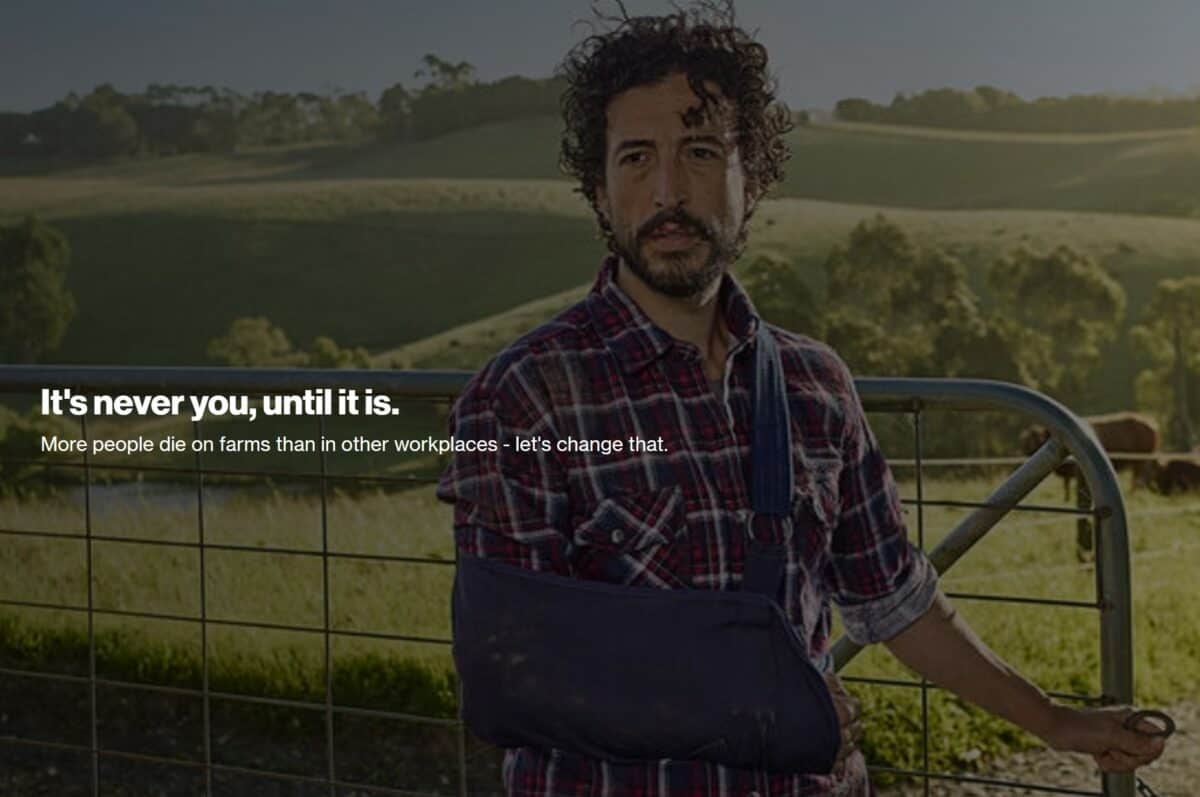
WorkSafe Victoria has launched a new campaign about health and safety on farms. Safety and health in this sector needs constant promotion as high rates of death and serious injury persist. The latest video campaign deserves a broad audience and hopefully is pushed heavily on television in rural areas and through local newspapers (what’s left of them) as these media continue to be major influences.

Farming is one of the hardest industries in which to achieve tangible change in occupational health and safety as discussed only recently on this blog. This latest campaign is fresh and looks good but the message is confusing if, as WorkSafe Victoria claims, the aim is to affect cultural change in the agriculture sector. The video takes a narrow focus on the male farmers implying they are the major cause of injuries. (Gender is a sensitive issue in farming, even though the statistics show older male farmers continue to be at high risk of injury) There is a little bit of “blame the worker” which is contrary to most strategies for cultural change.

Subscribe to SafetyAtWorkBlog to continue reading.
Subscribe Help
Already a member? Log in here

Business voices add weight to OHS change

On February 27 2012, The Australian reprinted/tweaked a Harvard Business Review (HBR) article on Burnout. A significant feature of the article is the acknowledgement of organisational factors as contributing to burnout and other workplace mental health hazards. The situation seems to have changed as these types of acknowledgements were harder to draw out of psychological health experts when SafetyAtWorkBlog spoke to some in 2019.

However, there are also clear parallels to Australian research into job stressors that could have helped HBR’s author Dave Lievens add weight to the decades-long research of Michael Leiter and Christina Maslach.

Subscribe to SafetyAtWorkBlog to continue reading.
Subscribe Help
Already a member? Log in here

The PM expects Australian workplaces to be “as safe as possible”

Prime Minister Scott Morrison has set the occupational health and safety (OHS) bar unachievably high for Australian businesses.

Morrison is embroiled in a scandal about an alleged rape in a ministerial office, his knowledge of and response to it, and his government’s duty of care to political employees. Below is his response to this question from a journalist:

JOURNALIST: “What is your message to young women who might want to get into politics and see this and are just horrified by it. What’s your reassurance to them about getting involved in the Liberal party or other parties? “

Subscribe to SafetyAtWorkBlog to continue reading.
Subscribe Help
Already a member? Log in here

Business continuity planning by another name

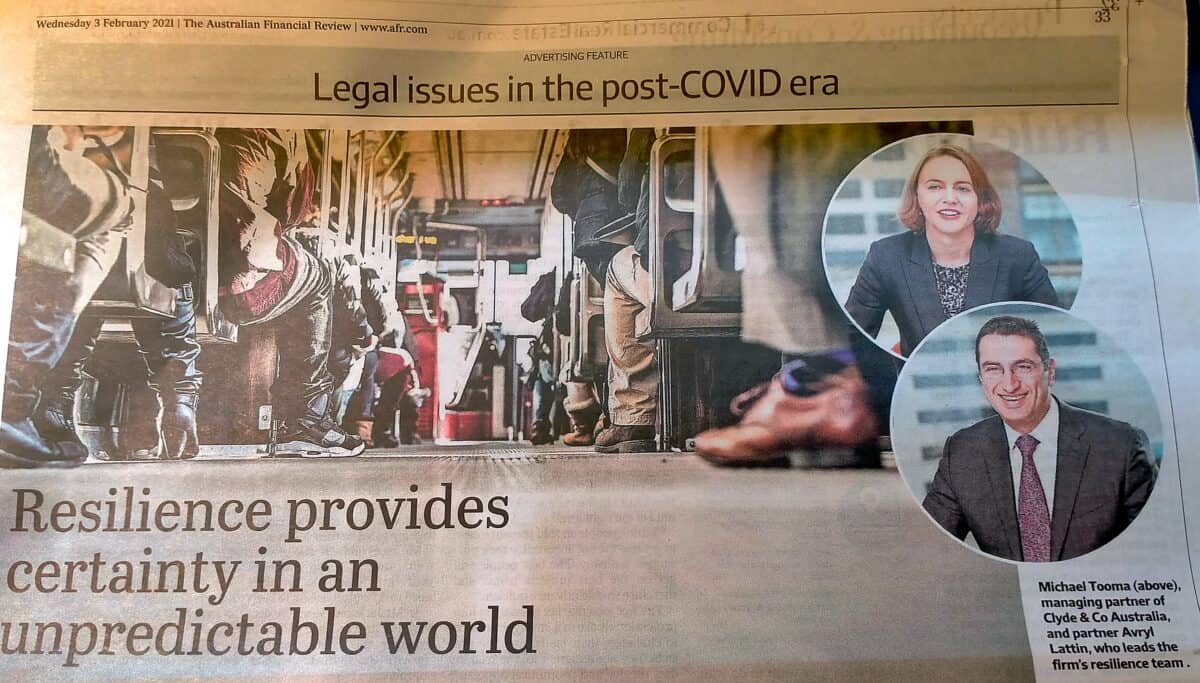
Occupational health and safety (OHS) gets a mention in a full-page advertorial in the Australian Financial Review (AFR) (February 3 2021, page 33) revolving around the legal and business services of Clyde & Co. The advertorial contains a good example of the contemporary business jargon such as “organisational resilience” – a concept that has come to the fore during the COVID-19 pandemic.

“Organisational resilience” has several definitions but here is one used by the British Standards Institution:

“….the ability of an organization to anticipate, prepare for, respond and adapt to incremental change and sudden disruptions in order to survive and prosper.”

This has very strong similarities to the much longer-established concepts of “business continuity” or sustainability within which OHS has dabbled for decades.

Subscribe to SafetyAtWorkBlog to continue reading.
Subscribe Help
Already a member? Log in here

We complicate what we know works

There is one simple way of improving occupational health and safety (OHS) in any workplace – have the senior managers and executives be more in touch with the manufacturing process or provision of services. This will improve their understanding of the risks in their businesses and, hopefully, cause them to see the importance of improving health and safety, either for increased profitability or for the quality of life of their workers. Often the executives are too busy to take the time to visit, learn and listen and Industrial Manslaughter laws are intended to cut through this business attitude.

Recently SAI Global issued a media release about Industrial Manslaughter laws which has more to do with its certification services than the improvement of worker safety or prevention of harm. Stripping away the marketing, the media release quotes Kiran Bhagat saying:

“Industrial manslaughter laws legislated in Victoria, Queensland, Western Australia, the Northern Territory, and the ACT place legal liability squarely at the feet of the C-suite and company directors for industrial manslaughter. Organisations must ensure their compliance to OHS laws is over and above current standards and, besides, aim to meet and exceed international standards as a safeguard. The highest-ranking leaders in an organisation must be proactively involved in these processes.”

There are few OHS professionals who would disagree with this.

The content that lets this media release down and puts it into the marketing folder rather than the OHS folder is the prominent promotion of its certification services, that should be able to stand on their own content such as this in the final paragraph:

Subscribe to SafetyAtWorkBlog to continue reading.
Subscribe Help
Already a member? Log in here

Ask not what WorkSafe can do for you, but what you can do to improve safety

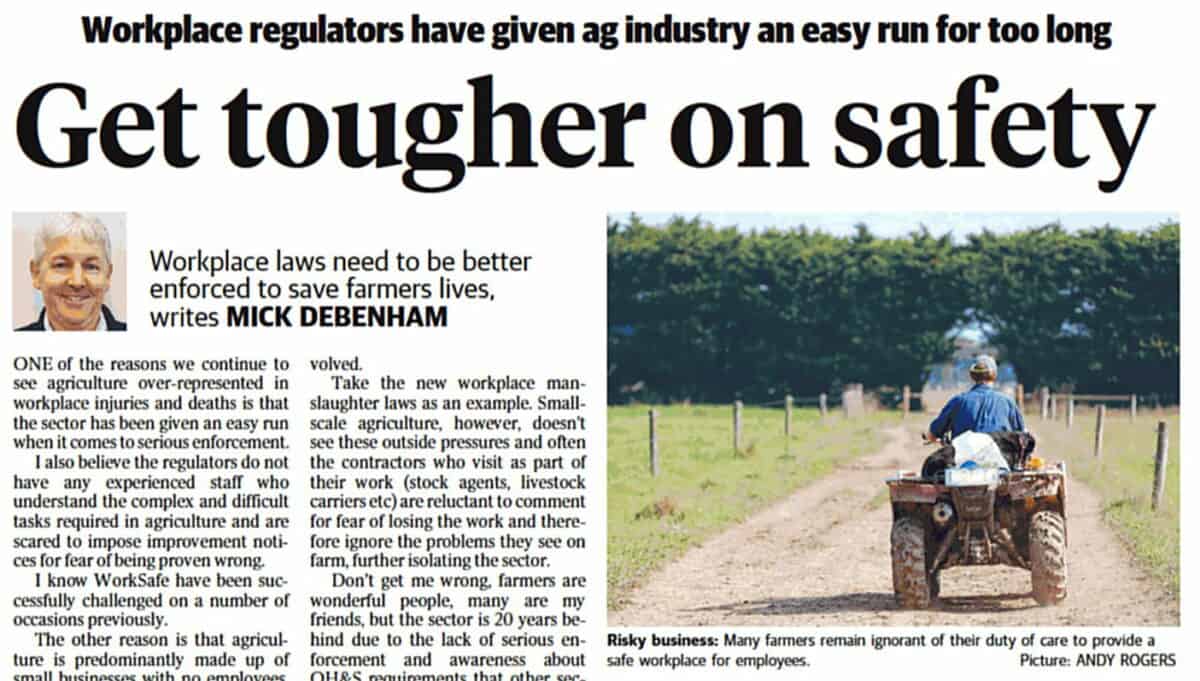
One of the most difficult industries in which to achieve occupational health and safety (OHS) improvements is farming, especially in areas where farming continues to be done by small family units. The safety culture of farming is unique as the workplace is embedded in community and rural culture. Some people believe that OHS regulators have given the agricultural industry an easy run for too long, as stated by Mick Debenham in a recent opinion piece in The Weekly Times (paywalled), but farmers should perhaps ask themselves why people continue to die on their farms and what they can do to change this.

Subscribe to SafetyAtWorkBlog to continue reading.
Subscribe Help
Already a member? Log in here
Concatenate Web Development
© Designed and developed by Concatenate Aust Pty Ltd