
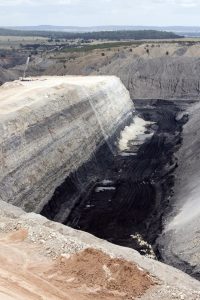
 Discussions about safety in the mining sector continue with recent debate in the Queensland Parliament but change continues to be at a slow pace and in a manner that reflects “business as usual” rather than being innovative and establishing a sound base for business to grow, and grow safely.
Category: business
Don’t be tough, be effective
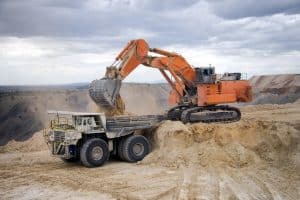
On 31 October 2018, the Queensland Government got tough on safety in its mining and resources sector. But how tough is tough? A press statement says that
“Parliament today backed maximum penalties close to $4 million for mining companies that fail to keep their workers safe. As well, mines inspectors will be able to hit mine operators with tough new fines of up to $130,550 without taking them to court.”
For those of us who do not have $4 million to cover prosecutions over occupational health and safety (OHS) breaches this may indeed sound “tough” but recent inquiries and reviews into OHS enforcement question whether financial penalties are the most effective way of improving workplace health and safety.
Liability insurance products get some serious criticism
 In 2017 the Queensland Government was advised to prohibit business insurance products that cover the costs associated with financial penalties that may occur after a successful prosecution of a breach of work health and safety (WHS) laws. This recommendation (page 47) was one of only two that were not accepted by the government and which were “referred to the WHS Board” for further consideration (footnote page 3).
On 17 October 2018 the Senate Education and Employment Committee’s report into industrial deaths similarly recommended the Commonwealth, State and Territory governments:
“amend the model WHS laws to make it unlawful to insure against a fine, investigation costs or defence costs where they apply to an alleged breach of WHS legislation;” (Recommendation 21, page xi)
Given the
Bad bosses
 Benjamin Artz, Amanda H. Goodall and Andrew J. Oswald determined that
“There are no published papers — to our knowledge — that assess in an internationally consistent way the rarity or commonness of ‘bad bosses’.”
So they undertook there own research, published under the title “
ACCI on silicosis
The business sector of Australia has been remarkably quiet on the recent media attention given to hazard of silicosis in, particularly, the synthetic stone commonly used as kitchen benchtops. However the Australian Chamber of Commerce and Industry (ACCI) did make a media statement.
It largely emphasised its role as a member of Safe Work Australia and the action taken on silicosis matters through that mechanism. However membership of a tripartite consultative mechanism does not mean that that is the only pathway for change. SafetyAtWorkBlog put some questions to ACCI about silicosis and its Associate Director, Work Health & Safety and Workers’ Compensation Policy, Jennifer Low, responded:
SAWB: The media statement says that ACCI will continue to be active through its representation on Safe Work Australia. Are there any specific dust-related initiatives that ACCI is recommending to its members? Perhaps in relation to supply chain safety on high silica-content products? Continue reading “ACCI on silicosis”
Families get a good deal from the Industrial Deaths inquiry
Will the recommendations of the Senate Committee’s inquiry into industrial deaths benefit relatives of deceased workers? Yes, mostly.
It seemed like relatives gained greater access to this Senate Committee than in other inquiries. Some public hearings were held with only relatives presenting. This is a major change. The transcripts of the 2012
WorkSafe acts on allegations of gruelling workplace conditions in a Victorian law firm
 On October 12 2018 the Australian Financial Review (AFR) published an exclusive article about an investigation by WorkSafe Victoria into excessive working hours at an Australian law firm, King & Wood Mallesons (KWM). The article was later expanded on line.
There are several curious elements of this report that could reflect other workplaces that may experience sudden high workload demands and fatigue. Some seem to see the significance of this article as being less about the workloads and fatigue but more about WorkSafe Victoria’s involvement in an industry sector where it does not usually play.
The Australian Government announced a Royal Commission into the Banking and Financial sectors in 2017. It was created urgently and given only 12 months to conclude its investigations. As a result banks and financial institutions