Suicides in China – is this a Foxconn problem or an Apple problem?

Foxconn, a large technology manufacturer in China has a cluster of suicides.  This issue is getting more attention than normal in Western media because the company manufactures products for Apple and the Apple iPad went on sale around the world at the same time news about the suicides broke.

The question that must be asked is “is this a Foxconn problem or an Apple problem?” Continue reading “Suicides in China – is this a Foxconn problem or an Apple problem?”

What is the OHS “public interest”?

On 7 May 2010 Judge Lacava of the County Court of Victoria increased the $A25,000 fine applied to A Bending Company to $A75,000.

WorkSafe’s Acting Director for Health and Safety, Stan Krpan, said in a media release:

“The fact that the Director of Public Prosecutions [DPP] found the original penalty inadequate, and the increase in the fine on appeal, demonstrates the courts’ attitude towards health and safety offences.”

The DPP made the appeal to the County Court after a request for review of the original fine was made by WorkSafe Victoria.  According to the judge’s decision (not yet available online):

“The appeal by the Director is made pursuant to section 84 of the Magistrates’ Court Act 1989. The section gives the Director the power to appeal to this Court “if satisfied that an appeal should be brought in the public interest“.” [emphasis added]

So how was the public interest served by increasing the fine by $A50,000? Continue reading “What is the OHS “public interest”?”

Planning for an ageing workforce – statistical clues

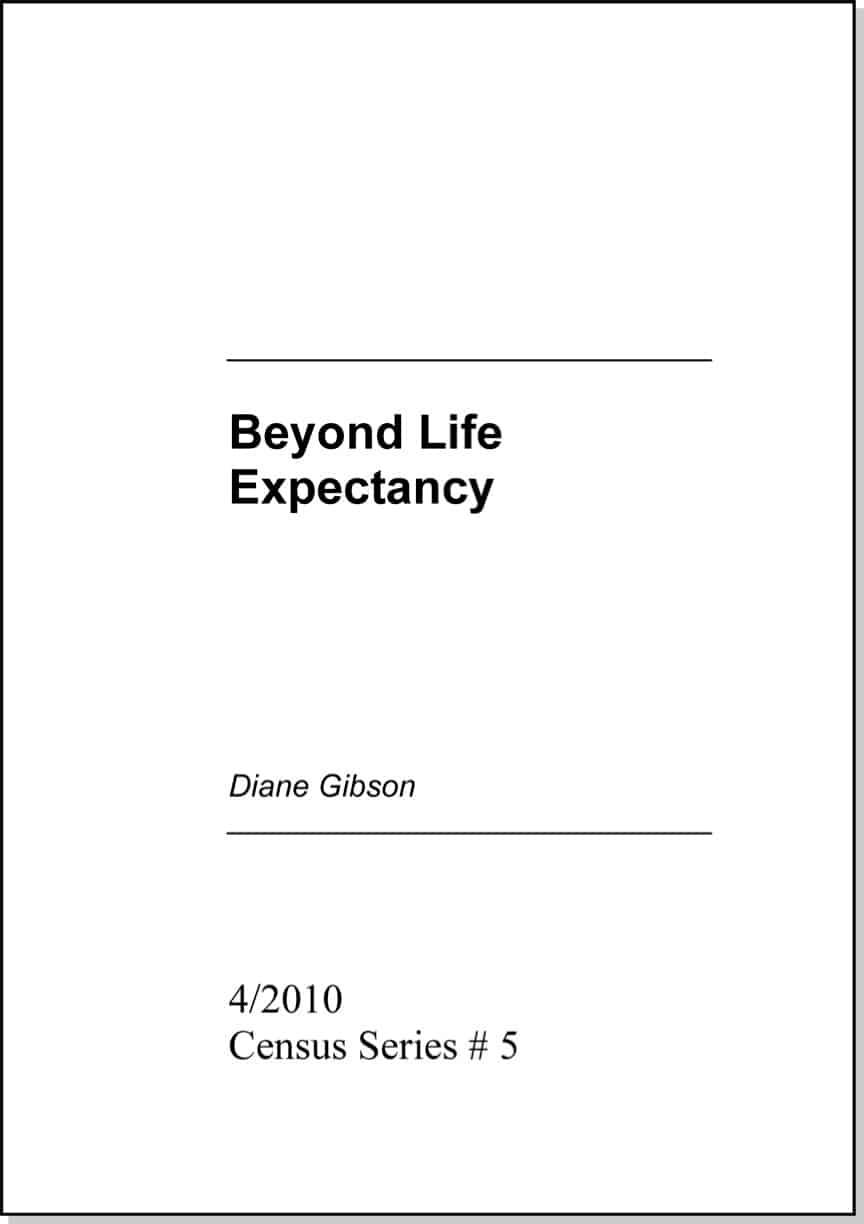
There has been a lot of media attention on the potential impact of an ageing population on all aspects of our society, workplaces included.  In terms of OHS, there may be an increased risk of injury as people are encouraged to work longer and past the compulsory retirement age of around 60 to 65.  But it is worth looking beyond the newspaper reports to get a better understanding 0f the level of risk presented by current population trends.

A report by Professor Diane Gibson for the Academy of Social Sciences in Australia is a terrific way to begin to comprehend the reality of the risk.  The report, Beyond life expectancy,  was released in May 2010 and provides an interpretation of the 2006 Australian Census data.  From a cursory scan of the contents there are important facts that challenge us, particularly if we manage, in any way, people in the workplace. Continue reading “Planning for an ageing workforce – statistical clues”

Guidance on the impacts of a workplace death

A short time after a traumatic death of a family member will cause the family to feel they are in a mental spin.  Not only are the usual funeral arrangements required but there can seem to be involvement in a personal loss from a mess of government departments and legal bodies.

It is not expected that all families have a manual to life and death but there is information for families who may have to face a workplace death.  Perhaps, more importantly, this information should be read by safety professionals so that they understand the social and familial complexities of workplace incidents.  Companies may call in the lawyers but there is also an obligation to their employees and families and guides, like the Kit for Families produced by the Workplace Tragedy Family Support Group, may help put all the processes into perspective.

Other online guidance material is available from

The Victorian Trades Hall Council

WorkCover New South Wales

SafeWork SA

One regulator’s perspective can be found at Health & Safety Executive

SafetyAtWorkBlog readers are welcome to suggest other similar online  guidelines.

Kevin Jones

New Mesothelioma Registry and government answers asbestos questions

The Australian Workplace Relations Minister, Julia Gillard, this morning launched the latest Australian Mesothelioma Registry.  SafetyAtWorkBlog took the opportunity to ask Safe Work Australia some specific questions about asbestos and government policy.  Their responses are below.

The government has awarded the contract for the new Australian Mesothelioma Registry to a consortium led by the Cancer Institute of NSW. Continue reading “New Mesothelioma Registry and government answers asbestos questions”

Australia’s national safety award winners

This evening in Canberra, Safe Work Australia announced the winners of the 5th Annual Safe Work Australia Awards. The profiles below are provided by Safe Work Australia.

The winners are:

Best Workplace Health and Safety Management System – Private Sector

GHD, South Australia

“GHD South Australia uses an electronic workplace health and safety management system accessible to all employees and has a workflow element to ensure that the necessary safety analysis and reporting is undertaken for all projects. Continue reading “Australia’s national safety award winners”

How revolutionary could the Work Health and Safety Act be?

In April 2010, the Australian Government is busy negotiating a new health reform package.  It is likely that the next stage of the reforms will be in the Australian Senate which brings Nick Xenophon into the negotiations.  On 21 April 2010,  The Australian reported Xenophon saying:

“…he had “an open mind” on the deal brokered by the Prime Minister yesterday but wanted to ensure it had a strong emphasis on preventative health, which was the ultimate “test of the health system”.”

Senator, Nick Xenophon, provides a good example of how personal ideals cross social boundaries and professional disciplines.  His focus on the prevention of harm covers public safety and workplace safety illustrates the interconnection that an ethical stance can bring social issues that are governed under different laws and expectations. Continue reading “How revolutionary could the Work Health and Safety Act be?”

Concatenate Web Development
© Designed and developed by Concatenate Aust Pty Ltd