

The community in Melbourne, Australia, has been talking about little else but a sex abuse scandal in the childcare industry. (It makes a difference from talking about beef wellingtons.) The media and the government are announcing and investigating various regulatory and enforcement options to prevent a recurrence. This abuse is a grave concern and not one that was unexpected, as earlier inquiries had identified the risk. The prevention of sexual harm to children has an occupational health and safety (OHS) context that should not be ignored.
Category: compliance

NZ OHS reform is all sticks and carrots of questionable quality
Recently, New Zealand’s Minister for Workplace Relations and Safety, Brooke Van Velden, was interviewed for almost half an hour by Jack Tame on her government’s proposed changes to occupational health and safety (OHS) laws. The interview was informative and entertaining, as it explained some aspects of the OHS changes, but also showcased a Minister who was uncomfortable with being questioned.
OHS Challenges: Neglected Business Element Faces Profit Conflicts and Misaligned Perspectives
Sometimes you need to stop what you’re doing and reflect. This could relate to life, work, values or more. I was invited to talk to the Central Safety Group (CSG) this week on “Challenging Mainstream OHS Views”, so I stopped, thought, and jotted down some personal opinions to discuss. It was a helpful exercise.
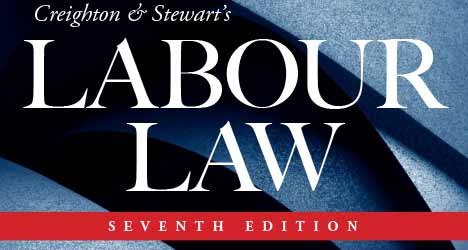
Whether it’s a book or a brick, it is invaluable
The latest edition of Creighton & Stewart’s Labour Law book (7th edition) has been released. I say “book”, but it is almost a brick, weighing in on my scales at 1.8 kilograms (see photo below). The book is excellent and probably authoritative, with the primary negative being its size and format. This article focuses on the 79-page occupational health and safety (OHS) chapter written by Richard Johnstone.
The most recent guidance on office safety, including psych safety and working from home
In December 2024, WorkSafe Victoria released “Office Health and Safety – A Guide for Employers“. Sadly, it seems to have (half) dumped the Officewise brand. If WorkSafe had kept it, the guide would have been part of an illustrious history stretching to the last century when the first edition was published in 1995. The new guide has some interesting advice on occupational health and safety (OHS) issues related to working from home, but workplace mental health seems more prominent than in earlier editions.

Lessons on management of heat from the Australian Tennis Open
One of the best articles about managing heat exposure at work is by Madi Chwasta of the Australian Broadcasting Corporation, who wrote about the Australian Open tennis tournament.
Tennis is usually played outdoors in summer, at least in Australia. The Australian Tennis Open, held in Melbourne, was heavily promoted and had a high public attendance rate. Some tennis matches are conducted in facilities with retractable roofs, but many others are held on outdoor courts with limited shade and no air conditioning.

This 2025 forecast offers mixed messaging
Risk and governance software company Navex published a forecast for 2025 which has some occupational health and safety (OHS) relevance. It wrote “Rising temperatures in the workplace: Addressing civility concerns” which said
“Workplaces increasingly mirror the polarization we see in the world, with tensions surrounding diversity, equity and inclusion (DEI), environmental, social and governance (ESG) initiatives, and political differences bubbling to the surface in workplace discord. Ideally, the workplace should be a collaborative environment, but now is a minefield of potential heated disagreements, making workplace civility a top priority for organizations.”