Timeline for PC Mental Health Inquiry

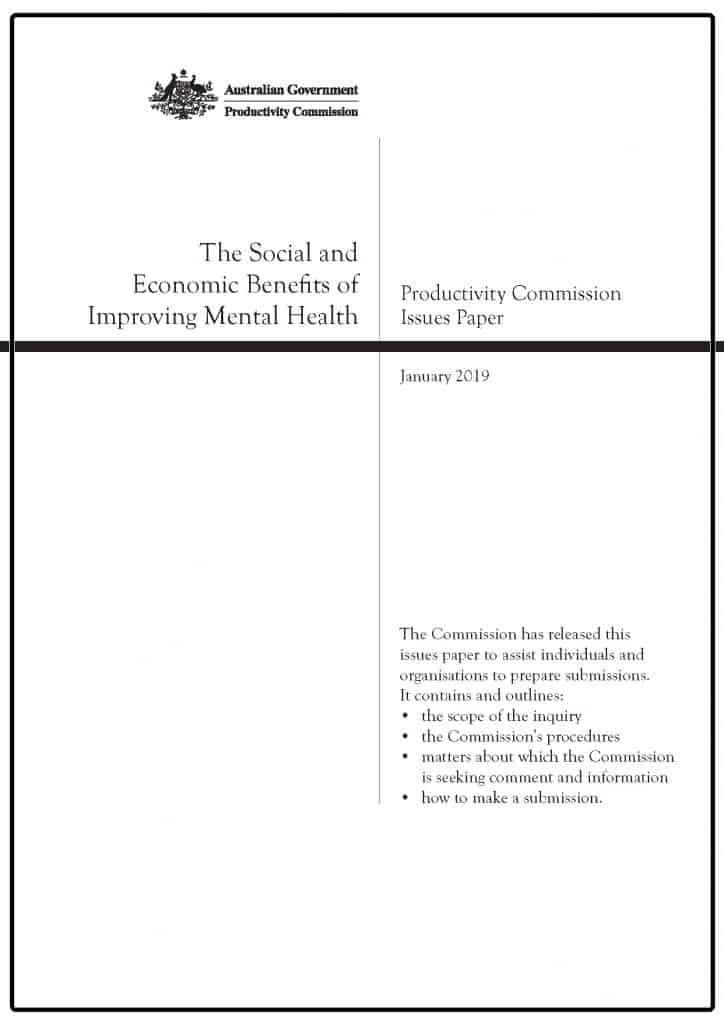
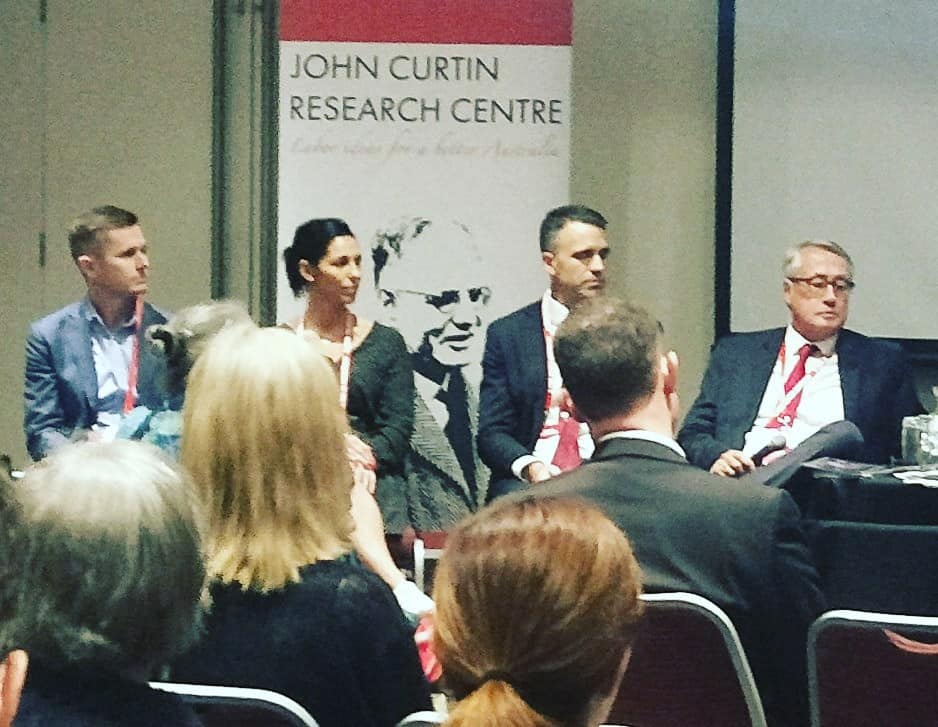
One of the Commissioners of Australia’s Productivity Commission (PC), Julie Abramson, spoke briefly at a lunchtime seminar on Mental Health and the Economy, hosted by the Committee for Economic Development of Australia.  It is very early in the PC’s inquiry into the role of improving mental health but Abramson was able to provide some draft timelines.

Abramson told the audience that the Presiding Commissioner on this inquiry

Subscribe to SafetyAtWorkBlog to continue reading.
Subscribe Help
Already a member? Log in here

Multidisciplinary analysis of safety culture

Managing occupational health and safety (OHS) is most successful when it considers a range of perspectives or disciplines in identifying practicable solutions.  Books are often successful in a similar multidisciplinary way but it is becoming rarer for books to contain a collection of perspectives.  A new book has been published on Safety Culture which matches this multidisciplinary approach.

Subscribe to SafetyAtWorkBlog to continue reading.
Subscribe Help
Already a member? Log in here

‘Safety Clutter’ and what to do about it

Many companies have bloated workplace procedures.  Many of these seem to involve workplace health and safety.  Some people blame this on a bureaucracy designed in the olden times by someone, that somehow still exists and is maintained by someone or some process that no one sees or knows. Some prominent Australian researchers have looked into this issue and have written about “safety clutter”* which they say is:

“…the accumulation of safety procedures, documents, roles, and activities that are performed in the name of safety, but do not contribute to the safety of operational work.”.”

Subscribe to SafetyAtWorkBlog to continue reading.
Subscribe Help
Already a member? Log in here

Where is the Senate Inquiry into Industrial Deaths heading?

As readers would realise, the transcripts for the Australian Senate inquiry into industrial deaths are fascinating. It is worth looking at the other presentations and questions on the day when the Australian Chamber of Commerce and Industry received a grilling as this provides insight into how to present to a government inquiry addressing occupational health and safety.

The Senate Committee has probably heard more from relatives of deceased workers than has any other similar inquiry, perhaps even the Workplace Bullying inquiry in which this Committee’s member Deborah O’Neill participated.  This is an indication of the shift in OHS over the last few years where the human impacts of workplace safety failures, what some describe as the “lived experience”, gain an influence that used to sit with professionals and acknowledged subject matter experts.

Source: istockphoto, Credit: jotily – https://www.engel.ac/
Subscribe to SafetyAtWorkBlog to continue reading.
Subscribe Help
Already a member? Log in here

A bad day for ACCI at the Senate Inquiry into Industrial Deaths

Jennifer Low, Associate Director of the Australian Chamber of Commerce and Industry addressed the Senate Inquiry into Industrial Deaths in Perth on August 30 2018.  Much of her presentation would be familiar to occupational health and safety professionals as it reflects the ideological position that the ACCI has put to countless inquiries over almost 20 years.  It is fair to say that the ACCI did not have a good day at the Inquiry.

Low’s presentation commenced with a restating of the general commitments to safety and that the ACCI and its members hold the importance of OHS as a “fundamental belief”. This was followed up with

“Our employer network feels strongly that the prevention for workplace incidents, injuries and fatalities is a shared responsibility.” (page 1, emphasis added)

This

Subscribe to SafetyAtWorkBlog to continue reading.
Subscribe Help
Already a member? Log in here

Inquiry into industrial deaths moves to Adelaide

Conversations about occupational health and safety (ohs) occur very rarely unless you are an educator who talks about this stuff every day.  We manage health and safety and advise on it but rarely get a chance just to talk about safety with peers.  This is where documents like the recent transcripts of Australia’s Senate inquiry into industrial deaths can be helpful.  For instance Andrea Madeley said this on August 29 2018 in Adelaide:

“I do not think that the Robens model of work health and safety was ever based on anything beyond encouragement. It was a model designed to lift and encourage employers, not to enforce laws, and we see that today, still. The guiding principles, even today, on enforcing work health and safety laws really are more about encouraging and educating. I don’t have a problem with that as long as we’re not treating the people that are suffering in the process like outcasts. Their loss is virtually ignored unless you happen to be a financial dependant.”

Given that it occurred almost fifty years ago, it is easy to forget the times in which Lord Robens issued his report into the management of workplace health and safety.  It was controversial in its day and the Australian iterations of his OHS principles were similarly opposed when they were introduced in the 1980s. 

Subscribe to SafetyAtWorkBlog to continue reading.
Subscribe Help
Already a member? Log in here

One billboard outside Melbourne, Victoria

The Safety Institute of Australia (SIA) is likely to have a different brand name in a couple of months.  Following a member survey some weeks ago SIA Board members have been travelling Australia consulting with members.  This may seem a bit arse about face but a process without consultation would have been a major problem.

Last night was Melbourne’s turn with a forum of about a dozen people hosted by Naomi Kemp.  The survey results are inconclusive so should the rebranding exercise proceed?

Kemp provided some context

Subscribe to SafetyAtWorkBlog to continue reading.
Subscribe Help
Already a member? Log in here
Concatenate Web Development
© Designed and developed by Concatenate Aust Pty Ltd