
The start of School Holidays is always a good time to issue reminders of the risks associated with farms, beaches and wherever holidaymakers go. The Victorian Farmers Federation (VFF), recently reinvigorated in its occupational health and safety (OHS) efforts, has released a new safety booklet – “Child Safety on Farms – A practical guide for farming parents“. However, the coverage of this guide by the ABC is a little loose.
Category: culture

SafeWorkSA’s approach to psychological harm is as much as it can do but doesn’t have to be
The harm presented by working in Australia’s mining sector has been a concern for a long time. Over the last decade or two, the psychosocial harm from the same work has come to the fore. The occupational health and safety (OHS) responsibility sits clearly with the employers who, in Australia, are often well-resourced national and international corporations. Recently SafeWorkSA issued a media release entitled “Sexual harassment in mining sparks campaign“. SafetyAtWorkBlog took the opportunity to put some questions to the South Australia OHS agency, to which it has responded.

Plants, cake and mental health
On mental health, a clinical psychologist, Dr Sanah Ahsan wrote in The Guardian recently that:
“…. I’ve seen first hand how we are failing people by locating their problems within them as some kind of mental disorder or psychological issue, and thereby depoliticising their distress.”
The Guardian, 6 September 2022
This perspective, enlightened for psychologists, is an established position for the Occupational Health and Safety (OHS) advocates. But OHS advocates have been traditionally weak and sometimes timid outside of the trade union movement. Most employers will pay more attention to the OHS position on mental health when it is spoken by one of their own or by a more respected professional.
Multidisciplinary approach to work-related suicides (Open Access)
Recently Denmark hosted the 19th European Symposium on Suicide and Suicidal Behaviour. Workplace suicide was on the agenda, and SafetyAtWorkBlog was able to pose some questions to a leader in suicide research, Professor Sarah Waters. Below is an illustrative extract:
Continue reading “Multidisciplinary approach to work-related suicides (Open Access)”“….If we reduce suicide to a mental health problem that is located in the mind, then there is no need to question the wider social structures and power relationships in which the individual is embedded. Suicide in my view is a political and a societal problem that is shaped by the wider social forces of which the individual forms part….”
Traditional suicide prevention strategies struggle for relevance
September 10 is World Suicide Prevention Day. Many organisations are and will be, releasing information about suicides but not really the prevention of suicides, more the management of potential suicides. It is a curious international day as it is almost a warm-up to Mental Health Day (and, in some places, Month).
This week Suicide Prevention Australia (SPA) released a report based on a survey of 283 responses, the majority from members of SPA. It’s not a representative survey, but it gained a fair bit of media attention. It also raises consideration of the meaning of a “whole-of-government” approach and the role of Regulations in preventing suicides.
Regardless of the peculiar survey sample, the media release accompanying offered a statement that should have all mental health and suicide prevention professionals reassessing their strategies.
Lymph v Blood – OHS at the Jobs & Skills Summit
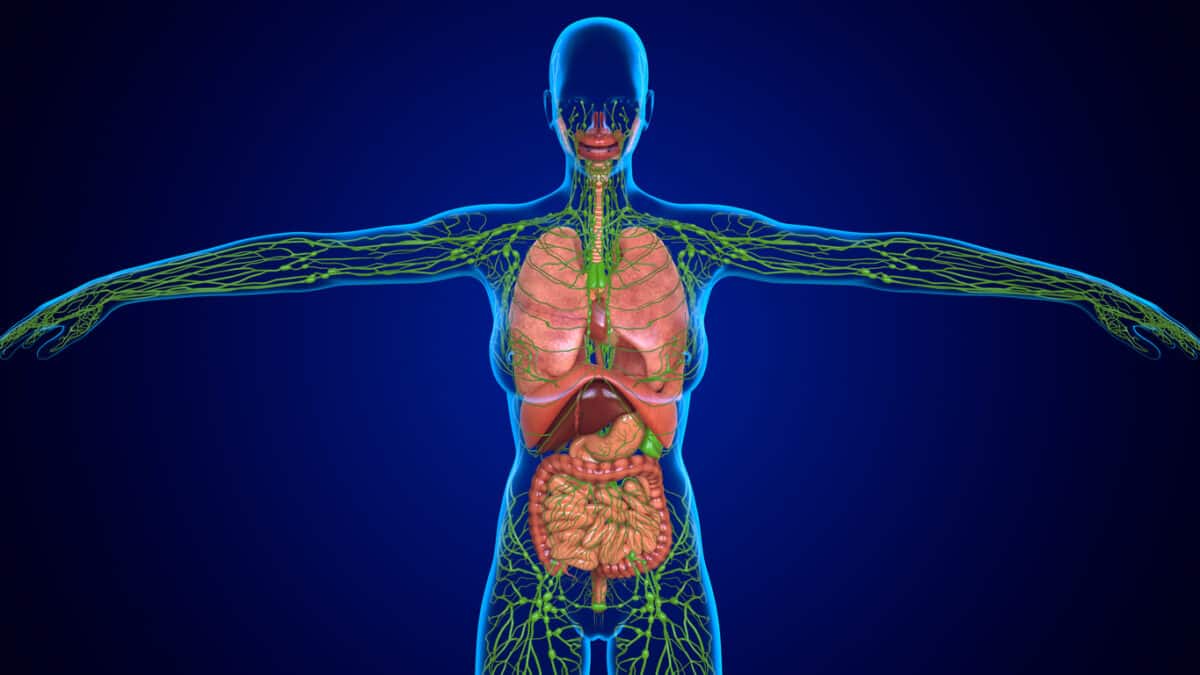
If Industrial Relations is the lifeblood of the economy and the nation, then Occupational Health and Safety (OHS) is the lymphatic system, a less well-known supplementary system without which blood circulation fails and the body stops working.
Australia’s Job and Skills Summit that has just concluded focused on the blood. Media analysis offered mixed interpretations. The event was politically stage-managed with many agenda items pre-prepared for the Summit to confirm, but it was not a worthless gabfest, as some (who chose not to attend) have asserted. On the matter of occupational health and safety, there was one new initiative but most of the OHS change, if any, is now more likely to come through the (wellbeing) budget in October.
History Lessons
The latest report/history of occupational health and safety (OHS) in Victoria and the role of the OHS regulators written by Barry Naismith was released last week. (Available HERE for a short time) There are few histories written, and those are primarily written through the legal and legislative prism. Naismith was an employee of the OHS regulator during the period of this publication (as was I). Localised and recent histories are rare, especially in topics like OHS. Yet, these perspectives are vital for new entrants to the OHS sector to understand the experiences of their immediate forebears and, perhaps more importantly, to understand the current priorities of OHS regulators.