Is the Deepwater Horizon movie good for safety?

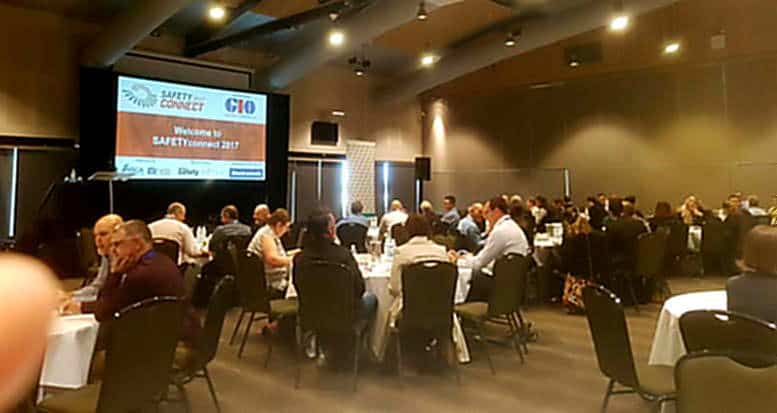
This week Australia has been experiencing a safety roadshow built around the Deepwater Horizon movie and two guest speakers. The afternoon sessions have been well attended and the discussion fruitful but does the film improve the viewers’ understanding of safety or misrepresent it?

Continue reading “Is the Deepwater Horizon movie good for safety?”

Poor worker safety through gov’t disinterest and high unemployment

Dhaka, Bangladesh – April 29, 2013: A view of collapsed Rana Plaza building in Bangladesh. Over 1,130 workers of apparel factories were killed and 2500 others were injured when the eight-storey factory build collapsed on the outskirts of Bangladesh capital Dhaka in 2013. Bangladesh is one of the major countries supplying ready-made garments to leading apparel brands of USA and Europe. Bangladesh also earns over US$ 28 billion a year by exporting apparel items.

The current edition of SouthAsia magazine has a short report on occupational health and safety (OHS) in Bangladesh that illustrate the political and social challenges for workers and citizens in a country. The article, “Poor Workplace Safety” (not available online) states that government data for 2016 list more than 1,225 workers killed and over 500 injured.  After these figures, and the fact that Bangladesh has a history of  catastrophic workplace disasters, the author, Mohammad Waqar Bilal, states

“In fact, the issue of workers’ safety has never been considered by the government on a priority basis.”

Continue reading “Poor worker safety through gov’t disinterest and high unemployment”

Can Australia Post’s executives survive the most recent allegations?

Australia Post features regularly in the mainstream press.  Recently, the media and Government discussed the pay packet of its Chief Executive Officer, Ahmed Fahour, but a safety management issue has been bubbling along for some time and reappeared this morning in the Australian Financial Review (AFR) “Australia post investigated over alleged manipulation of injury rate for bonuses” ($paywall).

The AFR writes that

“Comcare is investigating Australia Post over allegations that some senior managers manipulated data on injured employees’ absences from work to meet key performance indicators and secure hefty bonuses.”

This is allegedly done by

  • “delaying injury claims,
  • recording workers on sick leave when they are really absent on injury, and
  • paying for medical expenses in lieu of workers lodging compensation claims.”

Continue reading “Can Australia Post’s executives survive the most recent allegations?”

How much attention should we give to gender in OHS?

I once had to stop a potential fight on a construction site between a works supervisor and a safety professional.  The verbal abuse and niggling occurred for several minutes before the men’s chests were inflated like roosters and it was at this point I stepped in to diffuse the situation by asking some questions as…

Subscribe to SafetyAtWorkBlog to continue reading.
Subscribe Help
Already a member? Log in here

Outsourcing inductions may not support good safety management

new_young_induction-pdf_extract_page_1SafetyAtWorkBlog has been critical of the use and sale of generic Safe Work Method Statements (SWMS) for work tasks that can be managed through simpler and freely available job safety analyses (JSAs) and face-to-face communication. On 27 January 2017, the Chamber of Commerce and Industry of Western Australia (CCI) launched generic inductions.

The CCI asks and answers, in its media release:

“So why is it that so many workplaces don’t provide an induction? Our Members are telling us that they don’t really know what information they should be giving to a new starter.”

An internet search of the WorkSafeWA website would have led one to its “

Subscribe to SafetyAtWorkBlog to continue reading.
Subscribe Help
Already a member? Log in here

The fashion of safety culture

sia-cover001In 2016, Professor Andrew Hopkins urged occupational health and safety (OHS) professionals to abandon safety culture. In the December 2016 edition of OHS Professional magazine ($), he writes further about this position.

Several of Hopkins’ statements make the reader stop, sit up and reflect.  He writes

“What people do is something company leadership can indeed control, while what people think is neither here nor there“(page 28 – emphasis added).

POW!, there goes a lot of the safety training that is provided.

Subscribe to SafetyAtWorkBlog to continue reading.
Subscribe Help
Already a member? Log in here

Safety Culture from the accounting perspective

Occupational health and safety (OHS) spends a lot of time discussing safety culture.  The same names keeping cropping up in the discussion illustrating the insularity of the safety profession.  But other professional sectors are also interested in safety culture.

Recently this blog contained an article about the

Subscribe to SafetyAtWorkBlog to continue reading.
Subscribe Help
Already a member? Log in here
Concatenate Web Development
© Designed and developed by Concatenate Aust Pty Ltd