“Rule #1 – No Poofters”

The Building Safety conference this weekend had one or two underwhelming speakers but these were overshadowed by some brilliant presentations, and by brilliant, I mean challenging. I had no indication of what was to come from the presentation by Dr Dean Laplonge on gender. His presentation has caused me to begin to reassess my own (male) perceptions and those of the safety profession.

The title of this article is a Monty Python reference where a professor from England joins the Philosophy Faculty of the University of Woolloomooloo. He is inducted into the faculty by being told the rules and he even has his name changed to Bruce. This sketch is a good example of humour through hyperbole but over the decades this sketch has become more disturbing as, amongst others, it shows a gender perspective of the early 1970s that, in some industries, still echoes.

Continue reading ““Rule #1 – No Poofters””

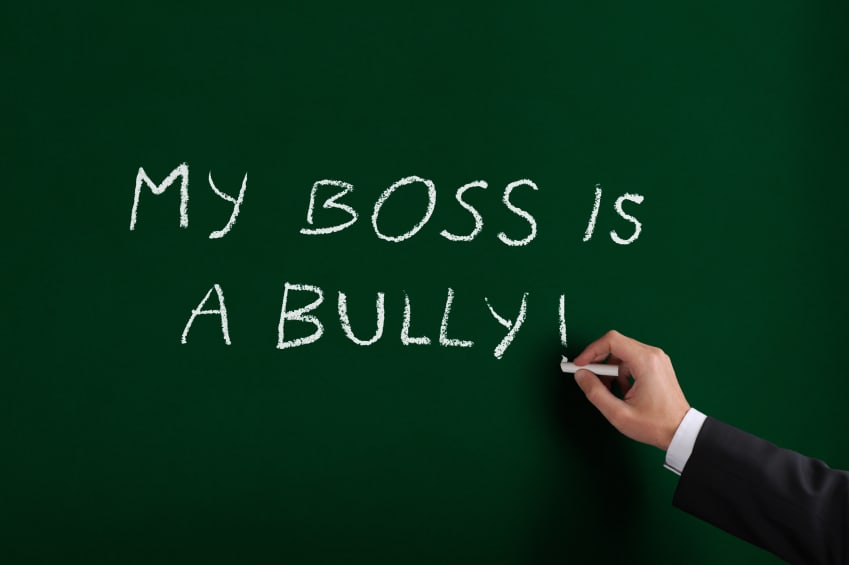
New workplace bullying laws generate heated debate

Today Australia hosts a No2Bullying conference.  It is a timely conference as the debate on Australia’s changes to the Fair Work Act in relation to workplace bullying heats up.

Lawyer Josh Bornstein is particularly critical of the politicisation of the amendments and believes this increases the instability or remedies available to victims of workplace bullying by increasing pressure on under-resourced OHS regulators.

The amendments are unlikely to reduce the incidence of workplace bullying in Australia as they address post-incident circumstances.

As the new legislation is being passed through Parliament, the industrial relations, political and legal context will dominate the media, Continue reading “New workplace bullying laws generate heated debate”

New Zealand railways, red tape, politics and workplace deaths

cover of NZ RailOn 28 April 2013, New Zealand lawyer, Hazel Armstrong, published a 48-page book on how workplace fatalities and the management of the NZ rail industry has been related to politics and economics.

This is an ideological position more than anything else and the evidence is thin in much of this short book but there is considerable power in the description of the manipulation of occupational health and safety regulations and oversight during the political privatisation of the NZ rail sector.  Many countries have privatised previously nationalised, or government-owned, enterprises usually on the argument of productivity and efficiency increases.  Armstrong argues that these arguments were used to justify breaking the trade union dominance of the rail industry. Continue reading “New Zealand railways, red tape, politics and workplace deaths”

Is safety leadership the panacea for unsafe workplaces?

National Safety Cover May 2013The May 2013 National Safety magazine has an article on safety leadership by Australia lawyer, Michael Tooma.  It is a terrific article but it also highlights the lack of case studies of the practical reality of safety leadership in Australia and the great distance still required to improve safety. Tooma starts the article with

“It is widely recognised that strong safety leadership is integral to work, health and safety performance in any organisation.” [emphasis added]

Later he writes

“There is little doubt that safety leadership is a prerequisite to a positive safety culture in any organisation.”

These equivocations may indicate authorial caution on the part of Michael Tooma but  they could illustrate that the role of safety leadership still remains open to question. Continue reading “Is safety leadership the panacea for unsafe workplaces?”

National Workers Memorial opens

Yesterday Australia opened its National Workers Memorial in Canberra.  The Workplace Relations Minister  Bill Shorten, spoke at the ceremony with, largely, an edited and reduced version of the speech he presented in Brisbane earlier last week.  The Canberra speech dropped  all the ANZAC Day references and spoke about the importance of remembering.

“By erecting this monument, we tie the lives and memories and families of thousands of Australians to this place.  We stand here in this place as a mark of respect from a civilised community as an expression of failure and regret.  That’s what all memorials are, and this one is no different.  This is a symbol of the mourning for those lost too early from our tribe Australia.” Continue reading “National Workers Memorial opens”

Safety change through rape?!

At many occupational health and safety seminars and conferences in Australia there is often an OHS professional in the audience who says that jail time is the only real and effective deterrent for those breaking safety laws, usually in the context of gross negligence, reckless endangerment or industrial manslaughter.  The threat of imprisonment is indeed a deterrent for some people.

But sometimes there is an OHS professional who colours their call for imprisonment by suggesting that, once in prison, offenders should be harmed or even raped.  An example appeared on an OHS discussion forum within the last week.  The comment, on an issue of fall prevention, included this phrase:

“Only need to send a few for a short holiday with “Bubba” and some soap on a rope, to get the message across to the masses.”

This person is suggesting that the deprivation of liberty is insufficient punishment for an OHS offence and that the offender should also be raped.  What does this say about the real values of a person whose profession is based on harm minimisation and the elimination of hazards?

If, as The Guardian newspaper says, the two main principles for jail are “in order to punish wrongdoers, and to remove the danger they would otherwise pose to the wider world”, where is the justification for abuse?

The “Bubba” comment above, and many similar comments I have heard over the years, may be an extension of the cynicism that many OHS professionals seem to acquire over their time in the profession.  But it is also offensive and shows an approach to humanity that I do not share and that I believe has no place in the OHS profession, or anywhere, for that matter.  It is lazy thinking, and these thoughts come from those who advise Australian businesses!  It is a shameful situation.

Kevin Jones

Six years jail for injury reporting fraud

B0000187“If it can’t be measured, it can’t be managed”* has been a mantra of business for decades but all measurement can be corrupted.  One of the most contentious elements of occupational health and safety (OHS)  is the measurement of safety performance and a recent prosecution in the United States provides an important lesson for OHS managers everywhere, even though details are scarce.

“On Apr. 11, 2013, Walter Cardin, 55, of Metairie, La., was sentenced to serve 78 months in prison followed by two years of supervised release…. after being charged by a federal grand jury with eight counts of major fraud against the Tennessee Valley Authority (TVA), an agency of the United States.” [link added]

According to the US Attorney’s Office

“Cardin generated false injury rates which were used by the Shaw Group to collect safety bonuses of over $2.5 million from TVA. … Cardin was convicted of providing the false information about injuries by underreporting their number and severity… The evidence presented at trial encompassed over 80 injuries, including broken bones, torn ligaments, hernias, lacerations, and shoulder, back, and knee injuries that were not properly recorded by Cardin. Some employees testified that they were denied or delayed proper medical treatment as a result of Cardin’s fraud. Evidence showed that Cardin intentionally misrepresented or simply lied about how the injuries had occurred and how serious the injuries were.” [link added]

There are many safety management issues related to the conduct of Walter Cardin. Continue reading “Six years jail for injury reporting fraud”

Concatenate Web Development
© Designed and developed by Concatenate Aust Pty Ltd