
 Safety First, is a dig at the absurdity of some of the training and concepts behind occupational health and safety (OHS) and is showing as part of the Melbourne International Comedy Festival. The comedy does not ridicule OHS as a concept but focuses on the idiotic, semi-informed trainers who talk about safety whilst also, often, talking shit. The humour is effective and occasionally generates discomfort for its proximity to reality. Continue reading “OHS needs more comedies like Safety First”
Category: culture
GlencoreXstrata’s annual report shows more than 26 deaths
Last week the Australian Financial Review (AFR) brought some focus on occupational health and safety (OHS) by reporting on the most recent annual report from GlencoreXstrata in its article “Mining’s not war, why 26 deaths?” (subscription required). The article is enlightening but as important is that a business newspaper has analysed an annual report in a workplace safety context. Curiously, although OHS is often mentioned as part of its sustainability and risk management program, safety is not seen as a financial key performance indicator, and it should be.
AFR’s Matthew Stevens wrote:
“Everybody in mining talks about ‘zero harm’ being the ultimate ambition of their health and safety programs. But talking safe and living safe are two very different things.”
GlencoreXstrata’s 2013 annual report is worth a look to both verify the AFR’s quotes but also to see the corporate context in which fatality statements are stated. The crux of the AFR article is this statement from the Chairman’s introduction:
“It is with deep sadness that I must report the loss of 26 lives at our combined operations during 2013. Any fatality is totally unacceptable and one of the Board’s main objectives is to bring about lasting improvements to our safety culture.” (page 76)
(A curious sidenote is that the interim Chairman is Dr Anthony Howard, formally of BP and brought to prominence by the Deepwater Horizon oil spill.) Continue reading “GlencoreXstrata’s annual report shows more than 26 deaths”
Important OHS titbits in latest Productivity Commission report
 Productivity and regulation is the rationale behind most of the workplace policies of the current Australian Government. Occupational health and safety (OHS) has a role to play in both of these economic and social elements but it rarely gets considered in a positive light. This is partly an ideological position of the conservative politicians but is also due to a lack of economic argument in favour of OHS and an inability, or an unwillingness, to identify essential regulations.
This week Australia’s Productivity Commission (PC) released a draft paper into the costs of public infrastructure projects that includes some telling OHS information even though most of the media has focused on the political angle or on the taxing of cars?!
A brief review of the draft report reveals OHS dotted throughout both volumes of the report and early on there is some support for Safety in Design in the tender development stage.
New Zealand trumps Australia on workplace bullying advice
 WorkSafe NZ has released “best practice guidelines” on workplace bullying. Best practice is a nonsense term but this guide is a major step above similar guides in Australia, in particular.
Definitions
Guides always begin with definitions and the definition New Zealand has applied is the same as that in the recently released Australian workplace bullying guide but with a couple of odd semantic differences. These variations should not have any effect on organisational changes required to prevent bullying but the variations are curious. Australia describes “unreasonable behaviour” the actions that generate the bullying as:
“… behaviour that a reasonable person, having considered the circumstances, would see as unreasonable, including behaviour that is victimising, humiliating, intimidating or threatening.”
New Zealand’s definition is:
“…. actions that a reasonable person in the same circumstances would see as unreasonable. It includes victimising, humiliating, intimidating or threatening a person.”
Is there a difference between actions and behaviours?
Workplace mental health deserves more attention
Mental health needs in the workplace has been an evolving area of study and application and has been followed by the SafetyAtWorkBlog since its inception. Several recent statements and reports in Australia have shown that the subject continues to be discussed but not by those who can make the substantial social change, the Government, partly due to a lack of the type of evidence needed by Government to justify the change.
Mental Health is the core element of almost all the contemporary workplace hazards that are categorised as psychosocial. This includes stress, bullying, fatigue, suicide, work/life balance, and many more. Each of these categories are important but most reporting and a lot of the health promotion initiatives in the workplace focus on the manifestation of mental health instead of the source.
On February 21 2014 the chair of the
Missed opportunity for making the business case on safety culture
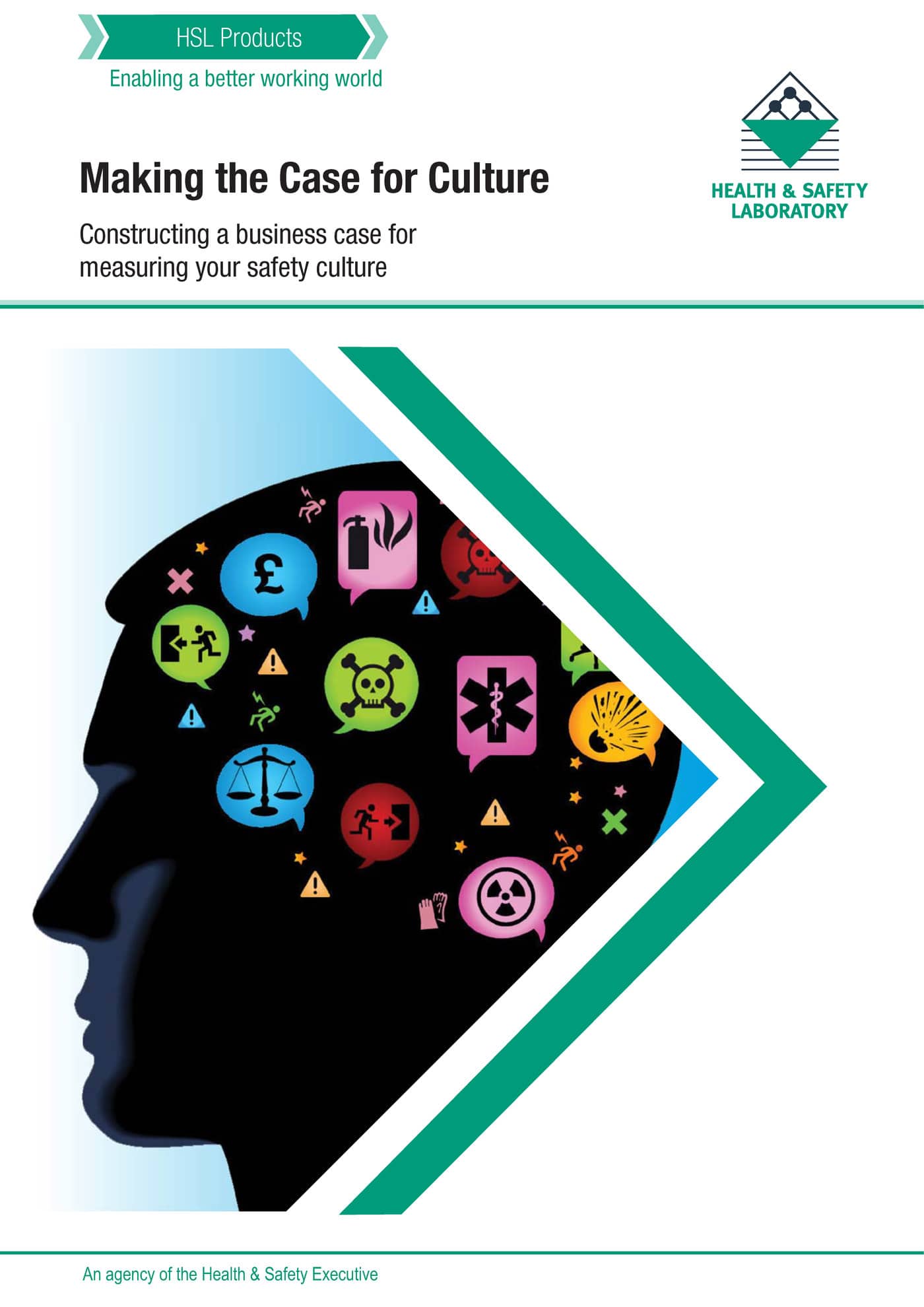 Recently the UK’s Health and Safety Laboratory (HSL) released its second white paper on safety culture. This paper is called “Making the Case for Culture” and outlines the three arguments for a workplace safety culture – legal, moral and financial – from which a safety business case can be built. Financial seems to get the most attention but this is perhaps because it is the element that is argued the least and the one that can get the greatest attention from company executives.
The document seems a little thin but it could be put that the simplicity of the presentation in a booklet designed to provide safety culture guidance is an advantage. It could also be argued that it is primarily a promotional pamphlet for the HSL’s very useful safety climate tool .
Continue reading “Missed opportunity for making the business case on safety culture”
Safety Culture can distract from safety management
Mohammad Rabbi has recently written that
“…safety culture is something that must permeate an entire organization. Its application largely depends on the investment, training, employee attitude, environment, location, laws, customs and practices in the industry. So how can organizations go about developing a safety culture?”
He is right that any safety culture has a wide range of business and social contexts but the quote, and the article, Workplace Safety Culture 101, seems to miss a couple of contextual realities. Many of these issues quoted appear to be basic elements of business and safety management and not dependent on safety culture programs.