The number of work-related fatalities in Australia is declining. Plenty are claiming credit for this, but no one knows for sure which prevention strategies have been successful over the last twenty-odd years and/or to what degree. Australia’s recent Intergenerational Report may offer some clues to the reasons for this decline in traumatic workplace deaths and a way forward. This article dips into the 200-page report.
Continue reading “Why have Australian workplaces become safer?”Category: death
Business should stop complaining about paying for mental health. It’ll boost the bottom line.
[Article reprinted, with permission, from the May 24 edition of Crikey newsletter]
Luke Slawomirski
During the 2020 lockdowns, the business lobby showed a surprising concern for Victorians’ mental health: lockdowns were bad because they’d cause a spike in mental illness and suicides far worse than the COVID-19 cases and deaths they’d prevent.
The suicide spike never happened. What did happen was much-needed additional funding for mental health — $3.8 billion over four years — announced in the 2021-22 state budget on Thursday.
But the way business reacted suggests its interest in mental health has waned.
You see, the measures aimed at better prevention, diagnosis and treatment of mental ill health will be funded by a levy: 0.5% for businesses with payrolls above $10 million and 1% for those above $100 million. Critics, including the federal treasurer, claim this will cruel “job creation and confidence“.
Continue reading “Business should stop complaining about paying for mental health. It’ll boost the bottom line.”Cause is not the same as Correlation
Politicians and executives love to claim a cause when there is only a correlation. This was displayed recently in Australian Senate Hearings on the issue of occupational health and safety (OHS) and Industrial Manslaughter (IM).
Wiktionary defines Cause as:
The source of, or reason for, an event or action; that which produces or effects a result.
And Correlation as
A reciprocal, parallel or complementary relationship between two or more comparable objects.
The conflation of these two very different relations has been a serious drag on OHS progress in practice and policy.
Industrial Manslaughter or Category 1. Which prevents harm more effectively?
The Communique issued after the May 20, 2021 meeting of the Work Health and Safety (WHS) Ministers says that Australia is not likely to apply an Industrial Manslaughter law nationally:
“While the Northern Territory, Queensland, Western Australia, the Australian Capital Territory and Victoria provided their support for an industrial manslaughter offence, the recommendation did not receive the required majority.”
Some people think that this is no real failure as the Communique also includes “defacto ‘industrial manslaughter’ laws”. Here is the quote that supports that position:
Industrial Manslaughter presents an empty hook
New South Wales’ Opposition Minister for Industrial Relations, Adam Searle, spoke recently in support of the introduction of Industrial Manslaughter (IM) laws. In Parliament on May 5 2021, he said
“… legislation is required to enable the prosecution of industrial manslaughter and to fundamentally change the approach across industry in order to raise the standard and embed a culture of workplace safety of a much higher and more stringent nature. We need a culture that supports workplace safety in our State, not a culture, as I indicated before, that allows and encourages the cutting of corners and the fostering of unsafe workplaces…..
page 43, Hansard,
Legislation can achieve many things but not by itself, and that reality often makes such penalties like Industrial Manslaughter little more than symbolic.
Twelve months of work-related deaths
In 2008, prominent occupational health and safety (OHS) advocate, Hilda Palmer wrote about the inadequate estimates of work-related deaths in the United Kingdom. Keeping work-related death confined to traditional categories provides a false understanding of the reality of OHS. Palmer wrote:
“Far from being complacent about the health and safety record in this country, we need to be honest and open, and examine what is really going on”.
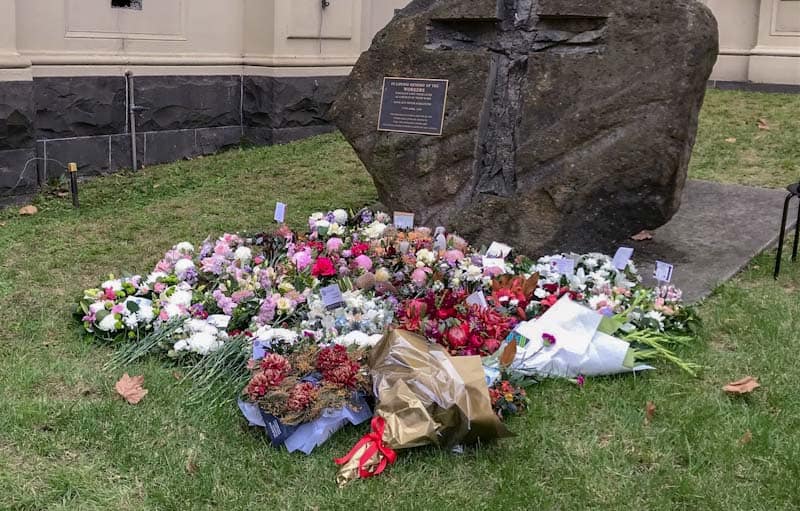
Recently, at the 2021 Workers Memorial, a representative of the Victorian Trades Hall read out a list of those who have died at, or due to, work in the last 12 months. It was a list of 47 people. The categories have expanded to include truck incidents, asbestosis, silicosis as well as the more traditional traumatic injuries. Curiously no suicides. A transcripted list of those 47 is below.
Continue reading “Twelve months of work-related deaths”Non-military safety lessons from the latest Royal Commission (open access)
The Australian Broadcasting Corporation broadcast an episode of The Signal on April 21, 2021, which discussed the complexity of the culture of Australia’s military, and I strongly recommend you listen to it. It does make some points about culture worth contemplating in the context of one’s own workplace and profession.
The most useful point was that an established institution cannot have a uniform culture that meets the expectations of all relevant stakeholders. Generations take their culture with them. So those who started in the military in the 1980s and 1990s (and later) will bring the values and lessons of that time into their maturity and when they move into senior and leadership positions – positions that are intended to both preserve and progress the organisation’s culture. This will result in conflict between the expectations of new recruits and the realities of the established military executives. Not open revolt, but a dissatisfaction that may or may not result in leaving the organisation.
The topic used by The Signal to illustrate the extremes of the defence force members and stakeholders was mental health.
Continue reading “Non-military safety lessons from the latest Royal Commission (open access)”