To understand Industrial Manslaughter, look at the politics

On May 20, 2020 Industrial Manslaughter became an offence applicable to Queensland’s mining and resources sector, sometime after the offence was applied to all other Queensland businesses. Industrial Manslaughter (IM) laws have always been as much about politics as they are about penalties, deterrence and occupational health and safety (OHS).

Some of the politics is shown by the responses from Queensland business groups (sounding like spoken through gritted teeth) but to really understand these laws, it is worth looking at the Second Reading of the omnibus Bill that included the IM amendments as politicians in several other Australian jurisdictions will face the same issues. It is also useful for OHS people to understand the political and legislative context of the penalties their employers may face.

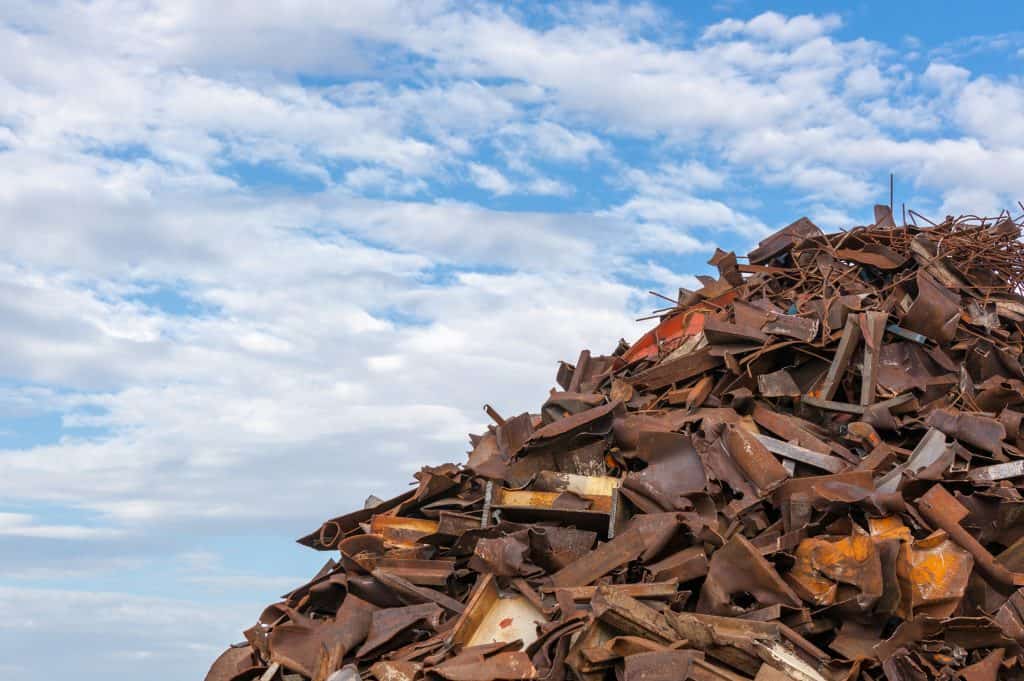
Also, in the last week of May 2020, the first company to be successfully prosecuted under the IM laws will be sentenced, Brisbane Auto Recycling. The company’s two directors have pleaded guilty to reckless conduct and will also be sentenced.

Subscribe to SafetyAtWorkBlog to continue reading.
Subscribe Help
Already a member? Log in here

COVID19 and OHS gets political

Workplace health and safety risks related to COVID19 emerge in Australia and the United Kingdom.

Trade Union Suggestions

On May 5 2020, the Australian Council of Trade Unions released a statement on occupational health and safety (OHS) calling for certain Industrial Relations and OHS changes, including:

  • Paid pandemic leave
  • New regulations on safety and health standards, and
  • Compulsory notifications to Health Departments and OHS Regulators.

SafetyAtWorkBlog has been led to believe that the paid pandemic leave is intended to apply from the time a worker is tested for COVID19 through their isolation while waiting for the test results and the operation of sick leave should the test results be positive.

Subscribe to SafetyAtWorkBlog to continue reading.
Subscribe Help
Already a member? Log in here

Shop safety protocols do not go far enough

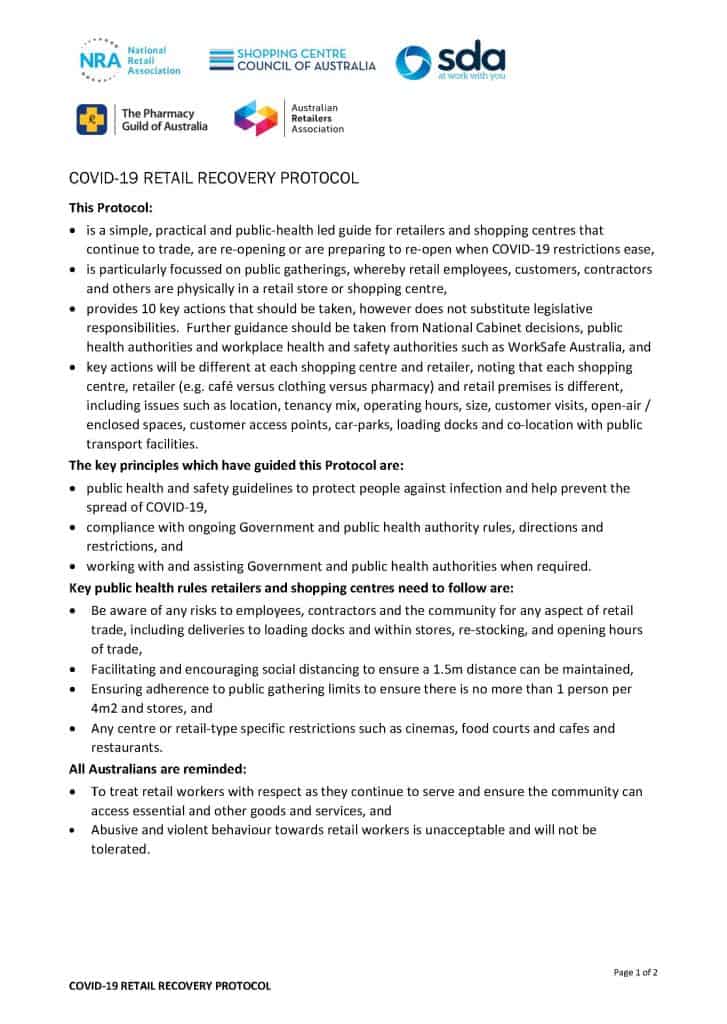
A group of retail associations in Australia has released a very curious COVID-19 Retail Recovery Protocol.

All shops and malls are workplaces and must comply with occupational health and safety (OHS) laws. A small embarrassment in these protocols is that although it acknowledges that further guidance may be available from workplace health and safety authorities, it provides no links to that COVID19 guidance and gets Safe Work Australia’s (SWA) name wrong! It does not inspire confidence and all that was needed was a single hyperlink to the SWA guidance developed specifically for the Retail Industry.

Subscribe to SafetyAtWorkBlog to continue reading.
Subscribe Help
Already a member? Log in here

Great loss, but no vision and limited interest

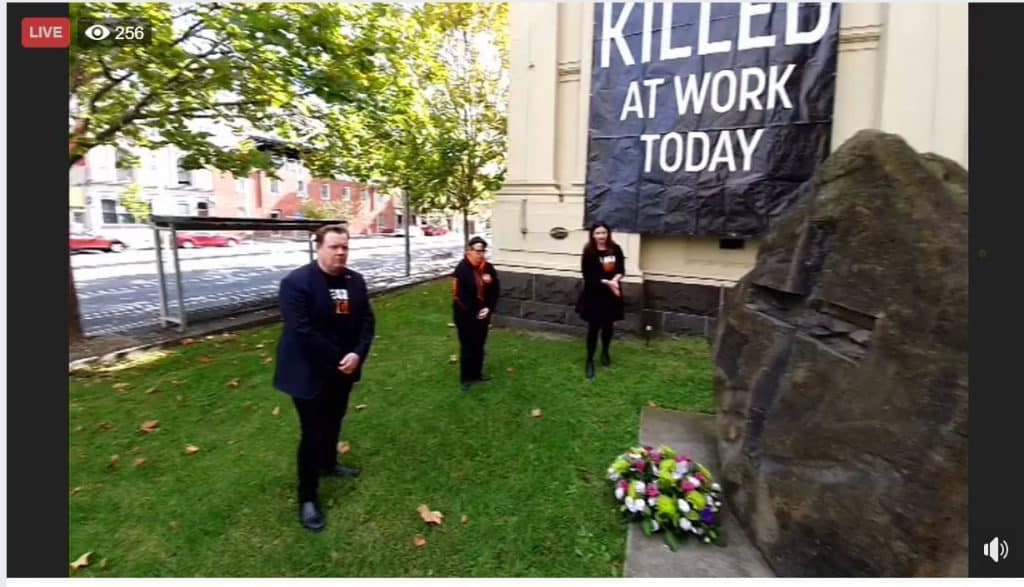
This year’s International Workers Memorial Day/World Day for Safety and Health at Work is over. Many of the memorial events were conducted online and many gave healthcare workers prominence, especially in the United Kingdom. SafetyAtWorkBlog watched the online service conducted by the Victorian Trades Hall.

Many worker memorials are little more than a reiteration of the importance of occupational health and safety (OHS) laws. If the ceremonies are conducted by trade unions, as most are, they are usually advocating for the role of Health and Safety Representatives (HSRs). This year’s Victorian ceremony was typical. However, there were some curiosities and such ceremonies can, and should, be more than just a commemoration.

Subscribe to SafetyAtWorkBlog to continue reading.
Subscribe Help
Already a member? Log in here

Deaths of Health Care workers from COVID19

A doctor in a protective suit taking a nasal swab from a person to test for possible coronavirus infection

The theme for most commemorations on April 28 is the COVID19 pandemic. This is understandable as the pandemic has disrupted lives and economies globally and many people have died. Perhaps the most tragic of these deaths are those of medical and healthcare staff who have contracted the infection through their work. The largest public outrage over this situation has been in the United Kingdom, but a similar situation could easily have occurred in Australia, New Zealand and elsewhere if those governments had not acted as quickly as they did or were less better prepared.

Some research has already commenced on healthcare worker infection deaths showing important initial clues on how governments, hospitals and medical employers can do better.

Subscribe to SafetyAtWorkBlog to continue reading.
Subscribe Help
Already a member? Log in here

Reasonably Practicable for the real world

The best public document on determining what is reasonably practicable under occupational health and safety (OHS) law remains this one from WorkSafe Victoria but, importantly, it is also unhelpful. The unhelpfulness is there in the title:

“How WorkSafe applies the law in relation to Reasonably Practicable”

What is needed more is a document about how an employer is expected to apply reasonably practicable to their workplace rather than how the law is interpreted. The focus should be on achieving a safe and healthy workplace but the discussion of Reasonably Practicable is almost always reactive and reflective with little advice on how to use this concept in Consultation to satisfy the positive (some still say “absolute”) duty of care. Below is a brief attempt at clarification.

Subscribe to SafetyAtWorkBlog to continue reading.
Subscribe Help
Already a member? Log in here

Jail or Ruin? Is deterrence still effective?

This week Dr Rebecca Michalak wrote that penalties for breaches of occupational health and safety (OHS) laws need to be personal for people to understand the potentially fatal consequences at the work site or decisions that are made in the comfort of the boardroom. In this sentiment she echoes the aims of many who have been advocating for Industrial Manslaughter laws and also touches on the role of deterrence. But when people talk about Jail, are they really meaning Ruin? And do these options really improve workplace health and safety?

Subscribe to SafetyAtWorkBlog to continue reading.
Subscribe Help
Already a member? Log in here
Concatenate Web Development
© Designed and developed by Concatenate Aust Pty Ltd