Focus on the hoops and not the holes

There is a confluence of investigations into mental health and suicides in Australia at the moment, and most of them overlap with occupational health and safety (OHS).  Each of these increases the understanding of the relationship between work and mental health but no one seems to be connecting the threads into a cohesive case.  This article doesn’t either, by itself, but hopefully the threads of the issues are identified through the themes of various SafetyAtWorkBlog articles.

Recently Tim Quilty of the Liberal Democratic Party addressed the issue of suicide in relation to his contribution to the debate on Industrial Manslaughter (IM) laws in the Victorian Parliament.  His assertions seem a little naïve:

Subscribe to SafetyAtWorkBlog to continue reading.
Subscribe Help
Already a member? Log in here

What is needed is a discussion of the “safe system of business”

By the time you read this, one of Australia’s States may have Industrial Manslaughter laws. One sad part of all of the IM argy-bargy is that it has focused on the penalty of going to jail rather than on the enhancement of occupational health and safety (OHS) which can prevent harm. Part of this seems to be because people are uncertain how to talk about OHS. For instance, some arguing against IM laws have started talking about making these laws fair. But fair to who?

Recently the Australian Industry Group released a media statement titled “Industrial manslaughter legislation must be fair“. Firstly, although the IM Bill is a piece of legislation, it is not an Act or Regulation in itself. It is an amendment to the existing OHS Act. But this Act and its Duties hardly gets discussed in the current debate, which is a bit curious but convenient.

Subscribe to SafetyAtWorkBlog to continue reading.
Subscribe Help
Already a member? Log in here

Paper provides historical context to OHS laws

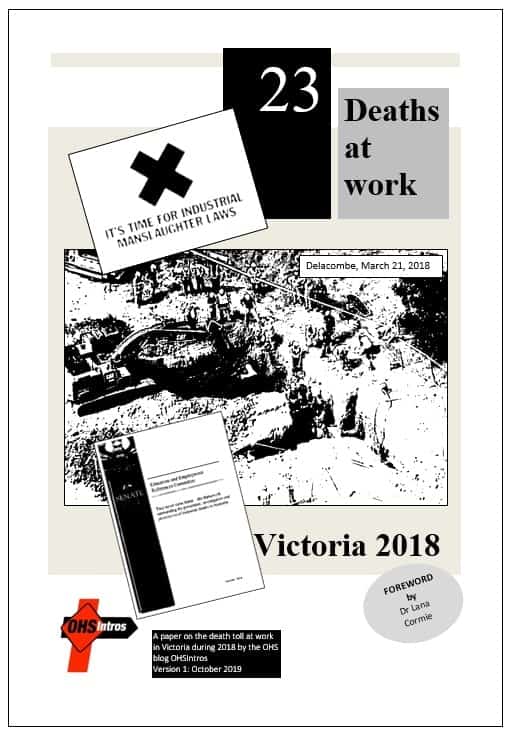
Barry Naismith of OHSIntros has provided excellent independent analysis of Victoria’s occupational health and safety (OHS) data for many years. His latest “Deaths at Work” report (available publicly for a limited time) includes a detailed discussion on the social context of Victoria’s proposed Industrial Manslaughter (IM) laws.

But of more immediate interest is Naismith’s longitudinal analysis. One of his graphs showing death statistics back to the commencement of Victoria’s modern-era OHS laws in 1985 supports the statement popular with politicians that the rate of work-related deaths is declining over that time but Naismith points out that the five-year trend to 2018 is reversed and that this is part of the justification for the IM Laws.

Subscribe to SafetyAtWorkBlog to continue reading.
Subscribe Help
Already a member? Log in here

Cocky on Industrial Manslaughter and confident on OHS of vehicles

Even before the Victorian Parliament (maybe) passes the Industrial Manslaughter amendments to the Occupational Health and Safety Act, Premier Daniel Andrews is promising new, targeted investigative resources. Even though Andrews acknowledged that the laws may not pass, he seems super-confident and we know that politics is littered with cases of over-confidence.

If the opposition Liberal/National Party coalition wanted to seriously embarrass the Premier and this Labor Government, it could nobble the changes in the Legislative Council in a move that would be popular with the major business organisations, agricultural industry groups and farmers.

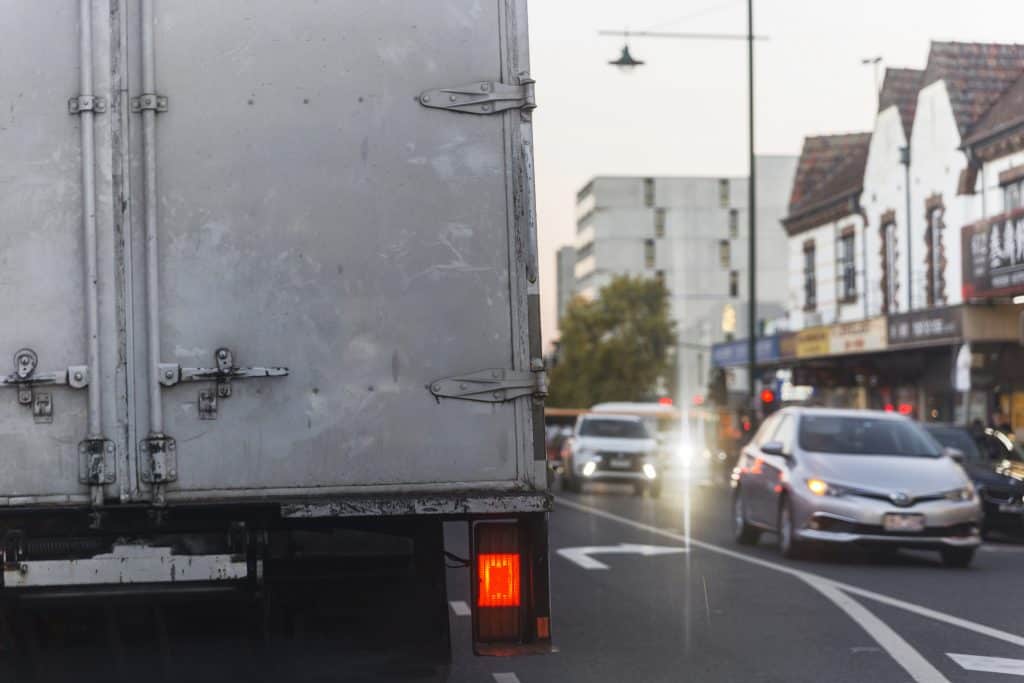
Many of the issues Andrews’ raised at the Victorian Labor Party conference on 16 November 2019 make a lot of sense, but why jeopardise a crucial vote on the Industrial Manslaughter laws? And how will he bring commercial vehicles into the occupational health and safety statistics, as he has promised?

Subscribe to SafetyAtWorkBlog to continue reading.
Subscribe Help
Already a member? Log in here

Industrial Manslaughter Laws are treading water

On November 13 2019 the Victorian Parliament heard detailed debate (page 93) about Industrial Manslaughter laws but without resolution. Many of the points raised were familiar and along political party lines but of particular interest was the insights provided into how that State’s political leaders perceive occupational health and safety (OHS).

Each of the speakers reiterated the importance of OHS and how all workers deserve to go home at the end of the shift – you know the cliches and the debate held plenty of them. There was also a fundamental misunderstanding by many speakers though.

Subscribe to SafetyAtWorkBlog to continue reading.
Subscribe Help
Already a member? Log in here

Innovation rather than complaints needed on safety

Moree, Australia – November 25, 2010: A farmer performs a maintenance routine on his John Deere combine harvester in Moree a major agricultural area in New South Wales, Australia.

The Victorian “Labor” Government has submitted its Workplace Manslaughter legislation to its Parliament. Debate is likely to begin, in earnest, from November 12, 2019. There were several surprises on which various business associations have expressed concerns, one surprise was that businesses seem to have been ignored by the government.

In many ways, the challenges are less about the legislation than what those business associations plan to do about occupational health and safety themselves.

Subscribe to SafetyAtWorkBlog to continue reading.
Subscribe Help
Already a member? Log in here

Silicosis – “we need to licence the industry and we need to regulate the product”

Last year the Scientific Meeting of the Australia and New Zealand Society of Occupational Medicine (ANZSOM) had a fiery discussion on the occupational health and safety (OHS) risks of cutting engineered stone.  The status has changed a lot over 12 months with various Codes of Practice, new exposure limits, a National Dust Disease Taskforce and lobbying from Erin Brockovich.  However the risk of worker exposure seems too have not changed this much because it is employers who are responsible for safe workplaces and there are many layers of OHS-related communication between research and practical application.

Dr Graeme Edwards (pictured above) spoke first in the ANZSOM panel on October 29 and he came out with all guns blazing.

“Prima facie evidence of system failure. That’s what accelerated silicosis means. It is an entirely preventable disease.”

Subscribe to SafetyAtWorkBlog to continue reading.
Subscribe Help
Already a member? Log in here
Concatenate Web Development
© Designed and developed by Concatenate Aust Pty Ltd