Safety wins

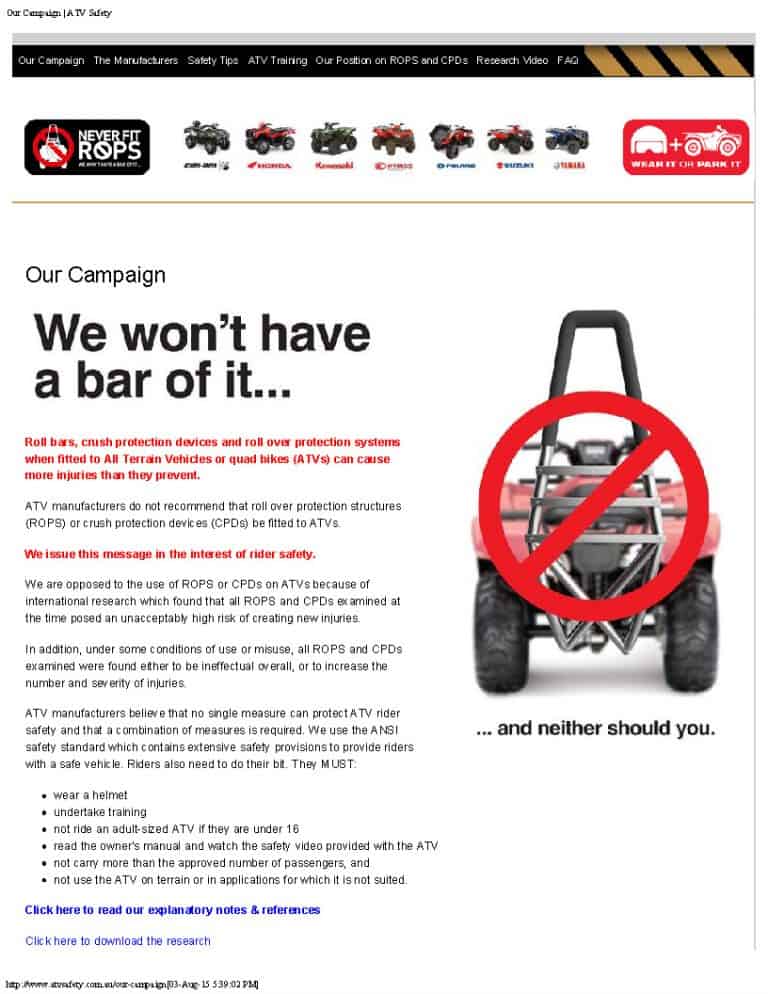
The saga of the safety of all-terrain vehicles (ATV) in Australia is coming to a close with Honda announcing that it will not be selling its ATVs in Australia after 10th October 2021. However Honda, one of the most strident opponents of increased safety standards, is belligerent to the end.

In the media announcement of its decision, Honda says that the new safety Standard is impossible to meet on any ATV. This may be true but the quad bike manufacturers refused to accept that rider safety could be improved by redesigning the quad bike, or adding additional safety devices, to reduce the risk of rolling over. Most occupational health and safety (OHS) advocates did not argue about the validity of the safety items and actions recommended by the manufacturers – helmets, dynamic riding training etc – but saw these as supplements to after-sales crush protection devices (CPDs). The manufacturers did not.

Subscribe to SafetyAtWorkBlog to continue reading.
Subscribe Help
Already a member? Log in here

Lift us up (safely) where we belong

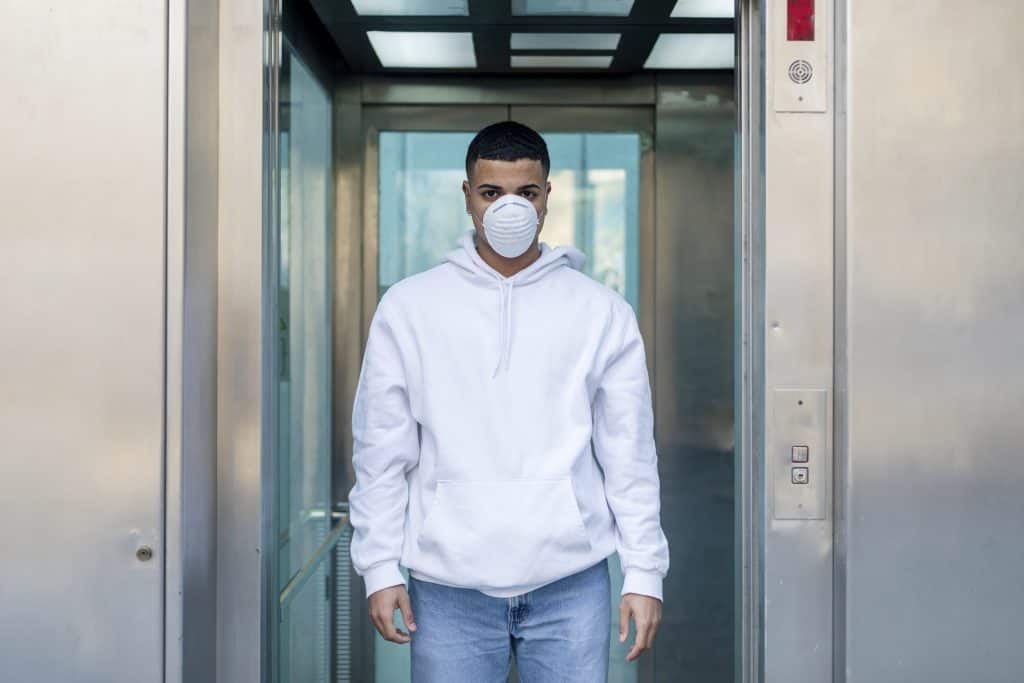
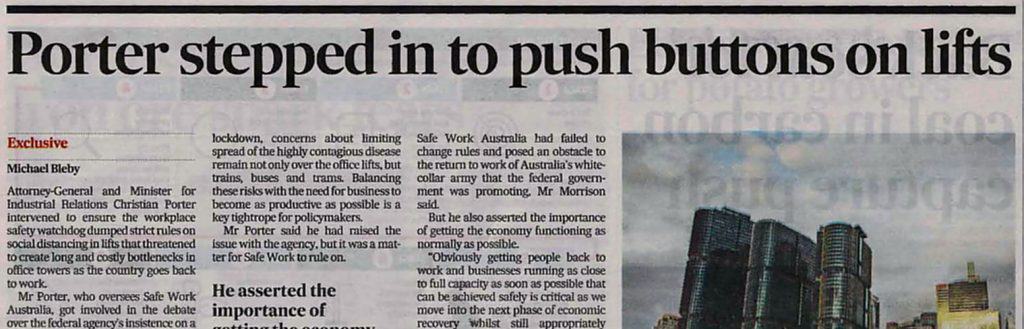
The safe number of people in an elevator gained the attention of Australia’s Attorney General, Christian Porter. The narrow consideration of the COVID19 risks faced by workers as they return to work was taken to Porter by the head of the Property Council of Australia, Ken Morrison.

According to an article in the Australian Financial Review on May 22 2022, Morrison took up the issue with Safe Work Australia who rebuffed his approach and refused to change the original guidance. He then contacted the Attorney-General’s office who, according to Morrison:

“…. engaged with the Deputy Chief Medical Officer to ensure the health issues were properly understood and then in conjunction with Safe Work Australia ensured that revised guidelines were released which were absolutely safe, but practical, and allowed the return to work that the national cabinet has been encouraging.”

Subscribe to SafetyAtWorkBlog to continue reading.
Subscribe Help
Already a member? Log in here

To understand Industrial Manslaughter, look at the politics

On May 20, 2020 Industrial Manslaughter became an offence applicable to Queensland’s mining and resources sector, sometime after the offence was applied to all other Queensland businesses. Industrial Manslaughter (IM) laws have always been as much about politics as they are about penalties, deterrence and occupational health and safety (OHS).

Some of the politics is shown by the responses from Queensland business groups (sounding like spoken through gritted teeth) but to really understand these laws, it is worth looking at the Second Reading of the omnibus Bill that included the IM amendments as politicians in several other Australian jurisdictions will face the same issues. It is also useful for OHS people to understand the political and legislative context of the penalties their employers may face.

Also, in the last week of May 2020, the first company to be successfully prosecuted under the IM laws will be sentenced, Brisbane Auto Recycling. The company’s two directors have pleaded guilty to reckless conduct and will also be sentenced.

Subscribe to SafetyAtWorkBlog to continue reading.
Subscribe Help
Already a member? Log in here

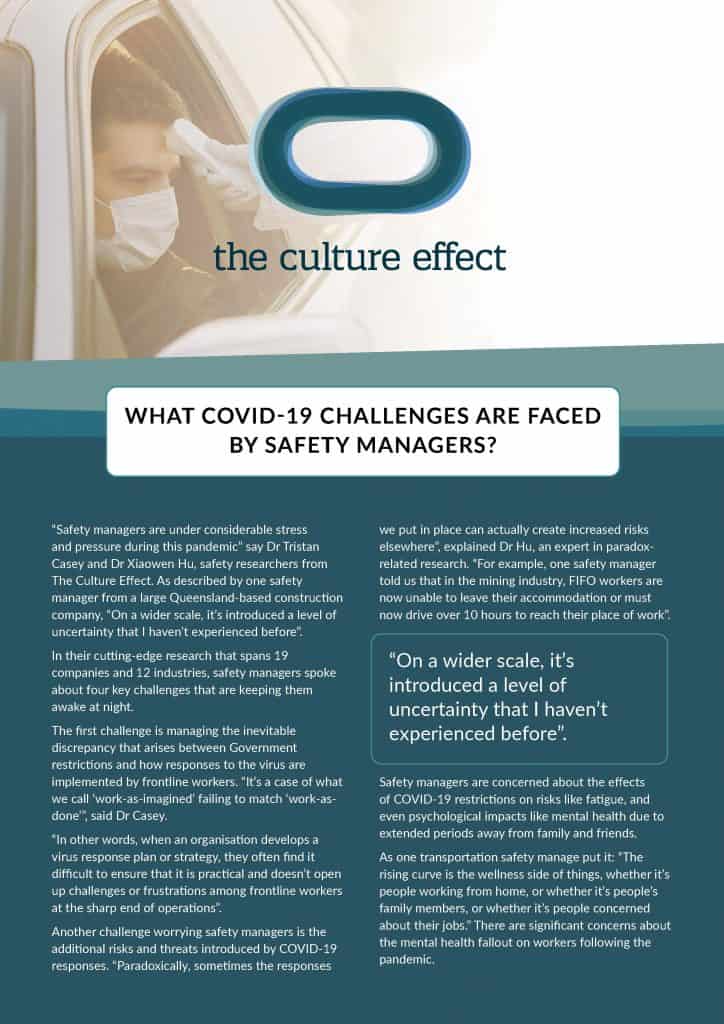
COVID19 and Safety Managers

Several weeks ago, researchers from Griffith University and Queensland University of Technology (QUT) commenced a survey about safety managers and COVID19. The research was called “Resilience in a COVID19 World” and aimed at

“Exploring health and safety measures taken by and for ‘essential services’ workers throughout Australia’s COVID-19 crisis, and how their contributions affect personal and organisational resilience.”

Some initial results are in a recent outline published by Dr Tristan Casey & Dr Xiaowen Hu through The Culture Effect consultancy. There were four key challenges but also significant positives.

Subscribe to SafetyAtWorkBlog to continue reading.
Subscribe Help
Already a member? Log in here

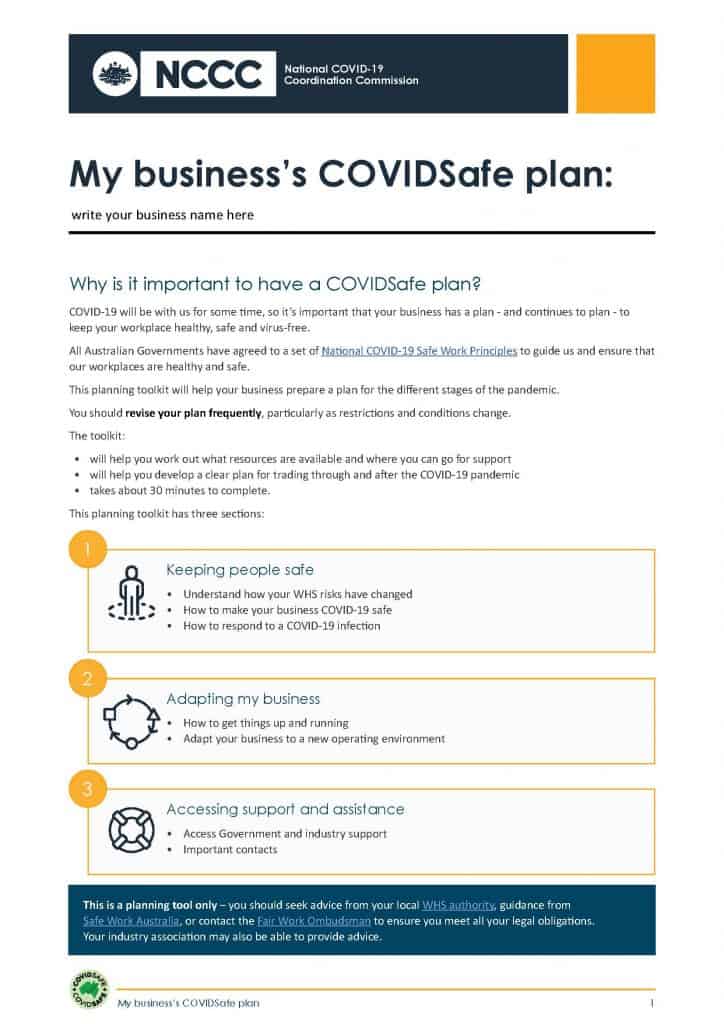
Australia government releases its COVID19 Safe Plan template

Australia’s National COVID-19 Coordination Commission (NCCC) has released what it calls a toolkit for assessing COVID19 risks for businesses that are reopening soon. It is a useful checklist/template that the NCCC anticipates will take around 30 minutes to complete. What legal standing it may have is unclear as OHS in most Australian workplaces is regulated at State and Territory levels, but the Prime Minister says we need COVID Safe Plans and here’s a checklist to support it.

Business owners should understand that any checklist is only ever a tool to aid them to make an informed decision. It is not a compliance tick. Sadly, the COVIDSafe Plan template fails to answer its first question:

“Why is it important to have a COVIDSafe Plan?”

The answer should have been something like

“….all Australian business owners are obliged by law to provide workplace that are free of health and safety risks, including viral infections, like COVID19. This plan will help you fulfill your obligation which will also reduce the transmission of COVID19 and could save lives.”

The legal and moral reason for this checklist should have been upfront to emphasise the primacy of occupational health and safety (OHS) in helping control a public health risk.

Subscribe to SafetyAtWorkBlog to continue reading.
Subscribe Help
Already a member? Log in here

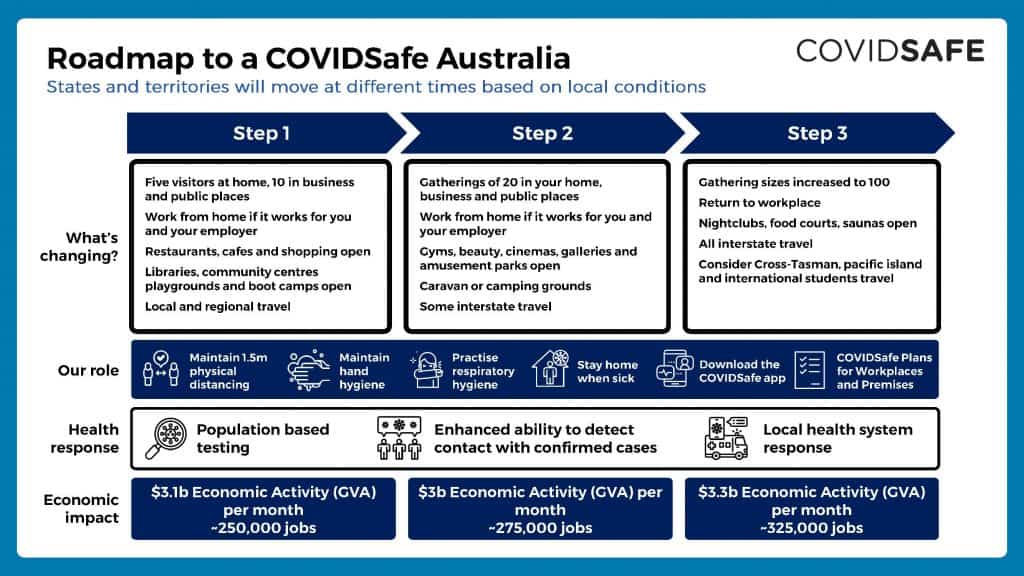
Australian government reopening strategy

On the afternoon of May 8 2020 the Prime Minister, Scott Morrison, and Chief Medical Officer, Brendan Murphy, revealed the decisions of the National Cabinet. This is a national plan developed with the agreement of State Premiers and Chief Ministers who will be largely responsible for how this plan is implemented in their local jurisdictions. Many of the occupational health and safety (OHS) challenges have been anticipated by business owners as discussed in this morning’s blog article but it is worth looking at the infographics of the plan revealed by Morrison and Murphy but also the transcript of the press conference as that provides an important context to what the government expects to happen.

The government released two infographics, one was four pages of the broad plan, the other is that plan split into industry sectors.

Subscribe to SafetyAtWorkBlog to continue reading.
Subscribe Help
Already a member? Log in here

Reopening challenges are more like manageable inconveniences

Many Australian workplaces will be reopening in the next few weeks.  Their productivity capacity will change, their workplaces, will change and their approach to, and understanding of, occupational health and safety (OHS) will need to change.  But there are signs that some business owners and employers are embracing risk and safety in this new operating climate but there are others who are either denying the changes needed, are struggling to think creatively, are ill-informed or are stupid.  Most of these realities were on display in a single edition of the Australian Financial Review (AFR) on May 8, 2020 (paywalled) – the primary source for this article.

The timing of the newspaper edition is important as it was published on the morning before the Prime Minister, Scott Morrison, and Chief Medical Officer, Brendan Murphy, revealed the decisions of the National Cabinet. A further blog article will be produced on those decisions shortly.

Lifts and Whinging

The AFR front page carried a short story called “Elevated risks in office lifts” that shows the deficiencies of several thought processes mentioned above.

Subscribe to SafetyAtWorkBlog to continue reading.
Subscribe Help
Already a member? Log in here
Concatenate Web Development
© Designed and developed by Concatenate Aust Pty Ltd