Duty of Care to the safety and health of “others”.

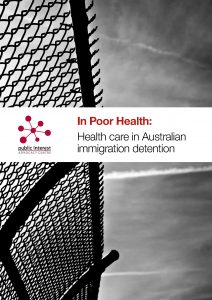
The Public Interest Advocacy Centre (PIAC) has released a very good report about Australia’s immigration detention centres which includes a long discussion on duty of care to detainees under Common Law. The report, “In Poor Health: Health care in Australian immigration detention” does not include any discussion on the duty of care under work health and safety (WHS) legislation however it can be argued that the Australian Government, through its supply chain, chain of responsibility and contract management, also has a duty of care to detainees under health and safety laws.

Several recent legal actions and workplace safety guidance indicates that clarification about the duty of care on physical and psychological risks to “others” is overdue.

Subscribe to SafetyAtWorkBlog to continue reading.
Subscribe Help
Already a member? Log in here

We need a safe system of business

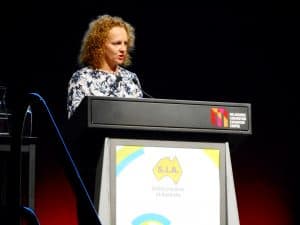
Throwing chocolates to delegates, audience participation, push-ups, book giveaways, hand-eye coordination exercises – not the usual elements of the opening keynote speaker of a safety conference.  Day 2 of the Safety Institute of Australia’s recent conference had a more traditional opening with presentations from a State workplace safety regulator and Australia’s occupational health and safety (OHS) agency.  If entertainment is your thing, jump for the chocolates, but if information is why you attend conferences, Day 2 was the better one.
The first speaker was

Subscribe to SafetyAtWorkBlog to continue reading.
Subscribe Help
Already a member? Log in here

An EU donation benefits the NZ OHS profession

Earlier this year the Safety Institute of Australia (SIA) was the beneficiary of funds granted as part of an Enforceable Undertaking (EU) after a company breached occupational health and safety (OHS) laws.  This month it was the turn of the New Zealand Institute of Safety Management (NZISM).

As a result of an OHS prosecution of Fletcher Constructions by WorkSafe New Zealand, an Enforceable Undertaking was agreed to and one of the obligations was a $10,000 donation to NZISM.  The EU says the donation is intended

“… to assist its work in supporting and providing educational development opportunities for health and safety professionals in New Zealand.”

Subscribe to SafetyAtWorkBlog to continue reading.
Subscribe Help
Already a member? Log in here

Grenfell’s “race to the bottom” equally applicable to workplace health & safety

Occupational health and safety (OHS), building safety and public safety often overlap but never more so than in the instance of the Grenfell fire of June 2017.  The UK Government has just released the final report into the incident and there are many interesting lessons for workplace health and safety and its social role.

Subscribe to SafetyAtWorkBlog to continue reading.
Subscribe Help
Already a member? Log in here

Why are we arguing about Industrial Manslaughter laws?

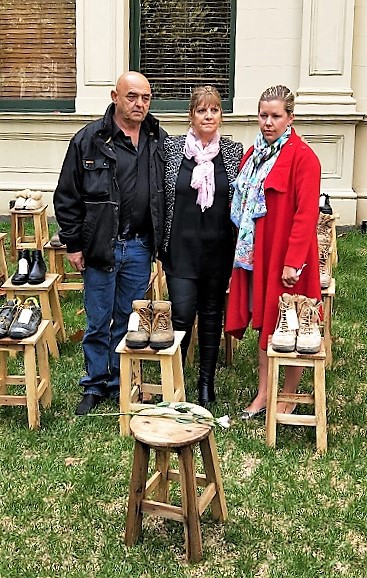
From left: Dave Brownlee, Janine Brownlee & Lana Cormie

On the issue of Industrial Manslaughter laws, Lana Cormie (pictured far right) said:

“Employers need to have motivation to do the right thing, ’cause clearly they don’t do it off their own back.  So, if that means, if this’ll be the difference between them making OH&S a high priority and not, then it needs to be done.  And I think all the other benefits for the men on the ground, and the women on the ground, will filter down from that.  “

Her comments on International Workers Memorial Day emphasises that the introduction of these laws is not so much about new laws but the failure of the existing ones and of their application.  Over time, the general commitment to implementing occupational health and safety (OHS) has declined in many workplaces or, at least, has not progressed in the way expected by the safety law makers of the 1970s and 1980s.

Government has relied on the increase of financial penalties as the major deterrent Continue reading “Why are we arguing about Industrial Manslaughter laws?”

Interview with Dr Gerry Ayers

This weekend is the International Workers Memorial Day.  In Victoria, in particular and in Australia more generally, it is highly likely that the issue of Industrial Manslaughter laws will be raised as part of a trade union campaign.

Dr Gerry Ayers, the OHS&E Manager of one of the branches of the CFMEU, features in an online petition about these laws and it seemed the right time to interview Dr Ayers about these laws but also about workplace health and safety enforcement and practices more generally.

Subscribe to SafetyAtWorkBlog to continue reading.
Subscribe Help
Already a member? Log in here

Flogging the banks could help safety

Australia’s Royal Commission into banking and financial services is a few months in and the evidence provided of wrongdoing is so substantial that those who were critical of the need for such an investigation are admitting they were wrong.

SafetyAtWorkBlog is applying the logic that occupational health and safety (OHS) succeeds best when it is part of the organisational culture.  Australia has often held its banking and financial services as “world-class” and many of that industry sector’s leaders have been prominent in speaking about the importance of leadership and corporate morality.

The financial and banking industry’s credibility and authority in Australia is gone and the OHS profession can learn much from this failure, even when the failure is in its early stages of exposure.

Subscribe to SafetyAtWorkBlog to continue reading.
Subscribe Help
Already a member? Log in here
Concatenate Web Development
© Designed and developed by Concatenate Aust Pty Ltd