Is the era of resilient people over?

In occupational health and safety (OHS) one hears about resilience usually in terms of psychological health and the ability to cope with stress. Applying a primary focus on resilience to prevent and manage mental health at work has been discredited, but resilience has a broader application and one that echoes the OHS-based concerns.

Subscribe to SafetyAtWorkBlog to continue reading.
Subscribe Help
Already a member? Log in here

Beyond COVID Toward Safer Smarter Workplaces

The recent COVID-19 pandemic is over, but the virus and risk continue. Like any biological hazard that occurs in or affects workplaces, occupational health and safety (OHS) personnel need to be ready to respond appropriately should the hazard emerge or expand.

It is generally accepted that Safe Work Australia responded as quickly as possible when developing COVID-19 guidance, given that everyone was trying to work out what the hell was happening. Shortly before the pandemic, WorkSafe Victoria had published the first edition of a guide on how employers could respond to pandemics.

But where is Australia at now? How prepared are we for the next disease pandemic or epidemic? I asked Safe Work Australia and WorkSafe Victoria for an update.

Subscribe to SafetyAtWorkBlog to continue reading.
Subscribe Help
Already a member? Log in here

Heat, Harm and the Cost of Denial

As Victoria shivers in the middle of its Winter and a cop-killer runs loose in the mountains in the middle of the state, it may seem odd to think about the occupational health and safety (OHS) context of working in excessive heat. However, give us a couple of months, and it will be a hot topic again in the Southern Hemisphere. (First and last weather pun, I promise)

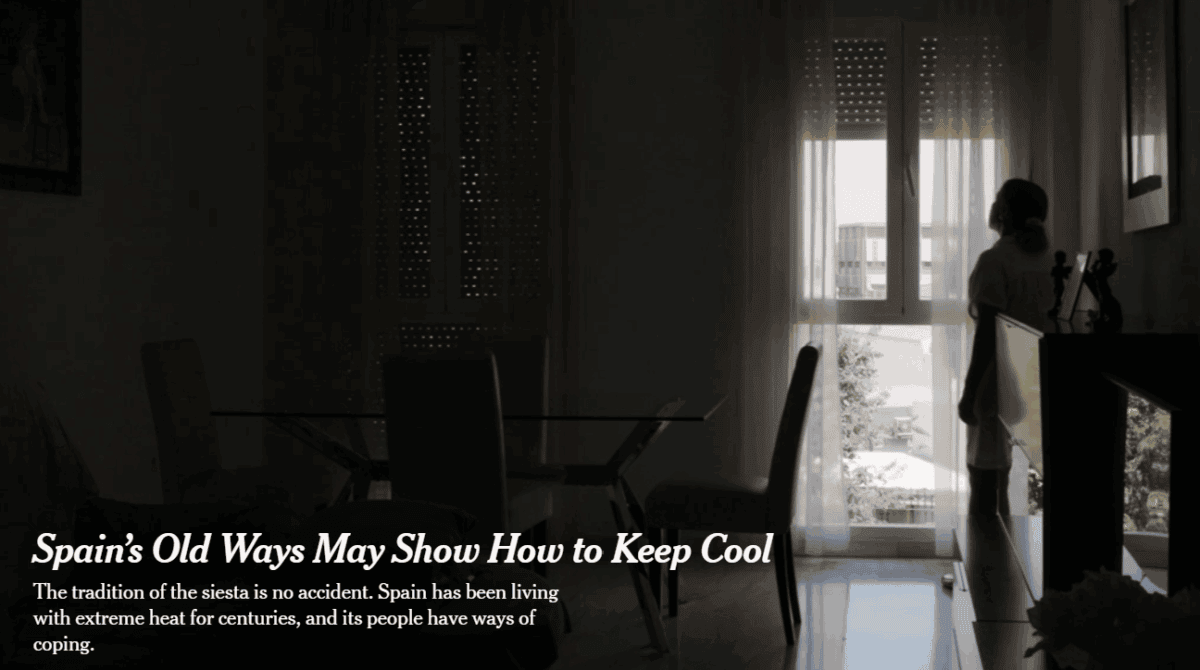
A recent article in The New York Times (paywalled) examined excessive heat in Spain, providing useful details on the changes being implemented—some old, some new.

Subscribe to SafetyAtWorkBlog to continue reading.
Subscribe Help
Already a member? Log in here

My Lovelock Lessons

I have liked James Lovelock ever since I heard about his Gaia Hypothesis in the brilliant English political drama, Edge of Darkness. I am not happy with all of his intellectual positions. I baulk at nuclear power from the unique Australian position of being nuclear-free but still exporting uranium. But as I finish reading the latest biography of him, I am starting to realise what I have learned.

Subscribe to SafetyAtWorkBlog to continue reading.
Subscribe Help
Already a member? Log in here

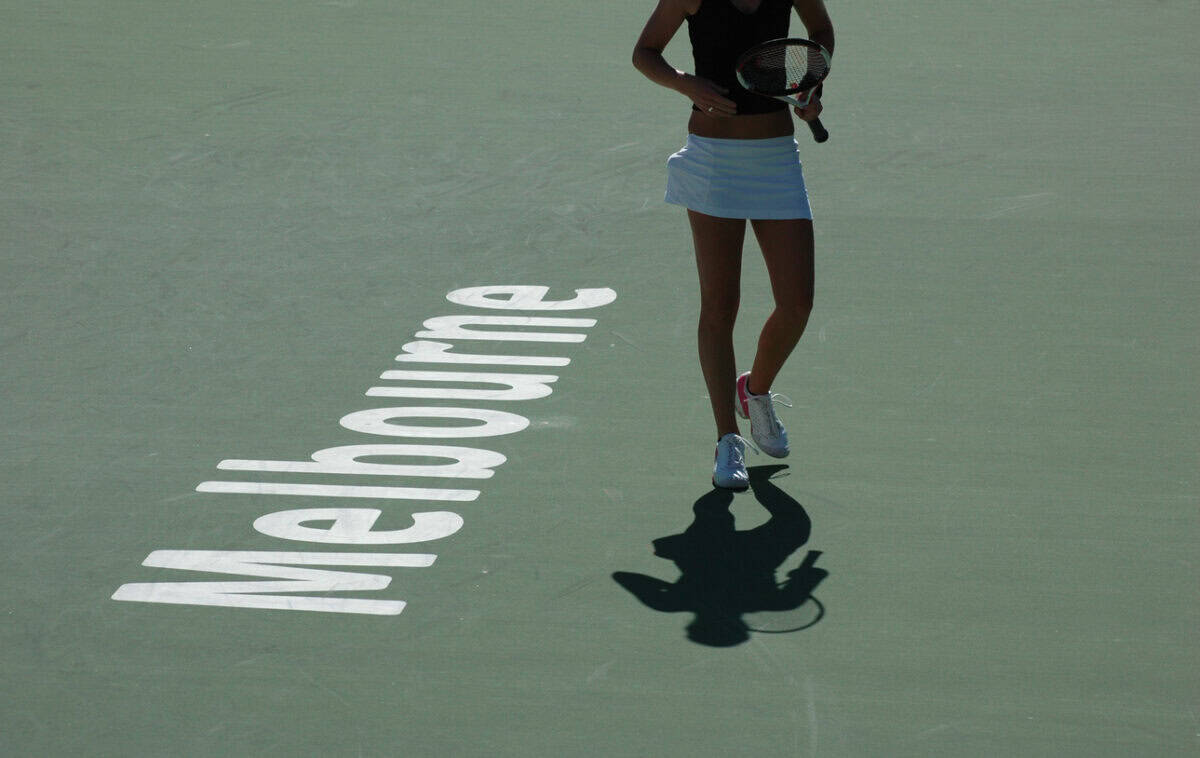
Lessons on management of heat from the Australian Tennis Open

One of the best articles about managing heat exposure at work is by Madi Chwasta of the Australian Broadcasting Corporation, who wrote about the Australian Open tennis tournament.

Tennis is usually played outdoors in summer, at least in Australia. The Australian Tennis Open, held in Melbourne, was heavily promoted and had a high public attendance rate. Some tennis matches are conducted in facilities with retractable roofs, but many others are held on outdoor courts with limited shade and no air conditioning.

Subscribe to SafetyAtWorkBlog to continue reading.
Subscribe Help
Already a member? Log in here

This 2025 forecast offers mixed messaging

Risk and governance software company Navex published a forecast for 2025 which has some occupational health and safety (OHS) relevance.  It wrote “Rising temperatures in the workplace: Addressing civility concerns” which said

“Workplaces increasingly mirror the polarization we see in the world, with tensions surrounding diversity, equity and inclusion (DEI), environmental, social and governance (ESG) initiatives, and political differences bubbling to the surface in workplace discord. Ideally, the workplace should be a collaborative environment, but now is a minefield of potential heated disagreements, making workplace civility a top priority for organizations.”

Subscribe to SafetyAtWorkBlog to continue reading.
Subscribe Help
Already a member? Log in here

The United States approach to work health and safety is getting creepy.

For most of the world, Donald Trump‘s re-election to the United States presidency is a non-event. Politicians and journalists are really interested, but Trump has little direct impact on our lives, and his policies, morals, and political strategies will affect us indirectly. Perhaps the most significant impact will be environmental.

Our business leaders take inspiration from American companies and corporate cultures. Even though he has yet to choose his Secretary of Labor, there are indications that occupational health and safety (OHS) is unlikely to progress under Trump’s term. It is useful to be aware of how Trumpian corporate culture and values may affect (infect?) the rest of the world.

Subscribe to SafetyAtWorkBlog to continue reading.
Subscribe Help
Already a member? Log in here
Concatenate Web Development
© Designed and developed by Concatenate Aust Pty Ltd