Innovative thinking needed if Australia is to save lives and improve the economy

The Australian Council of Trade Unions (ACTU) advocates for workers’ rights and entitlements with occupational safety being one of those entitlements but sometimes the safety message from ACTU is a little narrow.

On 14 March 2012, the ACTU issued a media release responding to the release of important workplace safety data by Safe Work Australia.  The release quotes ACTU President Ged Kearney emphasising very important data:

“This report has found that the cost of each workplace incident is around $99,100 and of this workers pay $73,300, the community $20,800 and employers $5100…”

and

“We think we are a clever country but it isn’t so smart to forgo almost 5% of our nation’s GDP on the cost of preventable workplace injury and illness…”

But what does the ACTU propose to address this economic cost of poor safety management? Continue reading “Innovative thinking needed if Australia is to save lives and improve the economy”

The Australian newspaper dismisses workplace deaths as “sickies”

Safe Work Australia has released two important statistical reports. One concerns the number of Work-Related Traumatic Injury Fatalities for 2009-10 and the other is called The Cost of Work-Related injury and Illness for Australian Employers, Workers and the Community: 2008-09 .

These reports have gained minimal mainstream media coverage. In a very short article The Australian newspaper preferred to focus on productivity clauses in workplace agreements following a departmental report, as is its choice, but, more significantly, the newspaper’s headline dismisses the report’s cost estimates on “work-related injuries, illnesses and deaths” as “sickies”.  The report on costs, from where The Australian drew its $A60 billion reference, includes an evaluation of the cost of workplace fatalities, defined in the report on page 18 as

“a work-related injury or disease, which results in death.”

It is enormously insulting that the newspaper includes workplace deaths in its disparaging headline “Workers’ sickies costing us $60bn”. Minister Bill Shorten states in his media release accompanying the reports that:

“Work-related injuries, illnesses and fatalities have a huge impact on Australian society. They can physically and mentally affect workers, colleagues, employers, families and the community. This latest research is evidence of the significant cost to Australia’s economy. Workplace safety is not just about avoiding human tragedy it is also about reducing economic cost for the nation.”

At a time when the Federal Workplace Relations Minister, Bill Shorten, is trying to bring some rigour and dignity to the issue of workplace safety, The Australian newspaper should be ashamed.

Kevin Jones

The synchronicity of safety and environment

There has always been a moral similarity between the occupational health and safety (OHS) profession and the environmental advocates.  One focusses on the immediate safety of humans and the other on the long term safety of humans.  This similarity can create challenges for organisations and industries that have workers in both environmental settings such as forestry and mining.  This type of challenge is currently being faced by Dr Nikki Williams of the Australian Coal Association.

In an article in the Weekend Australian on 10 March 2012 Dr Williams expressed concerns over a Greenpeace campaign against coal mining.  (Significantly the newspaper included no quotes from either Bob Brown of the Australian Greens or from Greenpeace.  ABC News did on on March 6 2012)  She inadvertently compliments the campaigners by saying the campaign shows a “a very high level of planning”, is “sophisticated” and “very detailed”. Continue reading “The synchronicity of safety and environment”

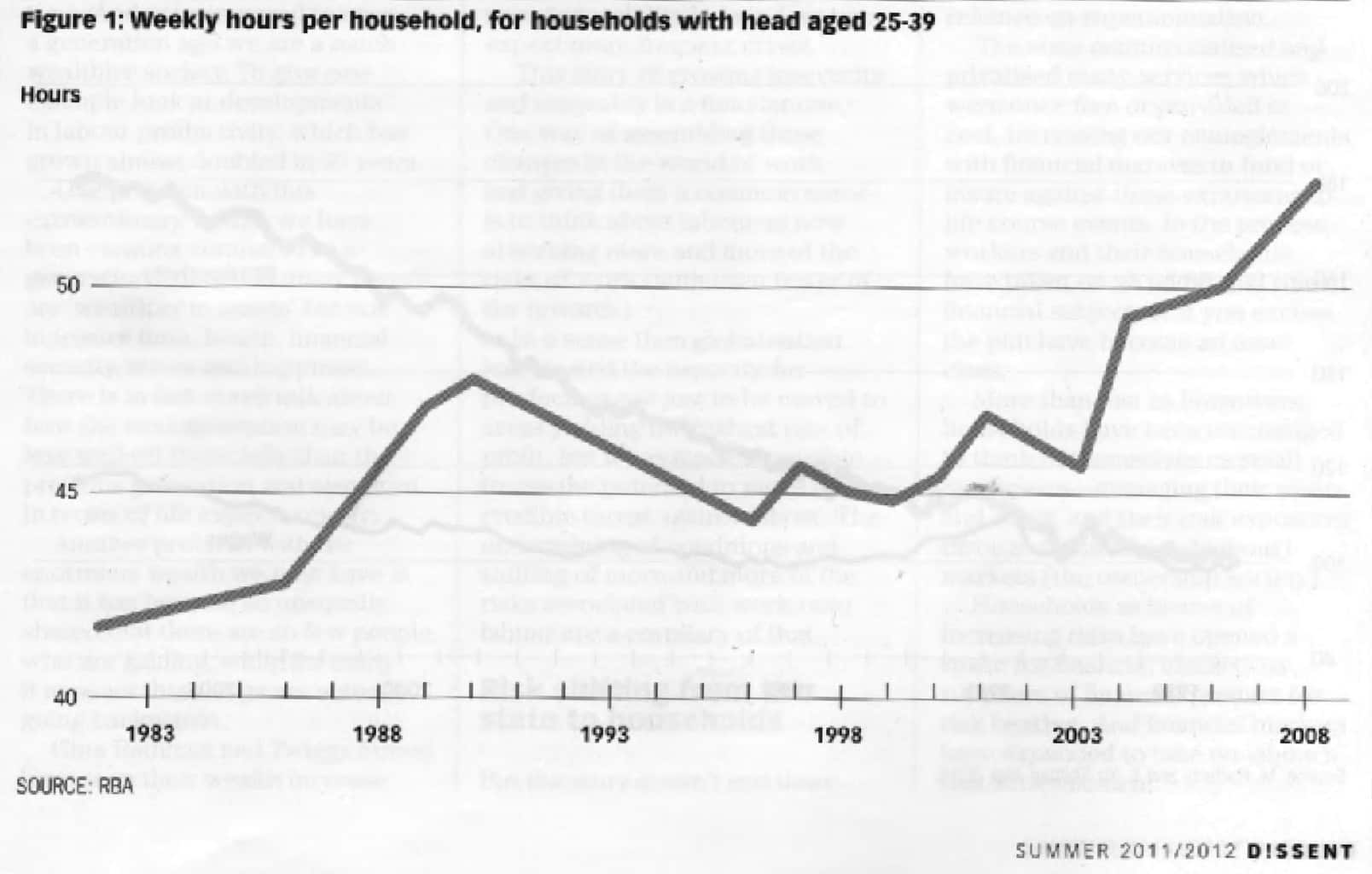
The productivity debate in Australia misses the opportunities presented by wellbeing

At the moment Australian business is campaigning on the need to increase productivity rates in Australian workplaces.  It, with the recent support of some State governments and ideological colleagues, is seeking to achieve this by weakening the recent changes to the industrial relations structure encapsulated in the Fair Work Act.  Fair Work Australiatrade unions and industry associations are primarily focussed on the industrial relations elements of this ideological fight over productivity.
Evidence of the potential productivity and economic benefits of improved occupational health and safety has been missing in the debate yet it is this linkage that Dame Carol Black has been talking about recently in Australia.  It seems there is a keen audience for her perspective in Australia as she will be visiting the country four times in 2012.
At a recent OHS conference in Melbourne one speaker said some OHS positions in the United States are being renamed Occupational Health Productivity in recognition of the importance of wellbeing  in the OHS roles.  Renaming “wellbeing” as “productivity” provides a different context to OHS activities and should better gain senior executive attention as it would be easier to see how this activity fits with traditional operational thinking. Continue reading “The productivity debate in Australia misses the opportunities presented by wellbeing”

An Australian research review blasts US quad bike research

In February 2012, the Institute for Safety, Compensation and Recovery Research (ISCRR) released a research report into the efficacy of crush protection devices (CPDs) on all-terrain vehicles or, more accurately, quad-bikes.  The report summary states that

“Experimental tests conducted by the University of Southern Queensland indicate that the Quad Bar CPD is capable of either preventing a complete roll, or modifying the roll event to reduce the risk and severity of injury to the rider for both side roll and back flip scenarios. These results highlight the potential for CPDs such the Quad Bar to reduce rider injuries and fatalities resulting from low speed roll over incidents;”

Great news for the manufacturer of the Quad Bar.  However the report is damning of some research into quad bike rollovers, particularly that which has been relied on by the quad bike manufacturers to resist the application of CPDs. Continue reading “An Australian research review blasts US quad bike research”

Han Solo – Risk Manager

I have a really bad feeling about this

In Star Wars, Han Solo and other major characters express their gut feeling about various situations.  In traditional risk management parlance, that “gut feeling” would equate to subjectivity, an element of decision-making that needs to be minimised in risk management if not eliminated.  This has been sought through various statistical analysis tools, risk nomograms and rational approaches to risk.  But all decision-making has an element of the emotional, the subjective, the gut-feeling.  This position was emphasised recently in a presentation in an OHS conference by Dr David Brooks who described risk management as an art as well as a science. Continue reading “Han Solo – Risk Manager”

OHS salary survey raises more questions than it answers

The information that safesearch has released on its annual salary survey of Australian OHS professional salaries included several curious statements. In media statements released in mid-February 2012 the following was attributed to an interpretation of the survey results:

“… a brain drain triggered by the mining boom has forced employers in other sectors to increase salaries for safety professionals”

“… it appears that companies [in the mining sector] are now being more strategic in their approach by putting an emphasis on their HR and employee branding strategies rather than simply throwing more dollars at the problem”

“The angst surrounding the failure of OHS harmonisation may be overstated, as findings from the safesearch remuneration survey released today show top safety professionals have other priorities….. The majority of respondents said the biggest issue facing organisations was the difficulty in driving the Health, Safety and Environment (HSE) message to all levels of organisations, to promote safety culture and leadership commitment to HSE.”

Brain Drain

It has certainly been the case that Australia’s mining boom has created a shortage of skilled workers.  Whether this has extended to HSE professionals is uncertain. Continue reading “OHS salary survey raises more questions than it answers”

Concatenate Web Development
© Designed and developed by Concatenate Aust Pty Ltd