A radicalised OHS profession may meet future social needs

The Australasian Faculty of Occupational and Environmental Medicine (AFOEM) has uploaded to the internet an hour-long discussion of their Position Statement on “Realising the Health Benefits of Work“.

Firstly  AFOEM should be congratulated for sharing such a resource.  Although the paper itself was launched in May 2010, to have access in July 2010 is a great achievement and an indication of the openness of the organisation and the importance the organisation places on the document.

Dr Robin Chase, President of AFOEM, says in his launch introduction that the dominant social perspective is that work is somehow bad for one’s health.  This is a perspective that OHS professionals will struggle to counter as they are always on the look-out for hazard, the potential for harm, risks.  Similarly HR people often are seen as providing services to assist workers in coping with workloads and workplace issues. Continue reading “A radicalised OHS profession may meet future social needs”

ICAP Congress of Applied Psychology is a neglected OHS resource

In July 2010, Melbourne Australia is hosting the 2010 conference of the International Congress of Applied Psychology.  What was an OHS consultant at this conference?  The question should be why wasn’t OHS consultants at this conference?

This conference is not about workplace safety, per se.  It is about how people think and communicate.  It provides research (some would say evidence), often about how people relate to each other at work.  The exciting content of this ICAP Conference makes the Safety In Action Conference look like a history lesson.

The conference has made the full program and the speaker abstracts online, for free.  Both are big PDF files but are excellent resources for those OHS professionals looking for the latest research into bullying, driver safety, health & wellbeing, organisational behaviour, leadership, fatigue, stress and other issues. Continue reading “ICAP Congress of Applied Psychology is a neglected OHS resource”

OHS: The Pearl Harbour Syndrome

OHS:  The Pearl Harbour Syndrome[i]

– Poverty of Expectations –

The Japanese attack on US forces at Pearl Harbour in the Hawaiian Islands on Sunday 7th December 1941 was a military disaster for the US described as a totally unforseen and unforeseeable attack.  It shocked the American people and brought the US into WWII (essentially the next day).  The element of total surprise (‘Why were our forces so ‘unexpecting’ and unprepared?’) was defended with the implication that, ‘we were still negotiating with the government of Japan and its Emperor in good faith’ and there was no state of war between the two nations.  In a speech to congress the next day President Franklin Roosevelt called it, “… a date which will live in infamy – the United States of America was suddenly and deliberately attacked by naval and air forces of the Empire of Japan”.

Controversy surrounds various aspects of the attack[ii] but it has become synonymous with surprise and astonishment.  However, research over the years suggests that in fact it was preceded by a large number of misunderstood or ignored warnings and missed signs.   The reason these were so completely missed, according to one scholar, is because of ‘poverty of expectations’ – routine attention to the obvious and reduced horizons for imaginative projections. Continue reading “OHS: The Pearl Harbour Syndrome”

The importance of evidence in OHS decision-making

There are a couple of actions in Australia’s OHS profession that are worth linking together.  The first is occurring outside OHS as well and that is the demand for evidence-based decision making.  The second is the push by the Safety Institute of Australia and others to establish a core body of OHS knowledge.

On the first point a recent Editorial in Elsevier’s “Policy and Safety” journal summarise the recent evolution of evidence-based decision making and evidence-based polices (EBP) which gained credence through the governments of Tony Blair particularly.  The editorial states that much of this push is a management strategy

“…based on the common-sense notion that business strategies and directions are underpinned by a solid information base will be superior to navigating without reliable charts and compass.”

In some ways this “notion” may be an assumption or an ideal.  The notion is sound, as far as it goes but, according to the editorial, evidence could be better used informing policy rather than providing the foundation.  Continue reading “The importance of evidence in OHS decision-making”

School principals seek solutions to workplace stress

Recently SafetyAtWorkBlog reported on stress issues in Tasmanian teachers.  Victorian data has been revealed of stress in the education profession through The Age newspaperr on 6 July 2010.   Apparently stress claims for school principals have cost $A2.4 million since 2005.

One principal said the claims are likely to be under-reported as a stress claim can kill one’s career.

For the purposes of this blog, control measures or causes need to be identified.  The Age article said that principals have asked the Education Department to consider the following issues.  It is reasonable to assume that these have been identified by the principals as contributory factors to workplace stress. Continue reading “School principals seek solutions to workplace stress”

Oil rig workers speak about BP/Deepwater incident

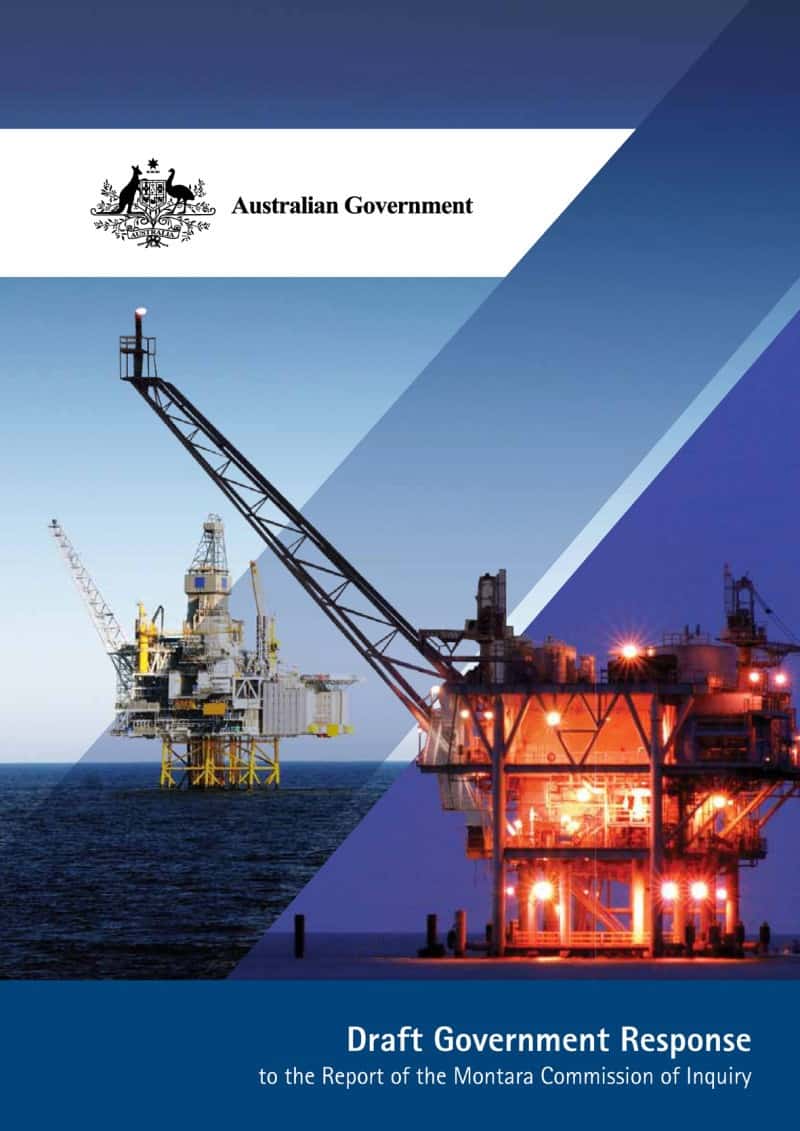
The worker impact of the BP/Deepwater incident in the Gulf Of Mexico has finally been provide a mainstream media airing in 60 Minutes.  Workers Comp Insider blog provides some commentary and embedded video of the show.

It is a curiosity of American television that everything is open for discussion even though an official inquiry is underway.  This may be to do with the fascination of all things television but may also be reflective of a country whose legal structure allows for greater and more immediate self-analysis than the United Kingdom and its Commonwealth colleagues.

From the information available about the events preceding the disaster and immediately after, there was an increased production pressure on the oil rig’s workers.  There was some confusion on the authority for decision-making on process matters.  Emergency procedures were not well-developed or the practicalities anticipated.

Clearly there were flaws in the safety management system regardless of any design issues.  The governmental inquiry will be able to provide a much more detailed and dispassionate report of these events but it is clear that at this one oil rig in the Gulf of Mexico, safety management was not clearly understood or applied by workers at the frontline.

The world is looking forward to the “big picture” report.

New suicide report has something to say about workplace mental health

Work-related suicides have been in the press a lot in Australia over the last six months.  In June 2010, the Australian Government released a report into suicide called The Hidden Toll: Suicide in Australia.  It covers suicide as a social issue broadly but there are some mentions in the report about work-related suicides that are worth noting.

On social costs:

“Ms Dulcie Bird of the Dr Edward Koch Foundation argued that whole communities are often affected when a suicide occurs and described low estimates of the number of people effected by suicide as ‘a load of nonsense’. She gave the example of the suicide of a 16-year-old boy in a small town and noted her organisation had completed ’43 face-to-face interventions for that one suicide’. The Foundation commented that suicide results in the loss of the deceased person’s contribution to society as a whole. Continue reading “New suicide report has something to say about workplace mental health”

Concatenate Web Development
© Designed and developed by Concatenate Aust Pty Ltd