
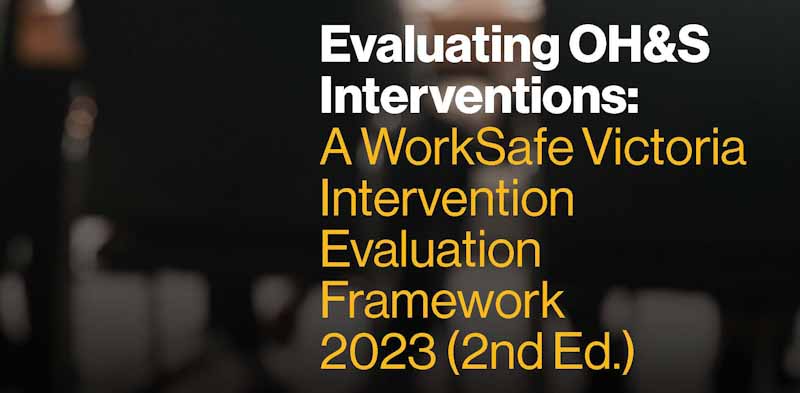
Last month, an extraordinary document appeared – “Evaluating OH&S Interventions: A WorkSafe Victoria Intervention Evaluation Framework 2023 (2nd Ed.).” Its extraordinariness comes from its appearance with no fanfare or promotion; it is a second edition of something published in 2004 (which I cannot recollect), it has authoritative authors, and it is a document many have been asking for.
Category: evidence
Hazard over Harm?
The Australian Institute of Health and Safety has been dropping new chapters of its Occupational Health and Safety (OHS) Body of Knowledge for many years. The latest revised chapter is titled “Hazard as a Concept“. This process is a good way of keeping some OHS information fresh, but it could be fresher and have a broader knowledge base or even greater engagement with OHS professionals.

WHO says burnout is occupational, but at least one psychologist says WHO is wrong
The cover story of the February 2024 edition of Psychology Today is less a story than a collection of short pieces on mental health and burnout. This blog may seem unfairly critical of much of the psychological discussion on burnout but this is largely because the World Health Organisation (WHO) has defined burnout as an occupational phenomenon and “is not classified as a medical condition”. The popular literature on mental health and its workplace context almost entirely overlooks these two elements – a literature that is often the first destination for people trying to understand their workplace distress. Sometimes, popular literature is unhelpful.
The occupational context of burnout is largely missed in this new book about exhaustion
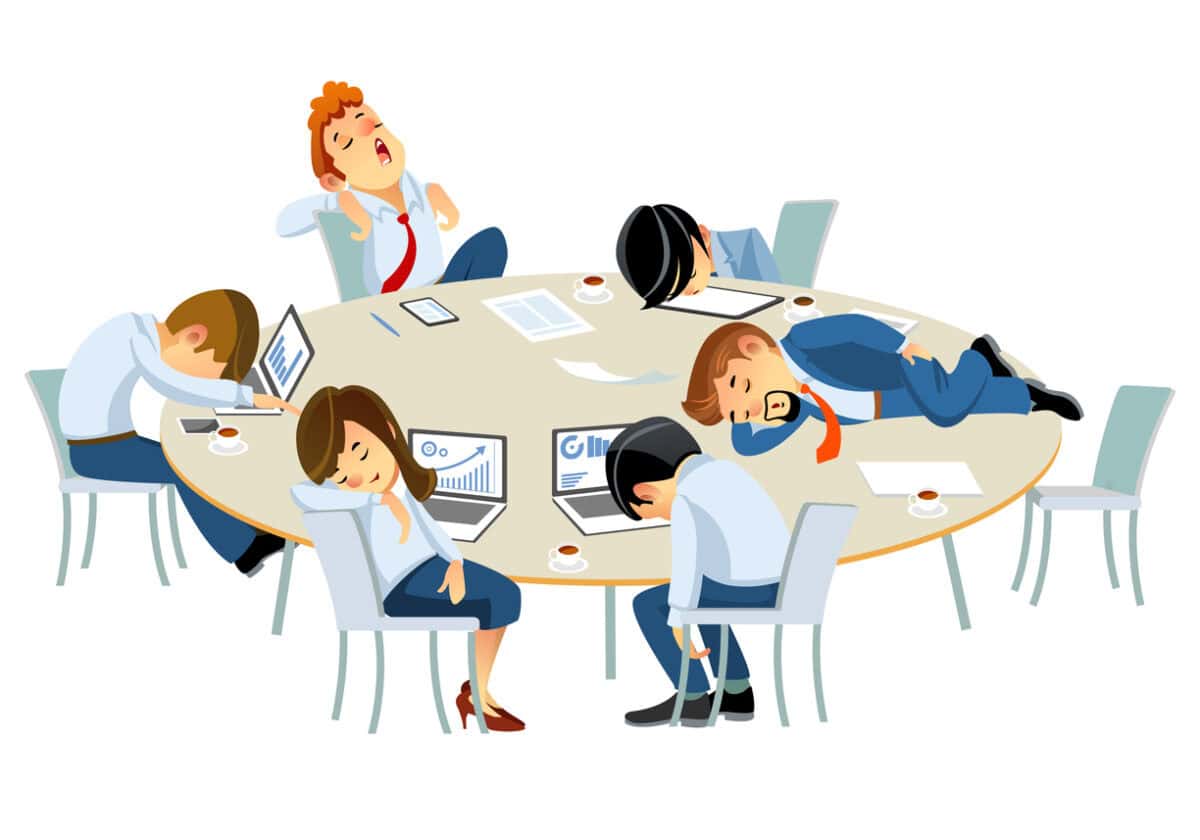
Burnout continues to have its moment in the sun. It is the cover story of the February 2024 edition of Psychology Today and is a major theme in a new book about exhaustion. The World Health Organisation’s (WHO) declaration of burnout as an “occupational phenomenon” is downplayed or ignored in both publications.
Applicability of Restorative Practices to all workplaces
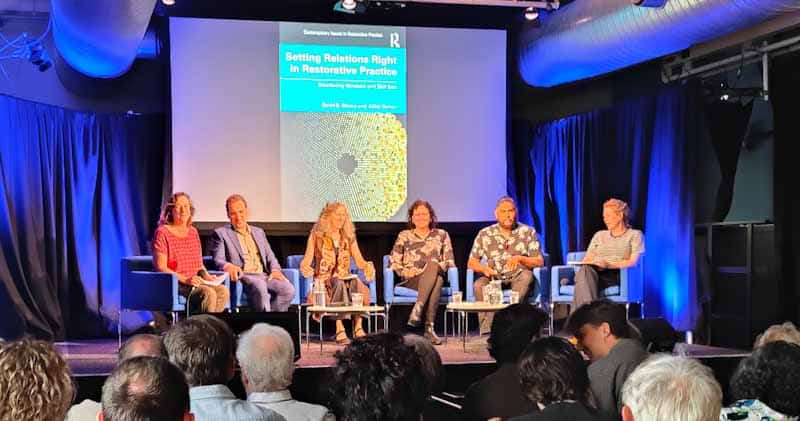
Last week, a book called Setting Relations Right in Restorative Practice by David B Moore and Alikki Vernon (pictured above, second and third from the left, respectively) was published. The launch seemed full of the authors’ friends and colleagues, as well as social workers. Although Restorative Justice has been applied a little bit to resolve workplace conflicts, the discussion was dominated by examples in youth detention, correctional facilities, health care and public sector organisations. These are important industries, but what about the private sector in which most people work?
I asked the authors for some perspectives on workplaces outside of the types already discussed?
Below is the response from Moore and Vernon.
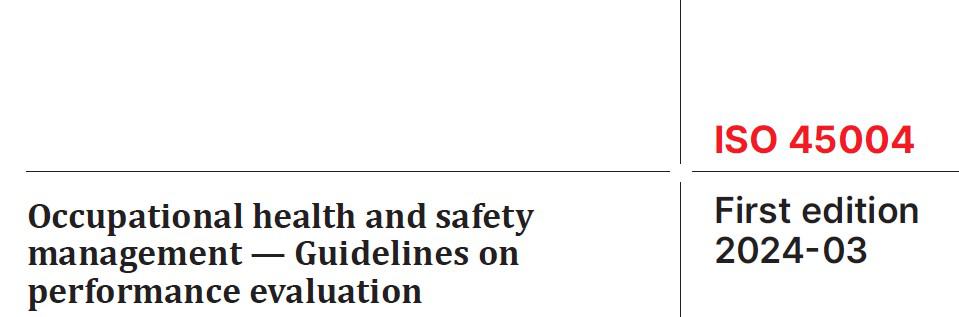
New international standard for evaluating OHS performance
On February 13th, 2024, the International Technical Committee (ISO TC 283) responsible for the design and development of ISO 45004:2024 OH&S Performance Evaluation reported that the Final Draft International Standard (FDIS) ballot yielded 54/55 supporting votes, equating to a very strong 98% international ballot approval.
ISO 45004:2024 is intended to help organisations to effectively monitor, measure, analyse and evaluate occupational health and safety (OHS) performance. OHS performance evaluation includes the organisation’s processes to assess the adequacy of activities expected to achieve intended results. OHS performance is normally evaluated using a combination of processes and sources of information such as incident investigations, inspections, audits, qualitative and quantitative indicators, culture surveys and interviews.
The new standard was published last week.
{The is a guest post by David Solomon; details are below. Some grammar changes have been applied, and hyperlinks added by SafetyAtWorkBlog]
Continue reading “New international standard for evaluating OHS performance”
“10 to 15% of suicides in the working population are attributable to work”
Job strain, job stress, and psychosocial hazards at work have become mainstream if a major public broadcaster produces radio programs and podcasts about them.
On March 15, 2024, the Australian Broadcasting Corporation’s This Working Life program interviewed Australian experts on job strain. The program offered the latest thinking on the prevalence of this hazard and what to do to prevent it.
Note: This article mentions work-related suicide.