
Australia has entered a federal election campaign, but the mechanics of the Australian parliament continued, and various occupational health and safety (OHS) comments were voiced in Senate Estimates. These comments touched on Industrial Manslaughter, regulations on psychologically safe workplaces and insecure work.
Category: evidence

Why don’t we act on the evidence?
Several years ago, I worked for an organisation that handed out awards for exceptional efforts and achievements. One time the award was given to a worker who had worked in the office for most of the weekend to meet a semi-important deadline. I was horrified as that worker had sacrificed important “downtime” with family friends and his own welfare with no time in lieu. But he was lauded by the boss.
Rewarding those who sacrifice their own health and safety for the apparent good of the company must change as there is increasing evidence that working long hours increases serious health risks. An extensive research project for the World Health Organisation has found:

It’s all about the context
Occupational health and safety (OHS) should prevent any of its conference speakers from ever using the image of an iceberg or a triangle to illustrate managerial theories. The images are valid but have been done to death in conferences over the last decade.
I came to this position when recently reading a very short article on Systems Thinking by Veronica Hotton in Dumbo Feather magazine. Hotton used the iceberg as a visual metaphor for what can be seen and what is less visible but equally influential and much larger than the visible top.
Her article is a very good, succinct explanation of systems thinking for the general reader, but I was less interested in the iceberg and more in the ocean.

No fanfare for Victoria’s workers’ compensation review
This week the Victorian Government released Peter Rozen‘s report called Improving the experience of injured workers: A review of WorkSafe Victoria’s management of complex workers’ compensation claims. The public release has been long anticipated as it has been sitting with the Minister for Workplace Safety, Ingrid Stitt, since April 2021.
The Review was forced on the Government after the second damning report on WorkSafe Victoria’s performance from Victorian Ombudsman Deborah Glass. In some ways, Rozen’s report can be seen as the third report into the Victorian workers’ compensation scheme.
Jessie Singer and the “social autopsy”
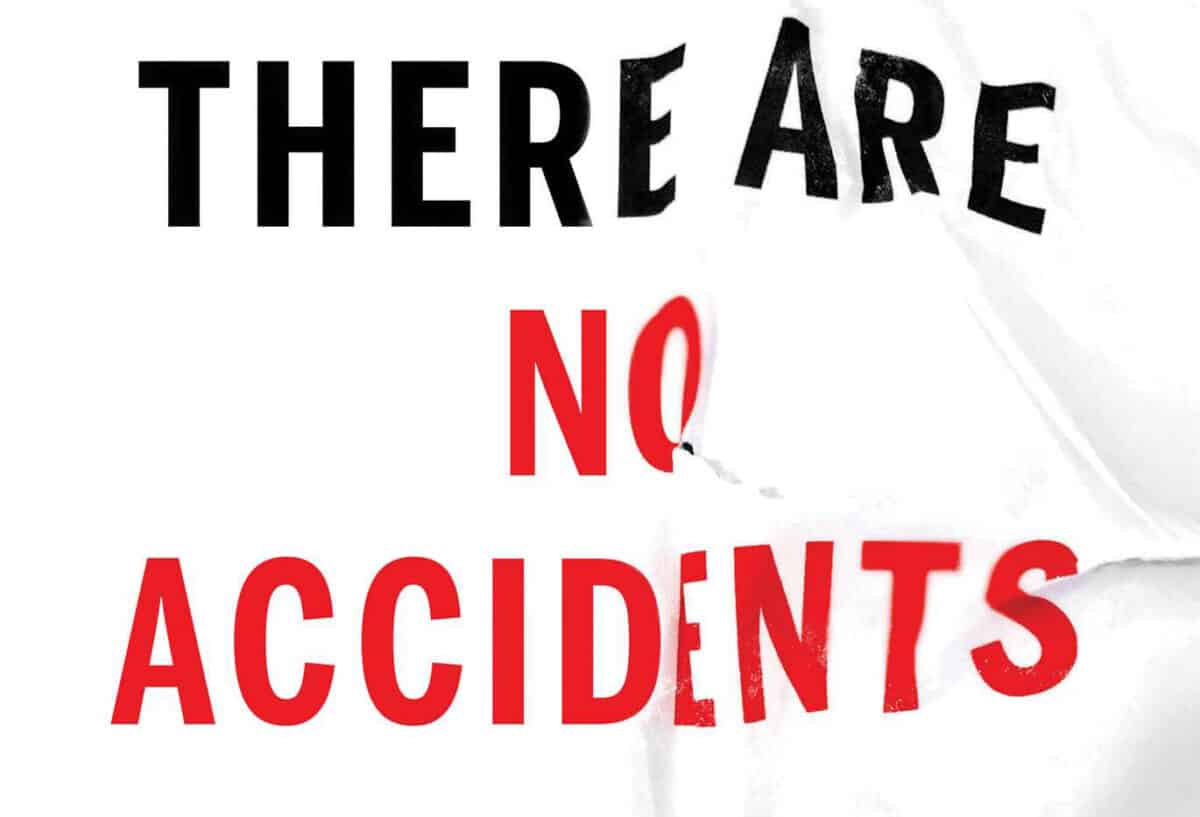
I am halfway through an extraordinary book called “There Are No Accidents –
The Deadly Rise of Injury and Disaster—Who Profits and Who Pays the Price” by Jessie Singer. It is extraordinary in many ways, but the most significant is that Singer chose to write a book for the general reader about how people are hurt at work, home and when driving and how describing these as “accidents” deflects responsibility, as if there was nothing that could be done to prevent them. This is of huge significance to the advocates of work health and safety, and the book’s release should spark interviews with Singer and book reviews which could lead to a broader social discussion of safety.
Talking about safety without saying much
The Australian Federal Budget is to be released very soon. As in every year, corporate and industry lobbyists release wishlist budget submissions even though there is no formal submission process. Sometimes these submissions include information, statements and pitches concerning occupational health and safety (OHS). The Master Builders Australia’s prebudget submission has been around since early January 2022 and the OHS chapter is educative on how the Master Builders Australia (MBA), and perhaps similar organisations, sees and understands OHS.
We need a revolution in how we think about working hours
If there was only one way available to improve the health and safety of workers in Australia, it would be to limit and enforce working hours to those in the official Awards and job descriptions.
This situation which would really be simply a case of working-to-rule, would need to be supported by other not unreasonable changes, in no particular order: