What employers need to know: the legal risk of asking staff to work in smokey air

The following article is reproduced from the excellent academic communication website The Conversation, and is written by Elizabeth Shi, a Senior Lecturer, in RMIT University‘s Graduate School of Business and Law. The article is a very useful contribution to managing the risks of working in smokey environments but is only one contribution to a discussion on occupational health and safety in smokey workplaces that has many, many months to go.

Amid thick bushfire smoke in cities including Canberra and Melbourne, employers need to consider their legal obligations.

Some have directed their workers not to turn up in order to avoid to occupational health and safety risks. Among them is the Commonwealth department of home affairs which last week asked most of its staff to stay away from its Canberra headquarters for 48 hours. Other employers want to know where they stand.

Continue reading “What employers need to know: the legal risk of asking staff to work in smokey air”


Auditing the auditors

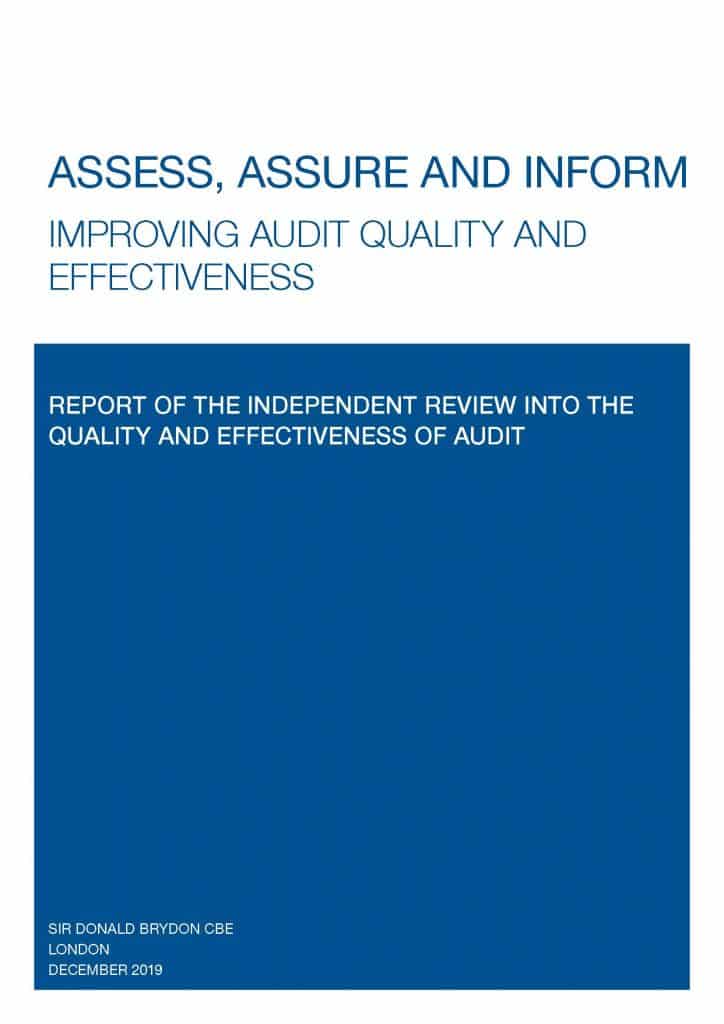
In the wake of several corporate collapses, the UK Government commissioned a review of the business auditing sector. In 2019, the final report of the Brydon Inquiry was released recommending substantial changes to auditing. Occupational health and safety (OHS) is increasingly considered as part of corporate governance so these recommendations have a direct effect on OHS management and reporting.

This report is relevant to Australia for many reasons, principally, because the audit firms that were scrutinised by Donald Brydon operate here.

Subscribe to SafetyAtWorkBlog to continue reading.
Subscribe Help
Already a member? Log in here

Australian research into corporate culture and mental health

In December 2019, it was announced that Professor Maureen Dollard had received funding to investigate “the impact of toxic workplaces on mental health”. The significance of this research is evident in the University of South Australia media release which describes this research as the “first of its kind in the world.

Subscribe to SafetyAtWorkBlog to continue reading.
Subscribe Help
Already a member? Log in here

Brexit, Boris and OHS

One reader has asked about the occupational health and safety (OHS) impacts of Brexit. This article looks specifically at The Conservative and Unionist Party Manifesto to identify potential OHS-related actions and intentions. The relevance for Australian readers is that UK and Australian politics frequently feed off each other.

The United Kingdom’s OHS laws have been greatly affected during the country’s membership of the European Union (EU). This has been seen as a nuisance by some but some EU safety Directives, such as Seveso 1, 2 & 3, have assisted many countries in establishing or strengthening their own regulations on specific hazards. EU safety rules seem amazingly complex for someone who has no involvement with them but then any economic community of over two dozen countries can seem baffling to an OHS writer who operates from an island with a small population in the Southern Hemisphere.

What can be said is that the UK will need to accommodate the “best” of the EU OHS laws in their own legislative structure, if it has not already. It is unlikely the UK will remove OHS rules that serve a positive, i.e. harm prevention, purpose unless there is a very good reason. But sometimes it seems that good reasons are not required, only political reasons.

Subscribe to SafetyAtWorkBlog to continue reading.
Subscribe Help
Already a member? Log in here

Questions asked on mining death data

The Australian newspaper published an article from the The Wall Street Journal titled “The hidden death toll from mining” (paywalled), written by Alistair Macdonald and others that questions the workplace health and safety prominence that is given to the minerals/materials sector. The opening paragraph is:

” Many mining deaths aren’t captured by global safety statistics, making the industry seem safer than it is to regulators, investors and consumers.”

Subscribe to SafetyAtWorkBlog to continue reading.
Subscribe Help
Already a member? Log in here

Even neuroscience needs sociology

Summer in Australia means a lot of time traveling in a car, often to the extent of completing an abridged audiobook and/or several podcasts.  One episode of BBC’s The World This Week caught my ear, not because it is titled “Australia Burning” but for the opinion piece by Martin Bashir (17 minute mark). Bashir discusses mid-life crises, risk aversion and neuroplasticity. I look at the relevance to occupational health and safety.

Bashir spoke about the importance of challenging oneself, especially at “an age of comfort” (my term) an achievement. This may not seem related to OHS, the raison d’être of this blog, but the age of comfort can be defined as an age of safety or risk aversion, or as Bashir says “a mechanism for self-protection”, and this period in our lives may bleed into the way we see the world, the type of OHS advice we may provide our clients and, perhaps, the way that our OHS legislation is constructed.

Subscribe to SafetyAtWorkBlog to continue reading.
Subscribe Help
Already a member? Log in here

Look deeper and read wider when trying to understand

This Forbes article on the France Telecom suicides, written by Jack Kelly, is doing the rounds on LinkedIn with various lessons identified by various commentators. Sadly Kelly dilutes the significance of the suicides and the jailing of executives by implying that the action in France is a special case, as if the executives were trapped by employment laws into taking the actions that led to the extreme anxiety felt by France Telecom’s workers.

Kelly’s concluding paragraph is unnecessarily equivocal:

“The trial shows that managers waging a campaign of harassment against employees could establish a precedent in France and other countries. It may serve as a strong warning to corporate executives and management that their actions have severe consequences. Pushing employees too hard may result in serious consequences for both the workers and the purveyors of the punishing behaviors.”

Kelly use of “may” weakens the significance of the executive’ actions, the successful prosecution and the jail sentences. Why write that this may happen when the article is about a real case of cause and effect between executive strategy and suicide? Surely “may” should have been “can”.

Subscribe to SafetyAtWorkBlog to continue reading.
Subscribe Help
Already a member? Log in here
Concatenate Web Development
© Designed and developed by Concatenate Aust Pty Ltd