Workplace suicides require organisational analyses

Some media reports on the recent suicide of another Australian Federal Police (AFP) officer indicate a change away from the dominant perspective of addressing the individual worker rather than institutional factors.

This article is not denying that suicide is a personal decision.  It is an act that most of us do not understand and struggle to do so; this is partly because, unless a note is left or the person spoke to another about their intentions, we can never be sure why someone takes their own life.  As a colleague explained to me, we try to rationalise an irrational act, or at least an act that seemed rational to the person at the time.

The Australian Federal Police has had several

Subscribe to SafetyAtWorkBlog to continue reading.
Subscribe Help
Already a member? Log in here

“Put them in jail!” – Industrial Manslaughter laws are not that simple

Christy Cain at ALP National Conference

Several people were surprised when Industrial Manslaughter laws popped up on the agenda on Day 3 of the National Conference of the Australian Labor Party (ALP) this week.  To ALP members from Western Australia and the Construction Forestry Mining Maritime and Energy Union, Christy Cain and Thomas French put a resolution on the issue to the Conference, which the delegates endorsed.

Most of the media who mentioned this resolution, and it was not many, focused on Cain’s urging of the delegates to

“Kill a worker, go to jail”.

Even though getting the audience to chant was colourful,  and the minute’s silence important, the discussion around Industrial Manslaughter laws was more nuanced.

Subscribe to SafetyAtWorkBlog to continue reading.
Subscribe Help
Already a member? Log in here

If all you have is a hammer, everything looks like a nail

The trade union movement has often been instrumental in affecting and sometimes creating government policy on occupational health and safety (OHS).  The latest generation of hazards – psychosocial – can be traced back to a survey late last century of workplace stress conducted by the Australian Council of Trade Unions (ACTU).  This week the ACTU released its survey into sexual harassment at work.

The current survey should not be seen as representative of any social group other than trade union members even though the survey was completed by 10,000 of them.  Also, this survey is far less likely to be as newsworthy as last century’s surveys as the agenda on workplace sexual harassment has already been established by reports from groups like Universities Australia and, especially, the current work by the Sexual Discrimination Commissioner and the Australian Human Rights Commission.  It is also likely to be covered, probably as a secondary issue, in the various mental health inquiries scheduled for 2019.

The ACTU survey provides additional information to our understanding of sexual harassment at work but certainly not the whole picture.

Subscribe to SafetyAtWorkBlog to continue reading.
Subscribe Help
Already a member? Log in here

OHS is often about broken promises

Occupational health and safety (OHS) is often about promises.  Employees trust their bosses to provide them with a job and the employer promises to provide a workplace that is as safe as possible.  There are also contractual policies which formalise OHS relationships between client and contractor.  But OHS is more often about those more personal promises and expectations between the boss and the worker.

A

Subscribe to SafetyAtWorkBlog to continue reading.
Subscribe Help
Already a member? Log in here

The measuring of culture creates debate

Today, Siobhan McHale, Head of HR at Dulux posted a comment and video on LinkedIn about measuring cultural change.  She introduces her post with:

“Can culture be measured? In my view it can and should be measured – in the same way as any other business activity that’s important to your success.”

The responses have been speedy and this conversation is likely to continue for sometime as McHale is monitoring the comments, some of which dispute McHale’s position.

Subscribe to SafetyAtWorkBlog to continue reading.
Subscribe Help
Already a member? Log in here

Fels sets the scene for inquiries into workplace mental health

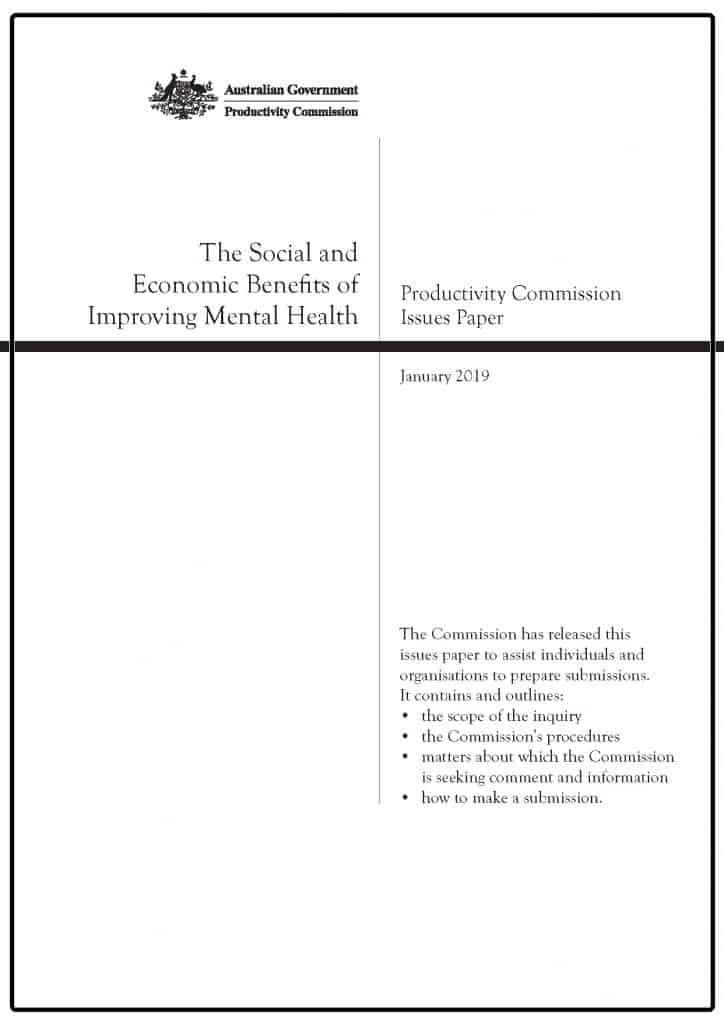
Earlier this week former chair of the Australian Government’s National Mental Health Commission, Allan Fels (pictured right) addressed a lunch hosted by the Committee for Economic Development of Australia.  The topicality of his presentation stemmed from two major inquiries into mental health – one by the Federal Government and undertaken by the Productivity Commission (PC), the other is a Royal Commission from the Victorian Government.  The breadth of the Terms of Reference (ToR) of the PC inquiry has generated a very broad level of interest across the social spectrum.  The Royal Commission ToR are yet to be released.

Fels acknowledged the role that workplaces have in addressing mental health

Subscribe to SafetyAtWorkBlog to continue reading.
Subscribe Help
Already a member? Log in here
Concatenate Web Development
© Designed and developed by Concatenate Aust Pty Ltd