Don’t be tough, be effective

Coal Mine Hydraulic Excavator and Dump Truck

On 31 October 2018, the Queensland Government got tough on safety in its mining and resources sector.  But how tough is tough? A press statement says that

“Parliament today backed maximum penalties close to $4 million for mining companies that fail to keep their workers safe. As well, mines inspectors will be able to hit mine operators with tough new fines of up to $130,550 without taking them to court.”

For those of us who do not have $4 million to cover prosecutions over occupational health and safety (OHS) breaches this may indeed sound “tough” but recent inquiries and reviews into OHS enforcement question whether financial penalties are the most effective way of improving workplace health and safety.
Subscribe to SafetyAtWorkBlog to continue reading.
Subscribe Help
Already a member? Log in here

Scissor Lift death findings clarify the context of OHS

If all you knew about occupational health and safety (OHS) was what you read in the physical or online newspapers , you would not know anything about safety management – or maybe anything positive.  It takes being involved with managing safety in the real world to understand how OHS operates in the real world.  But even then we only learn from our own experiences.
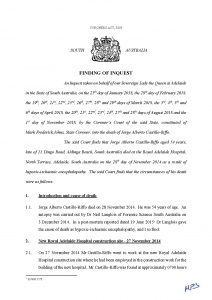
The 92-page coronial finding into the death of Jorge Castello-Riffo, released last week, is a tragic and detailed case study of OHS in the real world and should be obligatory reading for OHS professionals and those trying to understand the push for increased OHS, penalties and  corporate accountability.  Below I look at just one section of the Coronial Findings in this article – the Coroner’s responses to a set of proposed recommendations.

Subscribe to SafetyAtWorkBlog to continue reading.
Subscribe Help
Already a member? Log in here

A new statistical perspective on work-related injuries and illnesses

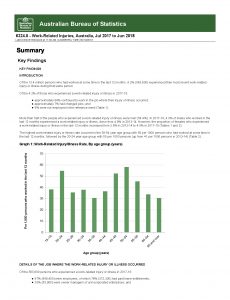
In late October 2018, the Australian Bureau of Statistics (ABS) released a summary of the latest work-related injury and illness data, although it was easy to miss as few, if anyone, reported on it. On first view, that mental health is barely mentioned in the Summary is surprising and the workers compensation data raises interesting policy questions.
Subscribe to SafetyAtWorkBlog to continue reading.
Subscribe Help
Already a member? Log in here

Misunderstanding sleep – Part 2

Most non-transport industries do not look for the lack of sleep or fatigue as a factor in their investigations.  Unless a formal investigation is undertaken, fatigue is rarely mentioned and, if it is, it is categorised as a “contributory factor”, which often means it is given such a low priority that nothing will be done about it.  This is partly a legacy of silo thinking that sleep is a non-work personal activity, which it is, but is still one that can affect work and all the relationships and decisions made at work.  But it is also partly due to the enormous disruption that could result if the lack of sleep and fatigue were taken seriously and effective control measures were introduced.

The most effective control for fatigue may be human-friendly shifts and “reasonable” working hours but that might not fit the shift rosters which are required to satisfy clients.  We know that night shift has higher health and physical risks than day shift so logically, get rid of night shift ….

Subscribe to SafetyAtWorkBlog to continue reading.
Subscribe Help
Already a member? Log in here

The systemic causes of poor mental health may get long-awaited attention

Source: istockphoto

Australia’s national government has announced an inquiry into mental health to be conducted by the Productivity Commission.  The Victorian Government has promised a Royal Commission into Mental Health as part of its election pledge. New South Wales has a five-year Mentally Healthy Workplaces Strategy. All of these initiatives are being applauded by the mental health advocates but two of them have yet to specify their terms of reference or their timelines for delivery, making it difficult to determine what role workplaces, workers and employers will have.

There is also a political risk that community expectations or the evidence base changes during the delivery period.  Workplace mental health seems particularly susceptible to this risk at the moment.

Subscribe to SafetyAtWorkBlog to continue reading.
Subscribe Help
Already a member? Log in here

The challenge of Crown vs Crown prosecutions

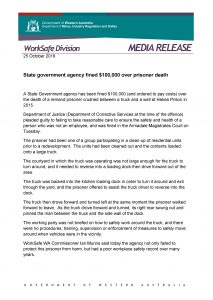
Recently the West Australian Department of Corrections was prosecuted over the work-related death of an inmate.  It was fined $100,000 plus costs over the death of a remand prisoner crushed between a truck and a wall at Hakea Prison in 2015.  The WorkSafe WA media release provides a level of detail rare in these sorts of incidents and it is recommended reading.

The incident and the prosecution raise enforcement issues that would be familiar to many occupational health and safety (OHS) regulators but also to businesses.

Subscribe to SafetyAtWorkBlog to continue reading.
Subscribe Help
Already a member? Log in here

The importance of evidence in addressing workplace mental health issues

At the recent Scientific Meeting of the Australia and New Zealand Society of Occupational Medicine (ANZSOM), Allison Milner stepped in for an ill Tony La Montagne and added value to his intended presentation on workplace mental health. This meeting is different from other conferences in one particular way, in relies on evidence and not marketing for its presentations.  This difference made Milner’s presentation very powerful.

Milner set the scene with a broad picture of mental health:

“1 in 5 Australians have a mental illness, which equivalates to about 1.5 million.  And over 3000 people lose their life to suicide every year, and the vast majority of these people being men.  But suicide affects far more people than those people who attempt or sadly lose their life.  It affects their work colleagues, it affects people in our community and it affects our family.”

Continue reading “The importance of evidence in addressing workplace mental health issues”

Concatenate Web Development
© Designed and developed by Concatenate Aust Pty Ltd