

Starting January 1, 2025, Australia will have new laws and penalties for intentional wage theft beginning January 1, 2025. The usual business lobby groups are bleating about the unfair imposition of costs and time on their members. But what about the significant impact on workers’ health, safety and dignity?
Category: executives
Red flags for OHS misunderstandings
Occupational health and safety (OHS) continues to have a credibility problem and a poor social profile. Some of this is due to OHS peddling nonsense, but probably no more than any other discipline. Some of it is due to employers and other corporate leaders using OHS as camouflage for inaction or as a distraction from a different workplace issue. Some of it is due to ignorance.
It is up to all of us to strengthen the discipline’s credibility. To help with this, here are three words commonly used by leaders that we need to question and challenge whenever they are used.
Continue reading “Red flags for OHS misunderstandings”
Why buy a dog and bark yourself?
Effectiveness is critical in assessing one’s occupational health and safety (OHS) management system. One must be sure that the system works and to repair or improve that system when a deficiency is identified. We must create and maintain a safe system of work, and we must trust it and respect it.
So why do we feel the need to remind our colleagues of their OHS obligations, which the system has already educated them about? Indeed, they are grown-ups who know what they need to do and appreciate the importance of their own safety and the safety of their teams. Part of growing up is learning from one’s mistakes by experiencing the consequences of one’s decisions and actions. A large part of OHS management is keeping people from harm and recognising and accepting that people are integral to the management system.

OHS must be careful discussing complacency
The latest edition of OHS Professional magazine carried a long article by Kerry Smith titled “Understanding and Combating Complacency in the Workplace.” The article uses examples at the worker level when the greatest risk posed by complacency is likely to be with managers, executives, their attitudes to safety, and their own safety management systems.
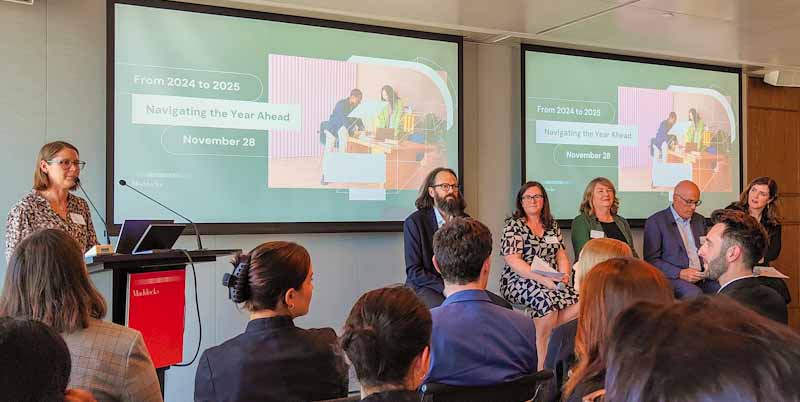
Latest OHS News from Maddocks
Last week, Maddocks law firm conducted an end-of-year summary of its workplace relations issues and a forecast for 2025. Occupational health and safety (OHS) are almost inseparable from industrial relations (IR), so the overlaps between the four or five topics discussed were enlightening and provided a good contrast to the information from other law sources.
How bad must it have been?
The corporate cultures of Australia’s mining industry have been under substantial scrutiny for over a decade. Sexual harassment, bullying, work-related suicides and more psychosocial hazards have been identified with strategies introduced to address the cultures that contribute to these occupational harms.
On 20 November 2024, Rio Tinto released a progress survey on its cultural change initiatives, which the Australian Financial Review (AFR) described as showing a “backlash” to these reforms. This survey is a significant document for those on similar journeys and for occupational health and safety (OHS) advocates.

Improvement notice issued after psychological trauma notification
Psychological injuries that happen at work or are caused by work may need to be notified to occupational health and safety (OHS) regulators in some Australian jurisdictions. Recently, an organisation associated with prominent Australian businessman Andrew Forrest underwent the notification experience and received an improvement notice.