
Measuring a safety culture

Defining safety culture is still a tricky proposition.  Definitions can vary from what Global Safety Index quotes:

‘the product of individual and group values, attitudes and beliefs, competencies and patterns of behaviour that determine the commitment to, and the style and proficiency of, an organisation’s health and safety management’.

to the, arguably more functional, definition of

‘the way you work when nobody’s looking”.

Safety culture comprises a mix of personal values, corporate values, laws, norms, expectations, hopes, respect, dignity, care, amongst others. By assessing and linking these elements it should be possible to map or pictorialise a company’s safety culture.

Several years ago at a Comcare conference in Canberra, one speaker outlined leadership and safety culture of some sections of the public service in web, spider or radar graphs (example above).  The image stuck with me, particularly after additional sets of data allowed for animation to show the evolution of culture and leadership in relation to specific interventions.  The importance of being able to provide a visual image of safety culture should not be understated. Continue reading “Measuring a safety culture”

Working at Heights seminar video available

In early September 2013 I was invited to participate in a panel discussion on the issue of working at heights.  The “crisis summit” was reported on recently by Marian Macdonald.  The videos of this panel are now available through the WAHA YouTube channel and all the separate videos are worth viewing.  The video in which I first advocate for a focus on safety is embedded below.

The questions from the floor are included in the last video of the panel discussion.  If the issue of working at heights seems dry it is worth looking at the video from the 4.30 minute mark.  Several members of the audience take the Workcover NSW representative to task.

Kevin Jones

No code of practice for workplace bullying but hope remains

Ha01-037As the 1 January 2014 implementation date for new workplace bullying processes approaches there is an increasing amount of legal, HR, and safety seminars, and newsletters and alerts being produced.  Most reiterate the amendments to Australia’s Fair Work Act but occasionally there is additional information.
In a recent seminar, it was suggested that the draft Code of Practice for the Prevention and Management of Workplace Bullying, developed by Safe Work Australia, is to be released as a guidance note rather than a Code of Practice (see below).  Continue reading “No code of practice for workplace bullying but hope remains”

OHS as an industrial relations tool

Recently Queensland’s Attorney-General Jarrod Bleijie has been asserting that a review of union right-of-entry provisions is needed because unions have been using occupational health and safety (OHS) issues as an excuse for industrial relations (IR) action.  Such assertions have been made for decades in Australia to the extent they have become fact.  Below is an article looking at one of the sources of the Attorney-General’s assertions.

In a media statement dated 5 October 2013, Bleijie stated:

“For too long, we have seen construction unions using safety as an industrial weapon in this State… Quite frankly, their abuses of the current right of entry provisions are designed to bully contractors until they get their way. Sites are being hijacked and workers held to ransom.

“I have personally heard of stories from hard working Queenslanders who have been locked out of their workplace because of militant union activity.

“Earlier this year, a major contractor lost 42 days of work due to illegal strike activity in the first year of their enterprise agreement. This practice will end.”

Some of this statement was quoted in a Sunday Mail article on 6 October 2013 following the minister’s speech at an awards ceremony with the Master Builders. Like most political media statements there is a large amount of hyperbole but this article’s focus will be on the OHS elements of the statement.  Continue reading “OHS as an industrial relations tool”

Australian research on OHS harmonisation’s progress, success and errors

The harmonisation of Australia’s occupational health and safety (OHS) laws has stagnated since the West Australian government’s tepid response to the strategy and Victoria’s belligerent and ill-founded rejection.  But some continue to examine the harmonisation process.  Eric Windholz is one of those researchers.

Windholz is a former executive of Victoria’s WorkSafe and is now  with the Monash Centre or Regulatory Studies and is writing his thesis on OHS harmonisation (to be available soon through the Monash Library).  Windholz acknowledges the political context of harmonisation, a context he describes as “contentious”.

The political maneuvering of various stakeholders in the harmonisation process deserves additional study.  The harmonisation, or even national uniformity, of safety has occurred over a similar period in Australia with other industry sectors, most noticeably in rail.  It is a strategy that was started by the conservative government of John Howard, embraced by the Australian Labor Party through its various prime ministerial incarnations and is now stagnant or even ignored. Continue reading “Australian research on OHS harmonisation’s progress, success and errors”

Always look for the evidence on workplace bullying and make sure it’s local

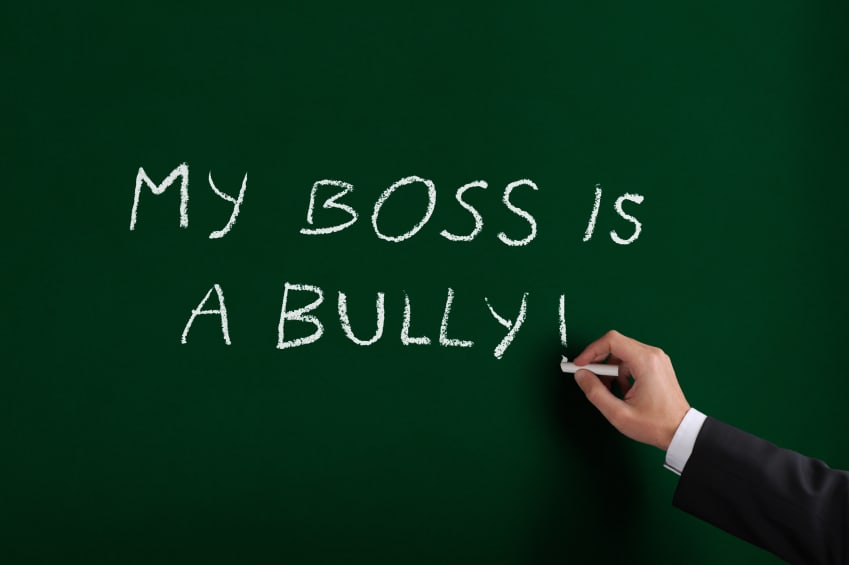
Boss is BullyOn September 9 2013, the Canberra Times published an article by Bill Eddy, entitled “Bullying a practice for the whole workplace to solve“.  (The article has been tweeted and referenced several times in the past week in Australia.)  Bill Eddy is due in Australia soon to conduct a workshop on workplace bullying. The article has some sound advice on workplace bullying but what caught my attention was the opening line:

“Research indicates that workplace bullying has a more negative effect on employees than sexual harassment, perhaps because there are more procedures in place for dealing with sexual harassment.”

What research? Continue reading “Always look for the evidence on workplace bullying and make sure it’s local”

New quadbike safety research in a time of political change

In the next edition of the Medical Journal of Australia (MJA), Dr Tony Lower, Director of Australian Centre for Agricultural Health and Safety and Monash University researchers ( Angela J Clapperton and Emily L Herde) will be providing more evidence about the death and injury rate associated with the use of All-Terrain Vehicles (ATV) and quadbikes. A unique feature of this study is that “it is the first Australian study quantifying injuries from three different data sources.”

This research is timely as only last week a Tasmanian court case was occurring over a quad bike incident on a dairy farm. According to a newspaper report on the case:

“Defence counsel Glynn Williams told magistrate Michael Brett that quad bikes were inherently unsafe and unstable…. [and]

“There is ongoing carnage on farms and while the government can legislate to make stronger and stronger dog laws there is no willingness to legislate for stronger quad bike laws”

According to a media statement on the MJA paper due for release on 16 September 2013, Lower says:

“As the data indicates not only are there increasing numbers of quad cases, they are also more serious than other similar injuries. Further, because of their threat to life, they will frequently require higher levels of medical treatment and longer recovery periods for the victims.”

“The impact of deaths and serious injuries from quad bikes is significant and I am sure everyone would like to see a decrease in these incidents.”

Continue reading “New quadbike safety research in a time of political change”

Concatenate Web Development
© Designed and developed by Concatenate Aust Pty Ltd