The Australian Government targets former PM, Kevin Rudd, over insulation deaths

The investigation into workplace deaths associated with Australia’s Home Insulation Program (HIP) was refreshed yesterday with the publication of some of the terms of reference for a new Government inquiry into the program.  The HIP deaths is an enormously politically charged issue in Australia and the politics, and associated media attention, could derail an inquiry that has the potential to provide important occupational health and safety, risk management and governance issues.

Greg Hunt, Environment Minister is quoted as saying that

“The Government is committed to a full inquiry into Kevin Rudd’s home insulation scheme that was linked to the tragic loss of four young lives,….”

According to the Courier-Mail newspaper on 27 October 2013 there will be ten elements in the terms of reference but only four are mentioned:

  • The process and basis of government decisions while establishing the program, including risk assessment and risk management;
  • Whether the death of the four men could have been avoided;
  • What if any advice or undertakings given by the government to the industry were inaccurate or deficient, and;
  • What steps the government should have taken to avoid the tragedies.

These four seem reasonable aims but this information has been leaked, the full terms of reference have not been released and a person to head the inquiry is yet to be announced.

iStock_000010997810 safety tape Medium crop Continue reading “The Australian Government targets former PM, Kevin Rudd, over insulation deaths”

Coronial findings into level crossing fatalities released

Today the Victorian Coroner has released the findings into the 2007 Kerang rail disaster and other level crossing fatalities.  SafetyAtWorkBlog has written about issues related to level crossings those articles may help when reading the many media articles that the inquest findings will generate.

Already family members of the Kerang victims have expressed their dissatisfaction with the findings. Continue reading “Coronial findings into level crossing fatalities released”

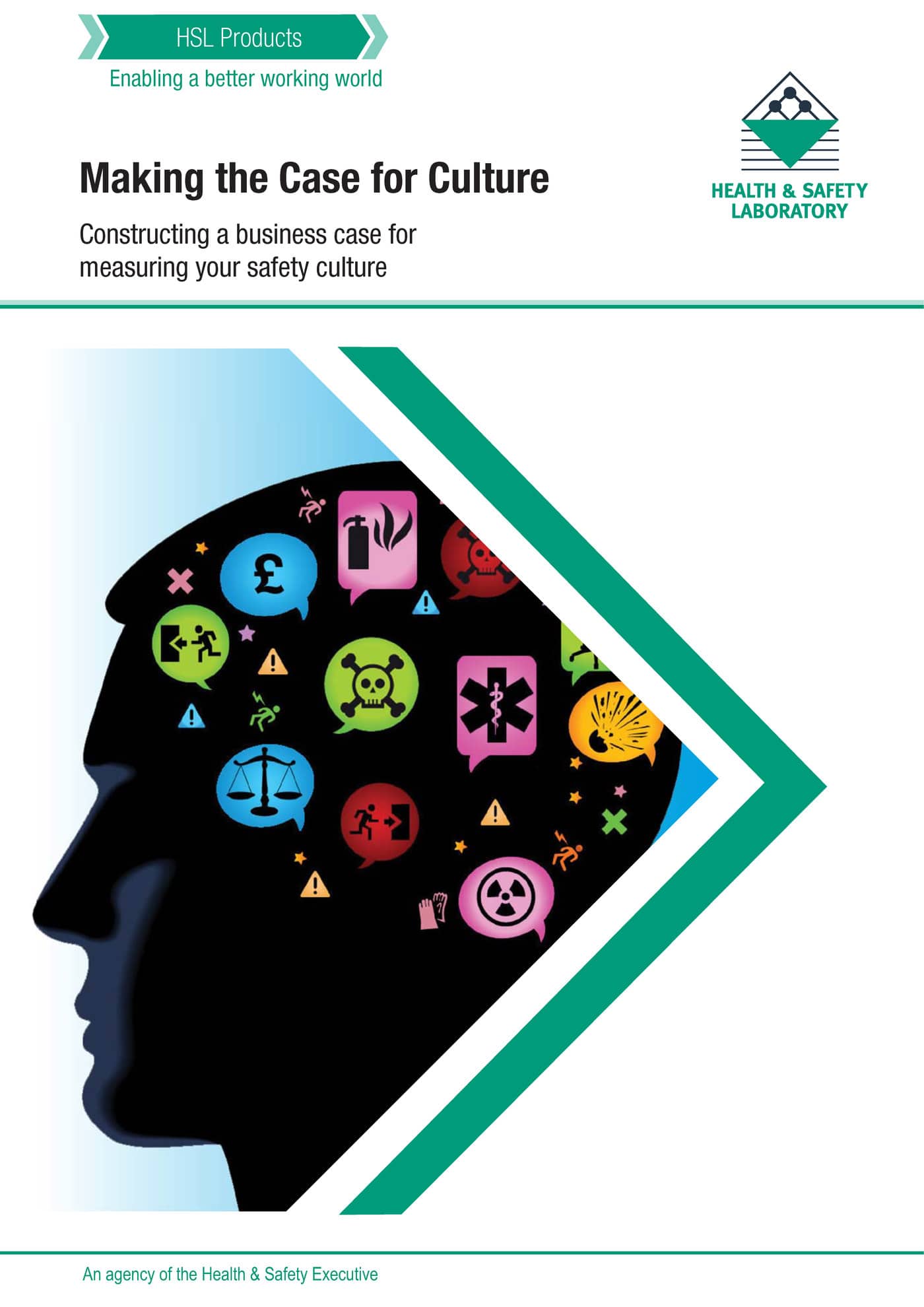
Measuring a safety culture

Defining safety culture is still a tricky proposition.  Definitions can vary from what Global Safety Index quotes:

‘the product of individual and group values, attitudes and beliefs, competencies and patterns of behaviour that determine the commitment to, and the style and proficiency of, an organisation’s health and safety management’.

to the, arguably more functional, definition of

‘the way you work when nobody’s looking”.

Safety culture comprises a mix of personal values, corporate values, laws, norms, expectations, hopes, respect, dignity, care, amongst others. By assessing and linking these elements it should be possible to map or pictorialise a company’s safety culture.

Several years ago at a Comcare conference in Canberra, one speaker outlined leadership and safety culture of some sections of the public service in web, spider or radar graphs (example above).  The image stuck with me, particularly after additional sets of data allowed for animation to show the evolution of culture and leadership in relation to specific interventions.  The importance of being able to provide a visual image of safety culture should not be understated. Continue reading “Measuring a safety culture”

Working at Heights seminar video available

In early September 2013 I was invited to participate in a panel discussion on the issue of working at heights.  The “crisis summit” was reported on recently by Marian Macdonald.  The videos of this panel are now available through the WAHA YouTube channel and all the separate videos are worth viewing.  The video in which I first advocate for a focus on safety is embedded below.

The questions from the floor are included in the last video of the panel discussion.  If the issue of working at heights seems dry it is worth looking at the video from the 4.30 minute mark.  Several members of the audience take the Workcover NSW representative to task.

Kevin Jones

No code of practice for workplace bullying but hope remains

Ha01-037As the 1 January 2014 implementation date for new workplace bullying processes approaches there is an increasing amount of legal, HR, and safety seminars, and newsletters and alerts being produced.  Most reiterate the amendments to Australia’s Fair Work Act but occasionally there is additional information.

In a recent seminar, it was suggested that the draft Code of Practice for the Prevention and Management of Workplace Bullying, developed by Safe Work Australia, is to be released as a guidance note rather than a Code of Practice (see below).  Continue reading “No code of practice for workplace bullying but hope remains”

OHS as an industrial relations tool

Recently Queensland’s Attorney-General Jarrod Bleijie has been asserting that a review of union right-of-entry provisions is needed because unions have been using occupational health and safety (OHS) issues as an excuse for industrial relations (IR) action.  Such assertions have been made for decades in Australia to the extent they have become fact.  Below is an article looking at one of the sources of the Attorney-General’s assertions.

In a media statement dated 5 October 2013, Bleijie stated:

“For too long, we have seen construction unions using safety as an industrial weapon in this State… Quite frankly, their abuses of the current right of entry provisions are designed to bully contractors until they get their way. Sites are being hijacked and workers held to ransom.

“I have personally heard of stories from hard working Queenslanders who have been locked out of their workplace because of militant union activity.

“Earlier this year, a major contractor lost 42 days of work due to illegal strike activity in the first year of their enterprise agreement. This practice will end.”

Some of this statement was quoted in a Sunday Mail article on 6 October 2013 following the minister’s speech at an awards ceremony with the Master Builders. Like most political media statements there is a large amount of hyperbole but this article’s focus will be on the OHS elements of the statement.  Continue reading “OHS as an industrial relations tool”

Australian research on OHS harmonisation’s progress, success and errors

The harmonisation of Australia’s occupational health and safety (OHS) laws has stagnated since the West Australian government’s tepid response to the strategy and Victoria’s belligerent and ill-founded rejection.  But some continue to examine the harmonisation process.  Eric Windholz is one of those researchers.

Windholz is a former executive of Victoria’s WorkSafe and is now  with the Monash Centre or Regulatory Studies and is writing his thesis on OHS harmonisation (to be available soon through the Monash Library).  Windholz acknowledges the political context of harmonisation, a context he describes as “contentious”.

The political maneuvering of various stakeholders in the harmonisation process deserves additional study.  The harmonisation, or even national uniformity, of safety has occurred over a similar period in Australia with other industry sectors, most noticeably in rail.  It is a strategy that was started by the conservative government of John Howard, embraced by the Australian Labor Party through its various prime ministerial incarnations and is now stagnant or even ignored. Continue reading “Australian research on OHS harmonisation’s progress, success and errors”

Concatenate Web Development
© Designed and developed by Concatenate Aust Pty Ltd