Achievements and opportunities

In November 2022, Victoria has its State Election. The current Government of the Australian Labor Party has a solid parliamentary presence and is tipped to win another term of government. Although the 2022 Platform is yet to be released, it is worth looking at the 2018 policy document for what was promised and has been achieved in occupational health and safety (OHS) since then and speculating on what is left to do or announce in 2022.

The opposition Liberal Party of Victoria does not release policy documents but does include a list of its “beliefs”.

Below is a list of what Labor “will” do from the OHS chapter of its 2018 platform document:

Subscribe to SafetyAtWorkBlog to continue reading.
Subscribe Help
Already a member? Log in here

Australia Day and OHS

[Article updated at 5.00pm]

Three Australians have received recognition on today’s Australia Day Honours – Kate Cole, Michelle Baxter and Sharann Johnson for occupational health and safety work, The official citations are for “For service to workplace health and safety”, “For outstanding public service to the health and safety of Australian workplaces and the community, particularly during the COVID-19 pandemic” and “For significant service to community health as an occupational hygienist, and to service groups” respectively.

I have never met these recipients, but I have heard several of them speak in various locations and media. The Australia Day process itself provides very little detail of accomplishments, so it is up to each of us to watch for mentions and profiles in the media over the next week or so. To help in this endeavour, below are some relevant links and hashtags.

Many award recipients have affected health and safety conditions in various workplaces. The health care setting and COVID-19 are of particular relevance, but occupational health and safety rarely gets this level of recognition. Often, no one receives an award in this sector, so this year is unique and important.

Continue reading “Australia Day and OHS”

Australia’s Prime Minister shows his ineffectiveness on OHS and COVID

Pragmatism was a theme of yesterday’s blog article. On January 19 2022, Prime Minister, Scott Morrison, showed political pragmatism in his press conference. His comments could create more discomfort between State and Federal jurisdiction and more occupational health and safety (OHS) confusion for business owners and employers.

Subscribe to SafetyAtWorkBlog to continue reading.
Subscribe Help
Already a member? Log in here

Where do you see yourself in five years’ time?

Occupational health and safety (OHS) laws continue to be relevant even when operating in a time of a highly infectious pandemic, but they are increasingly sidelined.

At the moment there are labour shortages in Australia because of the large number of workers infected, and affected, by the Omicron variant of COVID-19; a shortage exacerbated by the varying isolation and testing regimes applied by the Federal and State governments. It is a bit of a mess.

It is worth reminding ourselves that employers have a duty to proved a safe and healthy work environment with the support of employees. Employees are obliged to not allow hazards to be brought to work. At the moment, some employees are being encouraged or required to return to work if they are showing no COVID-19 symptoms; if they are asymptomatic. But everyone knows from experience and official advice over the last two years that asymptomatic people can continue to be infectious. Requiring workers to return to work, as seemed to be happening at one South Australian worksite, while still potentially infectious seems contrary to both the employer’s and employee’s OHS obligations.

Subscribe to SafetyAtWorkBlog to continue reading.
Subscribe Help
Already a member? Log in here

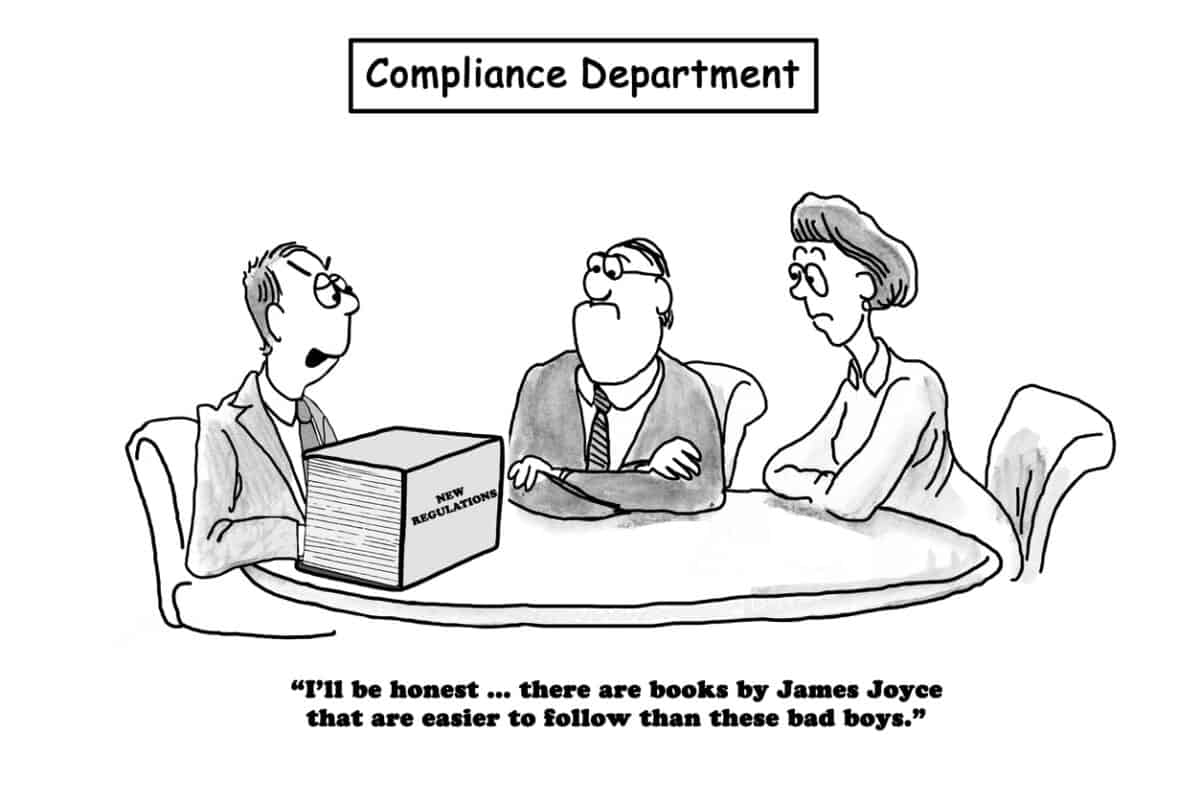
Why is the world “enthusiastic” for regulations?

Unsurprising from a global business magazine, The Economist’s special report on January 15 2002 (paywalled*) bemoaned the new “enthusiasm for regulation”. It clearly includes occupational health and safety (OHS) laws and Australia in its consideration but stops short of asking why this new enthusiasm exists.

Many regulations, especially in OHS, are proposed and introduced to address a wrong or misbehaviour or a new hazard. A major catalyst for Lord Robens‘ OHS laws in the 1970s stemmed from industrial deaths, especially those of the public. The pattern of deaths as a catalyst for change continues today with the Industrial Manslaughter laws, for instance. Another catalyst is new cultural sensitivities; what was tolerated previously is no longer acceptable.

The workplace bullying changes late last century in Australia is a good example, but this also ties in with unacceptable levels of harm. Bullying was often part of the initiation to work and seemed acceptable until workers were severely injured and traumatised, and people found out about it.

Subscribe to SafetyAtWorkBlog to continue reading.
Subscribe Help
Already a member? Log in here

A good job is also a safe job

At the moment, “The Great Resignation” remains a United States phenomenon, but part of that movement involves a reassessment of one’s job. Is it a good job? Is it meaningful work? Is it a good job now but likely not in the future? I would include my occupational health and safety perspective (OHS) and ask if it is a safe job, but I accept that my perspective is far from universal.

Recently Sarah O’Connor wrote in the Financial Times about the importance of having a decent boss. She wrote that

“Economists are increasingly of the opinion that the quality of jobs matter as much as their quantity”

Subscribe to SafetyAtWorkBlog to continue reading.
Subscribe Help
Already a member? Log in here

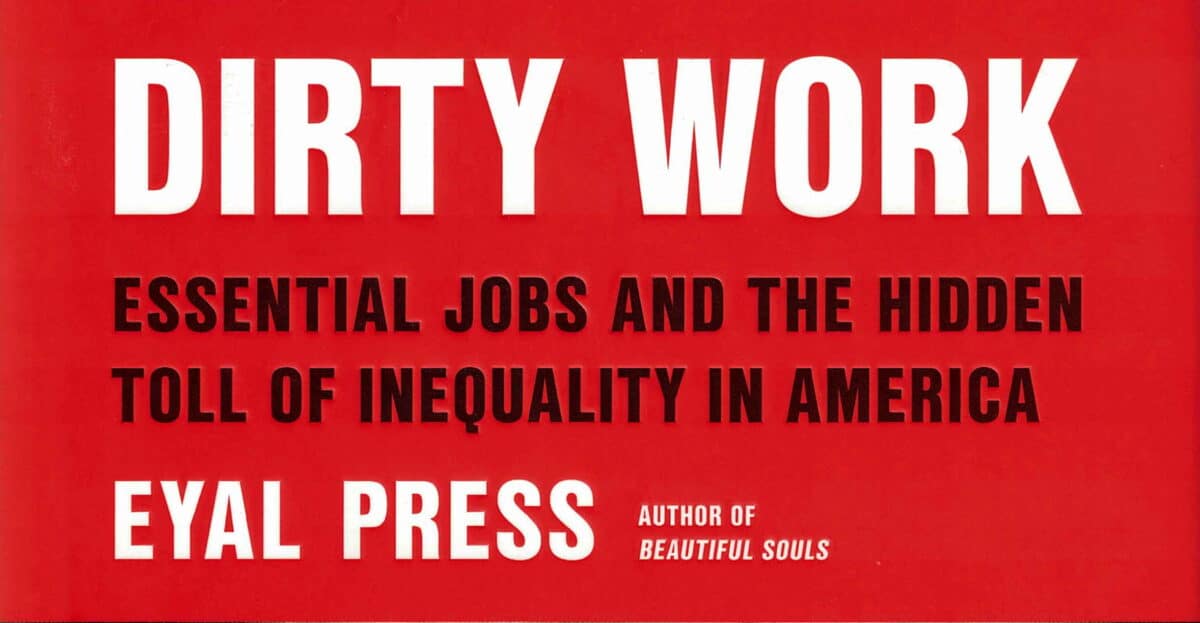
Australia needs its own Dirty Work

Eyal Press recently published “Dirty Work: Essential Jobs and the Hidden Toll of Inequality in America.” One of Press’s contentions is that coronavirus has brought the invisible workers who do our dirty jobs into view. These are now considered “essential workers” but are still subjected to the inequality and poor working conditions that rendered them invisible to the rest of society, to those who benefit from the services and products of the invisible dirty workers.

Although this blog’s theme is occupational health and safety (OHS), Press’ description of “dirty work” is an important perspective on work generally:

“The familiar, colloquial meaning of “dirty work” is a thankless or unpleasant task. In this book, the term refers to something different and more specific.
First, it is work that causes substantial harm either to other people or to nonhuman animals and the environment, often through the infliction of violence.
Second, it entails doing something that “good people” – the respectable members of society – see as dirty and morally compromised.
Third, it is work that is injurious to the people who do it, leading them either to feel devalued and stigmatized by others or to feel that they have betrayed their own core values and beliefs.
Last and most important, it is contingent on a tacit mandate from the “good people,” who see this work as a necessary part of the social order but don’t explicitly assent to it and can, if need be, disavow responsibility for it. For this to be possible, the work must be delegated to other people, which is why the mandate rests on an understanding that someone else will handle the day-to-day drudgery.”

pages 11-12, reformatted to emphasis the definition elements
Subscribe to SafetyAtWorkBlog to continue reading.
Subscribe Help
Already a member? Log in here
Concatenate Web Development
© Designed and developed by Concatenate Aust Pty Ltd