The PM expects Australian workplaces to be “as safe as possible”

Prime Minister Scott Morrison has set the occupational health and safety (OHS) bar unachievably high for Australian businesses.

Morrison is embroiled in a scandal about an alleged rape in a ministerial office, his knowledge of and response to it, and his government’s duty of care to political employees. Below is his response to this question from a journalist:

JOURNALIST: “What is your message to young women who might want to get into politics and see this and are just horrified by it. What’s your reassurance to them about getting involved in the Liberal party or other parties? “
Subscribe to SafetyAtWorkBlog to continue reading.
Subscribe Help
Already a member? Log in here

Parliamentary culture must change

Australia is in the midst of a murky investigation into an alleged rape that occurred out-of-hours in an office of a Federal Minister in Australia’s Parliament House. The incident has raised discussions and debates about workplace culture, the reporting of crimes, the uniqueness (?) of the parliamentary workplace, the rights of women, the role of the media in reporting the allegations or in being complicit in the workplace culture…….

Prime Minister Scott Morrison has got himself into a pickle about how to respond, how to investigate and what he should have known and what he was expected to do. One of the actions that he and his government could do, and should have done, was to accept, and act on, the findings of the National Inquiry into Sexual Harassment in Australian Workplaces conducted by the Australian Human Rights Commission (AHRC) early last year. The relevance of this report is obvious:

Subscribe to SafetyAtWorkBlog to continue reading.
Subscribe Help
Already a member? Log in here

Norms and culture continue to impede change in Australia’s transport sector

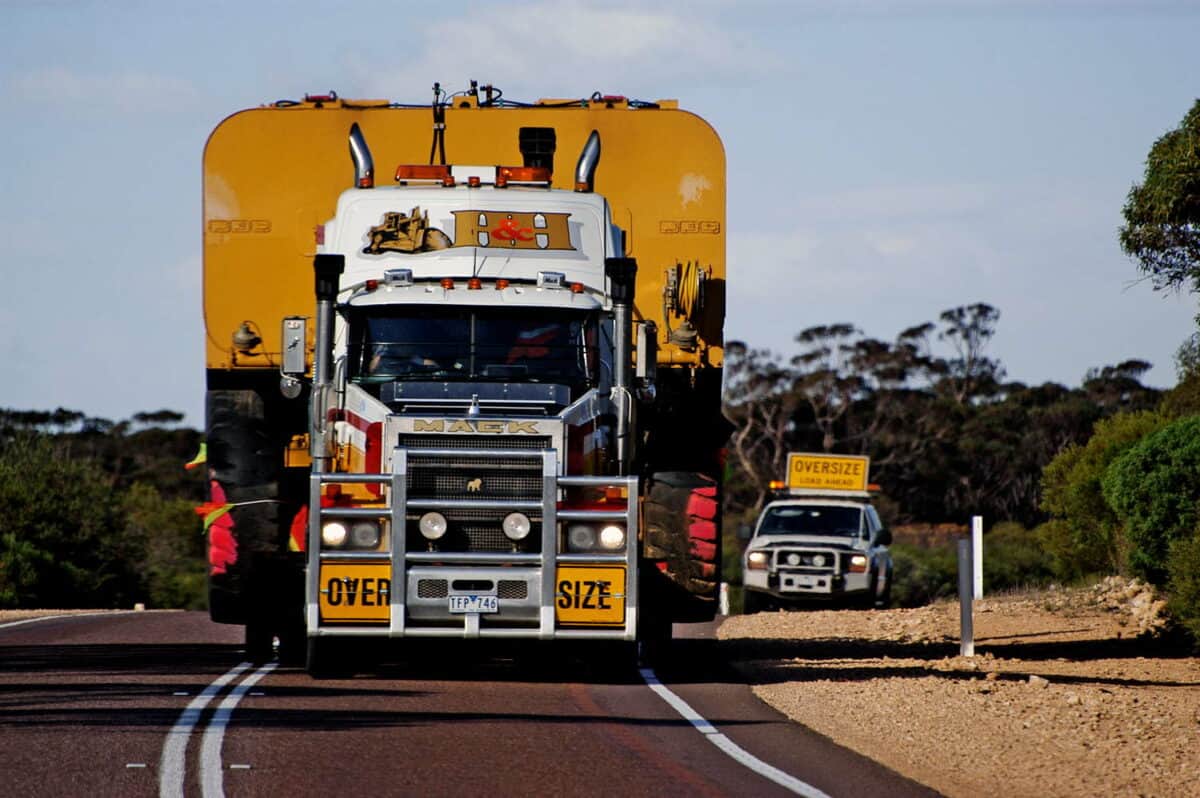
Australia’s heavy vehicle transport industry has been involved in arguing about workplace health and safety for decades. It is also one of those issues that have been largely dominated by anecdotal evidence, as shown by the recent Australian Senate Committee hearings into the “Importance of a viable, safe, sustainable and efficient road transport industry“, much to the detriment of the occupational health and safety (OHS) of the drivers, the public safety of other road users and the families of those who die in road incidents.

Subscribe to SafetyAtWorkBlog to continue reading.
Subscribe Help
Already a member? Log in here

Odd sexual harassment guidance

Safe Work Australia has released an important national occupational health and safety (OHS) guidance called “Preventing workplace sexual harassment.” The advice included is very good, but the presentation is so plain and vanilla as to be unattractive – unattractive in that there is little to encourage anyone from reading what is very important information. No images, no flowcharts, no graphics, no infographics but perhaps most importantly – no case studies.

This is not to suggest that SWA guidance needs to look like a “Dummy’s Guide”, but readability is more than grammar, understanding comes from more than just information.

Subscribe to SafetyAtWorkBlog to continue reading.
Subscribe Help
Already a member? Log in here

Ask not what WorkSafe can do for you, but what you can do to improve safety

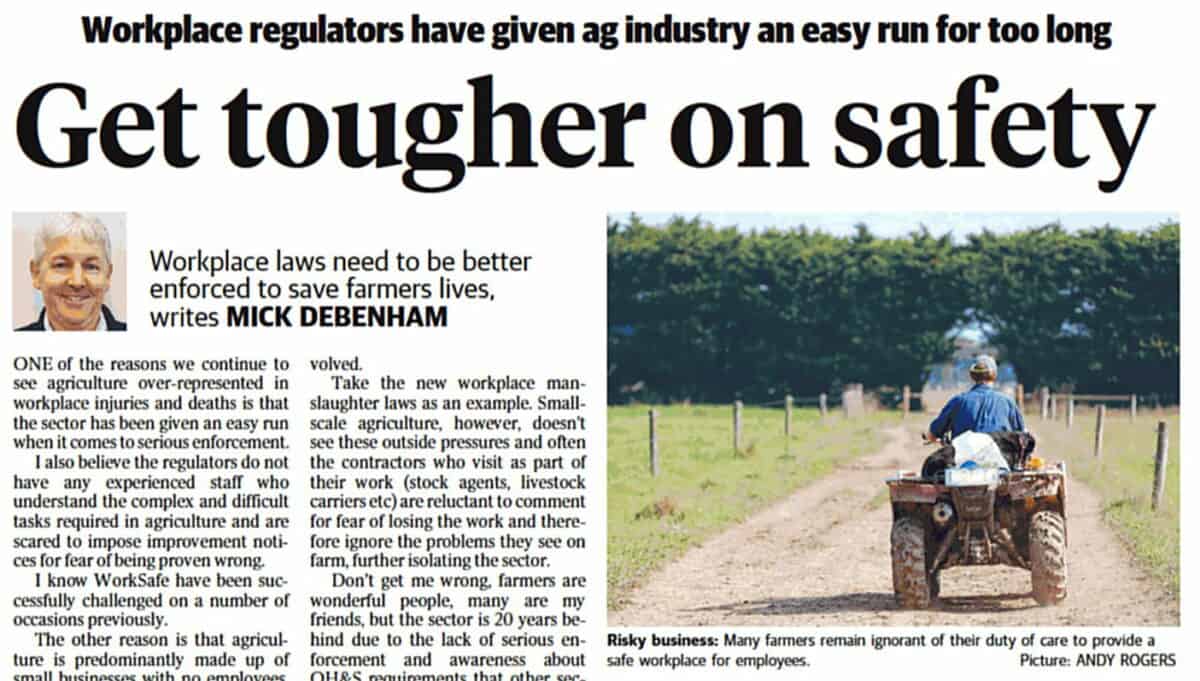
One of the most difficult industries in which to achieve occupational health and safety (OHS) improvements is farming, especially in areas where farming continues to be done by small family units. The safety culture of farming is unique as the workplace is embedded in community and rural culture. Some people believe that OHS regulators have given the agricultural industry an easy run for too long, as stated by Mick Debenham in a recent opinion piece in The Weekly Times (paywalled), but farmers should perhaps ask themselves why people continue to die on their farms and what they can do to change this.

Subscribe to SafetyAtWorkBlog to continue reading.
Subscribe Help
Already a member? Log in here

Biden reverses Trump’s position on workplace safety

It is fair to say that the term of office for President Trump was not supportive of occupational health and safety (OHS). Former President Trump did not seem to see the need for OHS regulations and his attitude to the COVID-19 pandemic meant that it would never be considered as an occupational disease. Reports over the last week in the United States media, and the issuing of an Executive Order, indicate that new President Biden values workplace health and safety.

The New York Times (paywalled) is reporting that

“President Biden directed the Occupational Safety and Health Administration [OSHA] on Thursday to release new guidance to employers on protecting workers from Covid-19.
In one of 10 executive orders that he signed Thursday, the president asked the agency to step up enforcement of existing rules to help stop the spread of the coronavirus in the workplace and to explore issuing a new rule requiring employers to take additional precautions.”

Subscribe to SafetyAtWorkBlog to continue reading.
Subscribe Help
Already a member? Log in here

Wilde about Industrial Manslaughter

Many people are sick of the issue of Industrial Manslaughter because it has seemed to dominate the discussion of occupational health and safety (OHS) and taken the focus away from harm prevention reforms on silica, mental health and others. However, Industrial Manslaughter (IM) continues to be raised in Australian Parliaments. In December, Shadow Minister for the National Disability Insurance Scheme & Government Services, Bill Shorten, reminded us of some of the arguments in favour of Industrial Manslaughter laws and penalties.

Subscribe to SafetyAtWorkBlog to continue reading.
Subscribe Help
Already a member? Log in here
Concatenate Web Development
© Designed and developed by Concatenate Aust Pty Ltd