Important safety, environmental, political and personal stories in book on the Morwell Mine fire

Dr Tom Doig has continued to build on his earlier work about the Morwell mine fire, expanding his “The Coal Face” from 2015 into his new book “Hazelwood” (after court-related injunctions, now available on 18 June 2020).

SPECIAL OFFER: The first four (4) new Annual subscribers in the month of June 2020 will receive a copy of Hazelwood.
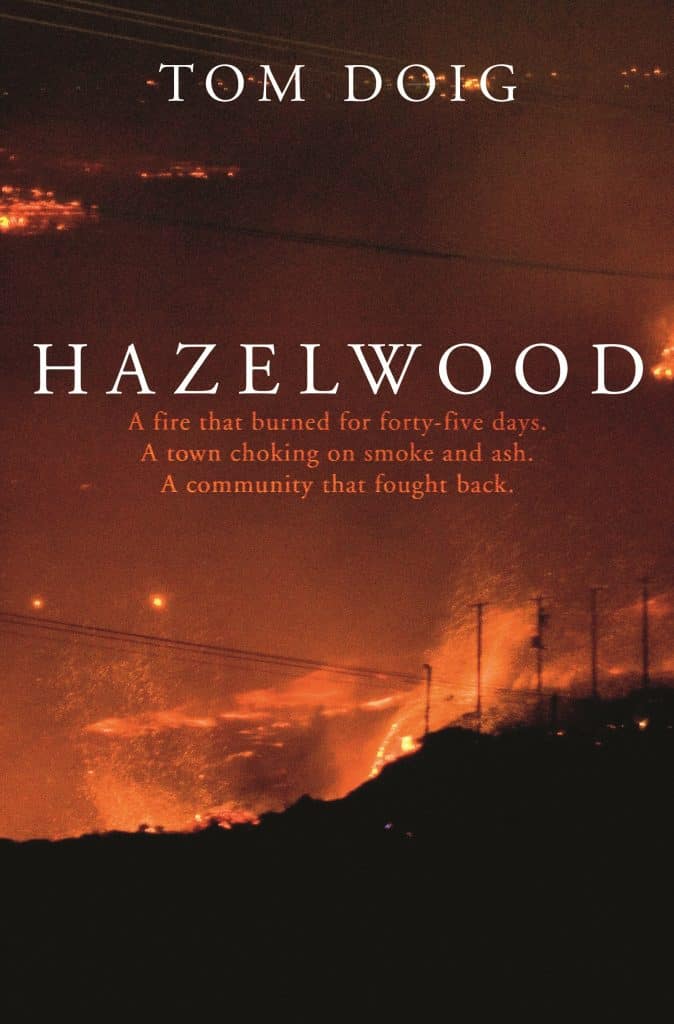
The Morwell mine fire created great distress to residents in Victoria’s Latrobe Valley, ongoing health problems, and a parliamentary inquiry, but can also be seen as a major case study of occupational health and safety (OHS) laws, enforcement, role and the obligation on employers to provide a safe and healthy working environment that does not provide risks to workers and “protect other people from risks arising from employer’s business”.  The management of worker and public safety is present in almost every decision made in relation to the Morwell Mine fire. The overlay of an OHS perspective to Doig’s book is enlightening.

Subscribe to SafetyAtWorkBlog to continue reading.
Subscribe Help
Already a member? Log in here

The time is right to push for the prevention of injury

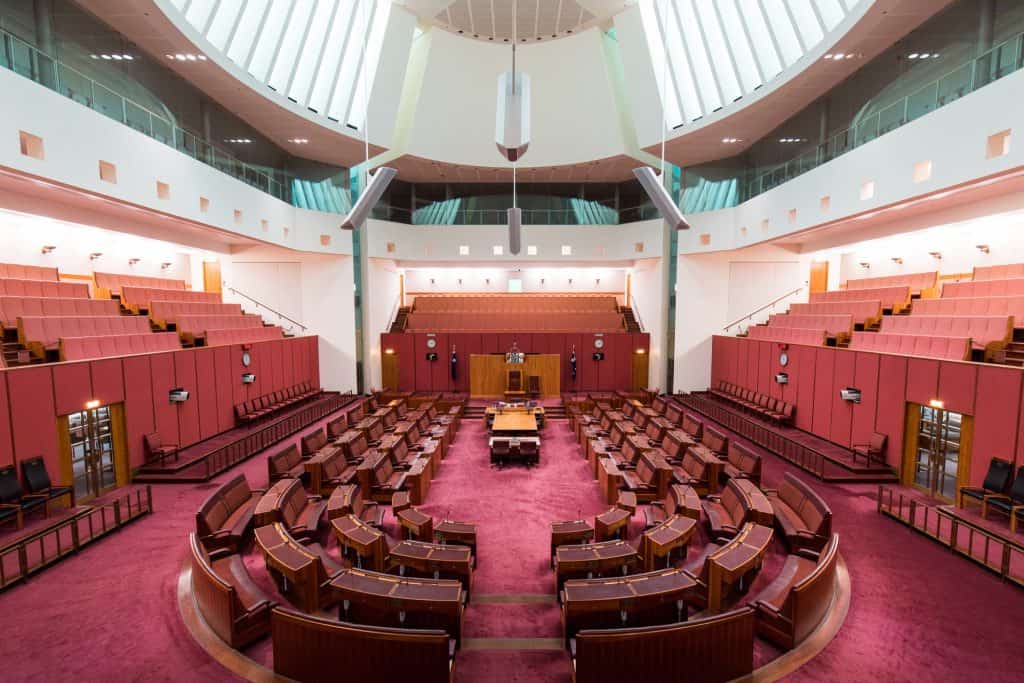
Canberra, Australia – October 14, 2017: A view inside Senate chamber in Parliament House

One of the major criticisms of Industrial Manslaughter laws by this blog is that the laws are likely to be a distraction from actions and changes that could prevent deaths. In 2018, the Australian Parliament conducted an inquiry into industrial deaths within which the prevention of death and injury was core. The recommendations of the inquiry’s final report – “They never came home—the framework surrounding the prevention, investigation and prosecution of industrial deaths in Australia” – have never really been acted upon, a fact mentioned in Australia’s Senate on June 11, 2020.

Subscribe to SafetyAtWorkBlog to continue reading.
Subscribe Help
Already a member? Log in here

How OHS can change the world

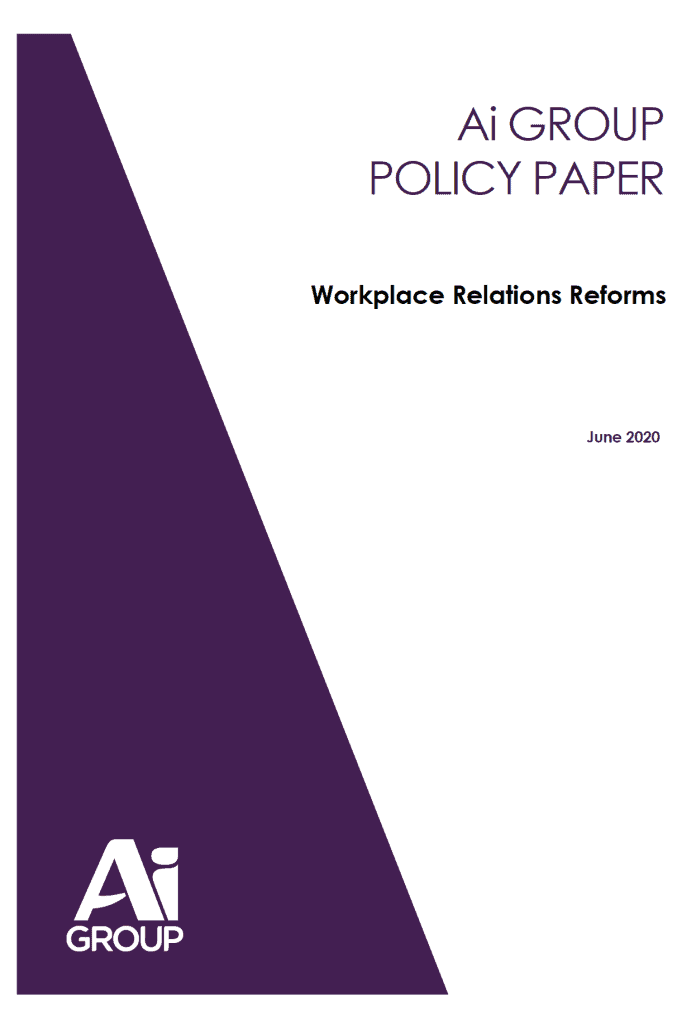
Yesterday, I was critical of an Industrial Relations paper written by the Australian Industry Group for not integrating occupational health and safety (OHS) into the submission to Government. This omission is indicative of the conceptual silos of OHS, Industrial Relations, Human Resources, and general business decision-making, and is certainly not limited to business organisations like the AiGroup.

In a presentation at the upcoming National Health and Safety Conference conducted by the Australian Institute of Health and Safety I urge OHS people to

“Provide submissions to any or all formal government inquiries, regardless of topic…”

This is an extension of the aphorism that safety is everyone’s responsibility and deserves some explanation. Through that explanation to the right people, on the right topic, at the right time, OHS could change the world.

Subscribe to SafetyAtWorkBlog to continue reading.
Subscribe Help
Already a member? Log in here

No OHS voice in this paper

Occupational health and safety (OHS) has always been part of the politics of industrial relations (IR) but it has rarely understood which part it plays as it has never really stood on its own two feet. In Australia, OHS advocates have been, primarily, from within the trade union movement. And for OHS professionals that was okay, as it allowed us to stay within our box, having others fight our battles. When those others weren’t as successful as we wanted, we remained content with the small achievements because they were achieved with minimal effort from us.

Australia, as it emerges from the COVID19 pandemic, is hoping to bring the camaraderie shared by the business groups, government and trade union to a new consensual IR strategy. OHS is an historical element of this discussion, but it needs to be more, and an OHS analysis of the Australian Industry Group’s IR reform paper released on June 6 2020 (but not yet publicly) may provide some clues on what to do about OHS influence.

Subscribe to SafetyAtWorkBlog to continue reading.
Subscribe Help
Already a member? Log in here

Mental health change needs to break out

On May 15 2020 Australia’s National Cabinet supported the National Mental Health and Wellbeing Pandemic Response Plan developed by the National Mental Health Commission. The focus was on the mental health impacts of the COVID-19 Pandemic but in the text was a reference to a National Suicide and Self Harm Monitoring System developed and run by the Australian Institute of Health and Welfare (AIHW). Given the dearth of valid data on suicide and after an earlier article questioning datasets, SafetyAtWorkBlog posed some questions to the AIHW about the monitoring system.

Subscribe to SafetyAtWorkBlog to continue reading.
Subscribe Help
Already a member? Log in here

All jobs are now more dangerous

The COVID19 pandemic has shone a spotlight on the government agencies that regulate and enforce occupational health and safety (OHS) laws. These regulators are not the lead agencies in pandemic control but as some countries relax lock-down protocols and people return to work in changed work environments, the role and actions of the OHS regulators are being re-evaluated.

Sarah O’Connor, in the Financial Times, opened her 26 May 2020 article brilliantly with

” Covid-19 has upended our notion of what a dangerous job looks like”

Office were often dismissed as low-risk workplaces with many site safety walks, if they happened, reporting on torn carpet and other similar hazards. That way of assessing risk should have been replaced, or supplemented, with assessments of the psychosocial risks of stress, bullying, a harassment, excessive workloads and many more harmful practices. So, offices may have a low risk of traumatic physical injuries but a higher level of risk of psychological harm. On top of this reassessment comes an infection risk that can be spread by workers showing no symptoms. Office-based risk has increased again and made the workplace itself dangerous.

Subscribe to SafetyAtWorkBlog to continue reading.
Subscribe Help
Already a member? Log in here

Safety wins

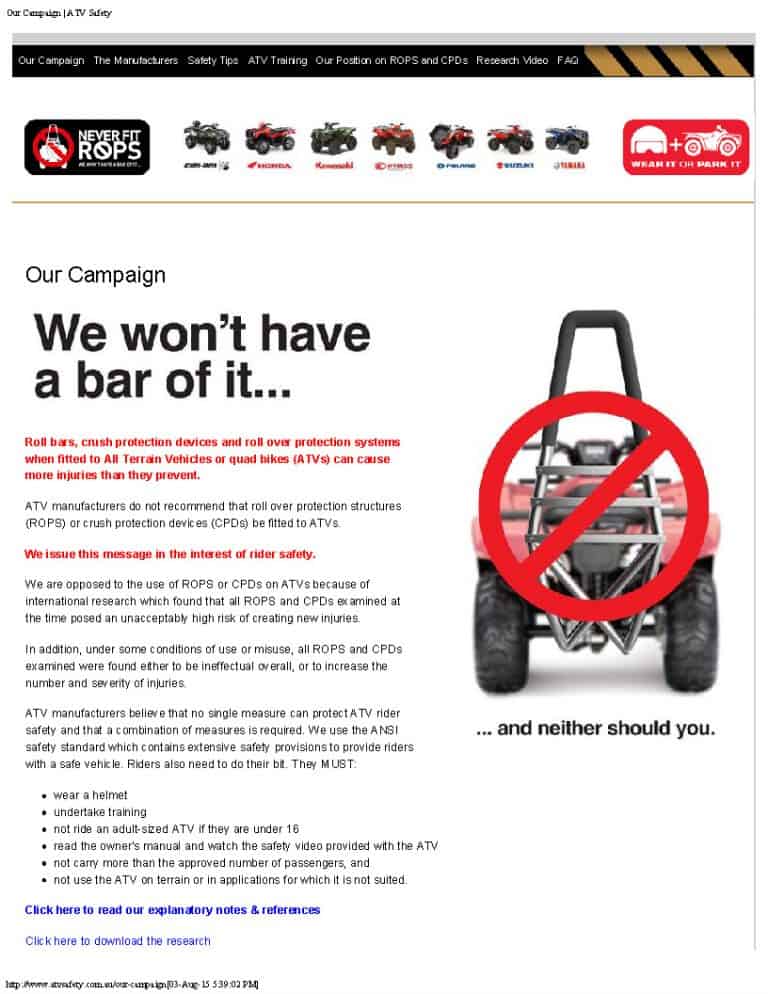
The saga of the safety of all-terrain vehicles (ATV) in Australia is coming to a close with Honda announcing that it will not be selling its ATVs in Australia after 10th October 2021. However Honda, one of the most strident opponents of increased safety standards, is belligerent to the end.

In the media announcement of its decision, Honda says that the new safety Standard is impossible to meet on any ATV. This may be true but the quad bike manufacturers refused to accept that rider safety could be improved by redesigning the quad bike, or adding additional safety devices, to reduce the risk of rolling over. Most occupational health and safety (OHS) advocates did not argue about the validity of the safety items and actions recommended by the manufacturers – helmets, dynamic riding training etc – but saw these as supplements to after-sales crush protection devices (CPDs). The manufacturers did not.

Subscribe to SafetyAtWorkBlog to continue reading.
Subscribe Help
Already a member? Log in here
Concatenate Web Development
© Designed and developed by Concatenate Aust Pty Ltd