Most-read OHS articles in 2019

This past week most media have been reflecting on the last twelve months or the decade. There are two ways of applying this practice to the SafetyAtWorkBlog – statistics and most-read. Let’s look at statistics first.

This year the SafetyAtWorkBlog posted 225 articles, not including this one, with an average word count of 1,030 words – the equivalent of a 230,000 word book on occupational health and safety (OHS). For those Annual subscribers that equates to just over $1.00 per article which I think is a pretty good return.

Continue reading “Most-read OHS articles in 2019”
Instead of throwing stones, build a stronger house

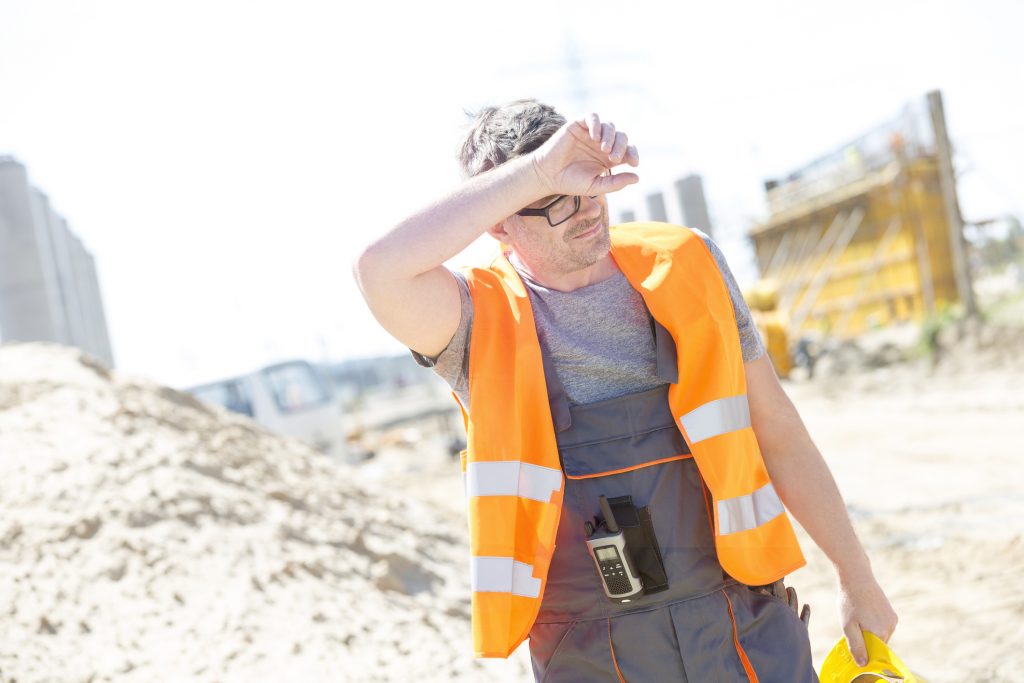
Stock photo of hot worker who, yes, should also be wearing long sleeves and a hat.

On 19 December 2019, the Australian Council of Trade Unions (ACTU) issued a confusing and, ostensibly, three-paragraph media release about working in heat, a hazard that has been regularly analysed by SafetyAtWorkBlog. It states:

“OHS laws which are designed to keep workers safe at work need to be updated to deal with the reality of climate change, which will mean hotter days and more bushfires, resulting in conditions which are hazardous to workers, especially those who work outside.”

Paragraph 1 – update the occupational health and safety (OHS) laws. Paragraph 3 – new regulations needed:

“… we call on the Morrison Government to act urgently to implement new regulations to protect workers from these hazards.”

So which is it – enforce the old or create new?

Continue reading “Instead of throwing stones, build a stronger house”

Alright stop, collaborate and listen

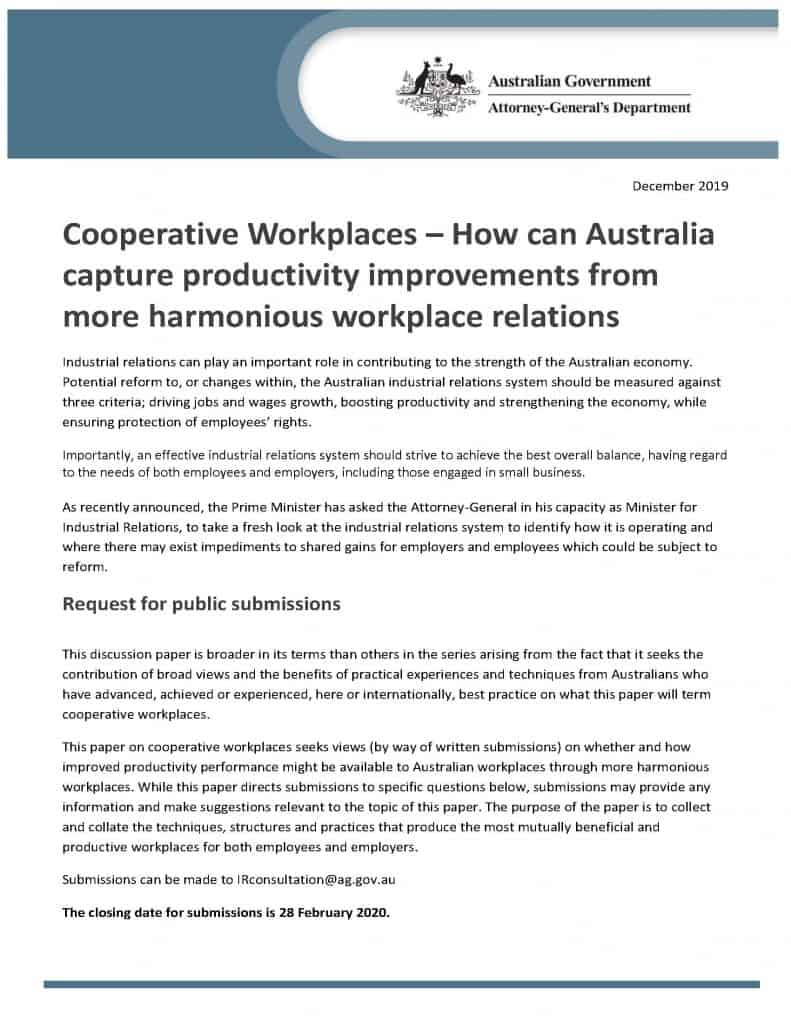
On 2 December 2019, Australia’s Attorney-General, Christian Porter released a discussion paper about workplace relations in the hope of sparking contributions on how cooperative workplaces can create productivity improvements. Any discussion paper on productivity and workplace from the current conservative government is loaded with neoliberal ideology but one of the questions posed is:

“What has been the experience with techniques and practices to foster cooperative workplaces including…. Collaborative development of Health and Safety policies.”

It is not unreasonable for this to be seen as an opening for a broad discussion about the concept of Consultation included in Australia’s workplace health and safety laws, as the improvement of health and safety requires collaboration, trust respect and other elements in the discussion paper. The parallels between Collaboration and Consultation were on show at the Australian Labor Party’s national conference twelve months ago.

Subscribe to SafetyAtWorkBlog to continue reading.
Subscribe Help
Already a member? Log in here

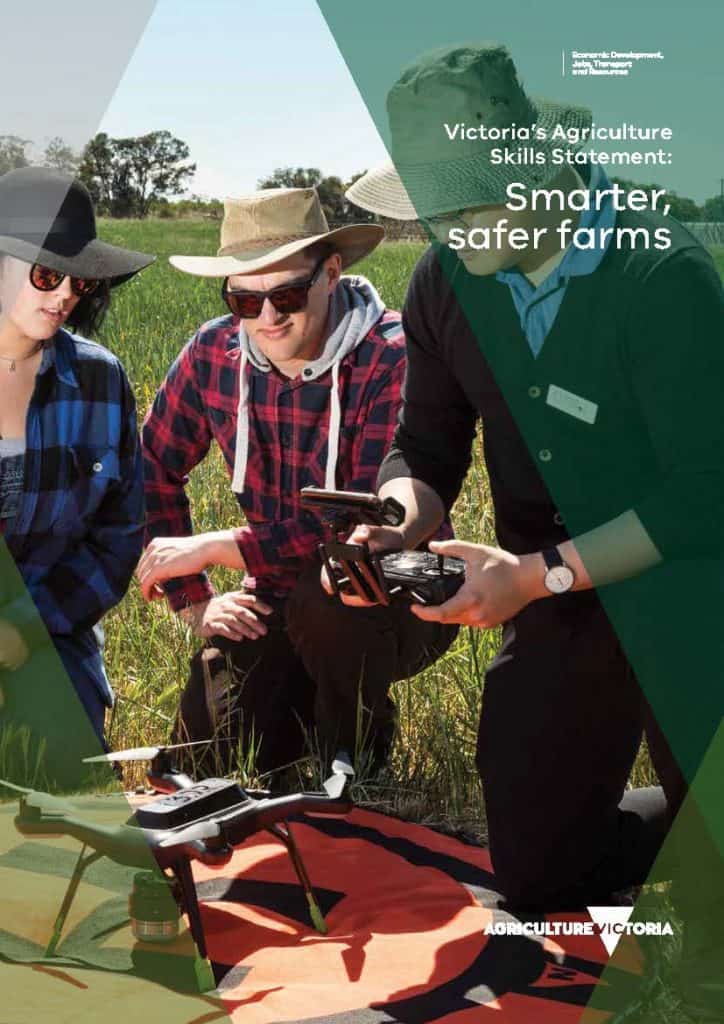
Reduce deaths and injuries to achieve a sustainable industry

Agriculture is one of the most dangerous workplaces in Australia and other countries. This reality is supported by many statistics and over a long time.

Agriculture is, perhaps, at the forefront of changing production methods to ensure sustainability in a world that is changing in ways that no farmers have had to face in the past. Agriculture therefore needs to be both a safe and a sustainable industry.

So why is workplace health and safety not being given a top priority in the Victorian Government’s Smart Farms program?

Subscribe to SafetyAtWorkBlog to continue reading.
Subscribe Help
Already a member? Log in here

Sex Work review includes many OHS matters

The Victorian Government has announced a review of the regulations pertaining to sex work. It will include several areas related to occupational health and safety (OHS):

  • Workplace safety including health and safety issues and stigma and discrimination against sex workers
  • Regulatory requirements for operators of commercial sex work businesses
  • And the safety and wellbeing of sex workers, including the experience of violence that arises in the course of sex work and as a consequence of it, and worker advocacy for safety and wellbeing

Consumer Affairs has carriage of the Sex Work laws but the breadth of the review would have been better served if the announcement had been a joint one with the Minister for Workplace Safety and Minister for Health.

This review should offer a real challenge to Victoria’s OHS laws, the OHS profession, consultants, advocates and critics.

Continue reading “Sex Work review includes many OHS matters”

What is needed is a discussion of the “safe system of business”

By the time you read this, one of Australia’s States may have Industrial Manslaughter laws. One sad part of all of the IM argy-bargy is that it has focused on the penalty of going to jail rather than on the enhancement of occupational health and safety (OHS) which can prevent harm. Part of this seems to be because people are uncertain how to talk about OHS. For instance, some arguing against IM laws have started talking about making these laws fair. But fair to who?

Recently the Australian Industry Group released a media statement titled “Industrial manslaughter legislation must be fair“. Firstly, although the IM Bill is a piece of legislation, it is not an Act or Regulation in itself. It is an amendment to the existing OHS Act. But this Act and its Duties hardly gets discussed in the current debate, which is a bit curious but convenient.

Subscribe to SafetyAtWorkBlog to continue reading.
Subscribe Help
Already a member? Log in here

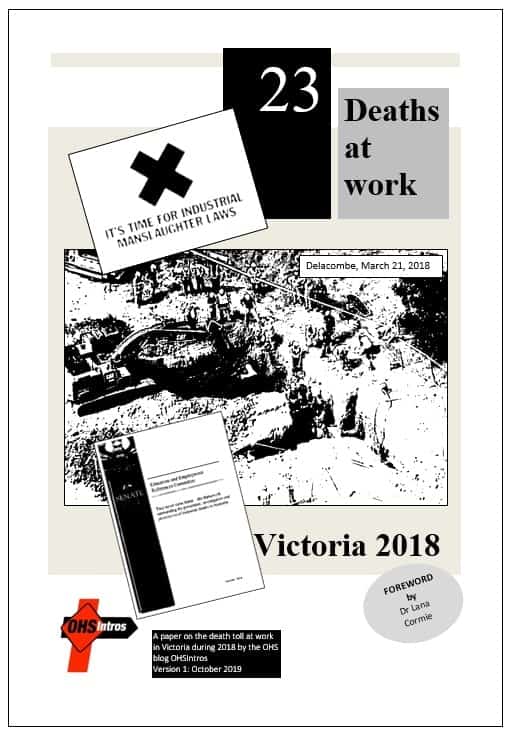
Paper provides historical context to OHS laws

Barry Naismith of OHSIntros has provided excellent independent analysis of Victoria’s occupational health and safety (OHS) data for many years. His latest “Deaths at Work” report (available publicly for a limited time) includes a detailed discussion on the social context of Victoria’s proposed Industrial Manslaughter (IM) laws.

But of more immediate interest is Naismith’s longitudinal analysis. One of his graphs showing death statistics back to the commencement of Victoria’s modern-era OHS laws in 1985 supports the statement popular with politicians that the rate of work-related deaths is declining over that time but Naismith points out that the five-year trend to 2018 is reversed and that this is part of the justification for the IM Laws.

Subscribe to SafetyAtWorkBlog to continue reading.
Subscribe Help
Already a member? Log in here
Concatenate Web Development
© Designed and developed by Concatenate Aust Pty Ltd