Time to ban synthetic stone

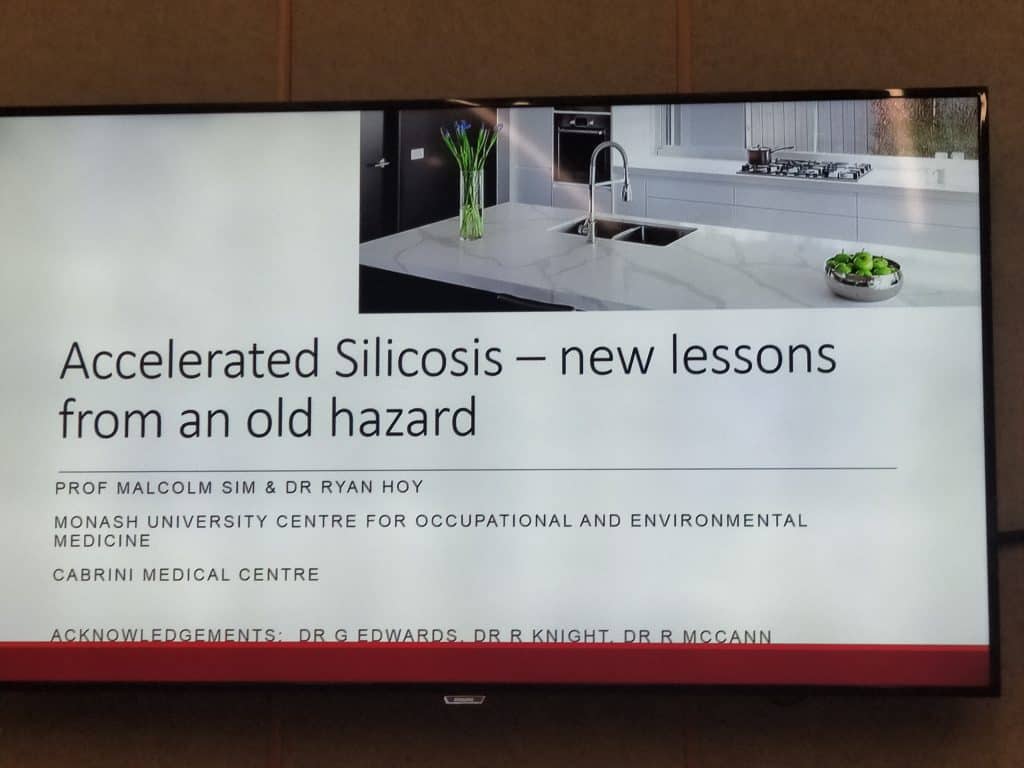
Professor Malcolm Sim of Monash University spoke at the 2019 National Work Health and Safety Colloquium on an issue that he never imagined he would be speaking of, at his age, silicosis.

As it is in several countries, the emergence of silicosis related to synthetic stone is gradually getting the attention of governments as more, and younger, workers are starting to die from this aggressive occupational disease. Professor Sim outlined the risk of handling this new type of stone by asking:

Subscribe to SafetyAtWorkBlog to continue reading.
Subscribe Help
Already a member? Log in here

The Interconnectedness Challenge

The solutions to most occupational health and safety (OHS) issues are multidisciplinary meaning that solutions are rarely simple and rarely come from a single source of information or knowledge. Recently I have been challenging my colleagues to spread their voices and experience beyond their own disciplines to illustrate how a worker’s health and safety is affected by a broad range of hazards and environments. I extend that challenge to all organisations including employer and industry groups like the Business Council of Australia (BCA) which has recently released a report on “The state of enterprise bargaining in Australia”.

Many organisations undertake research into different elements of work but rarely take an overall perspective, or one that analyses the interconnection of societal and occupational conditions and pressures. The latest BCA report is one example

Subscribe to SafetyAtWorkBlog to continue reading.
Subscribe Help
Already a member? Log in here

Chinese Whispers on drugs and alcohol at work

Evidence-based policy making needs make sure that the evidence is accurate and valid. Evidence is also the foundation of the state of knowledge of the occupational health and safety (OHS) professional, action and regulations. To achieve and sustain these aims and requirements, evidence needs to be questioned in order to verify it.

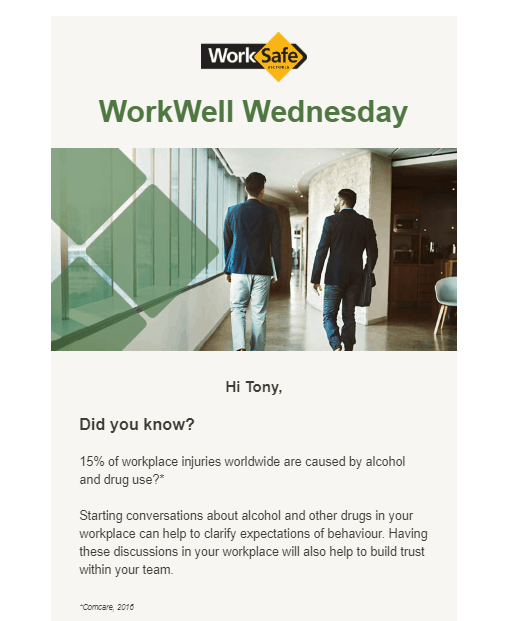
On July 17 2019 WorkSafe Victoria distributed an email newsletter which stated that

“… 15% of workplace injuries worldwide are caused by alcohol and drug use”

and referencing Comcare as its source. But that source says something significantly different.

Subscribe to SafetyAtWorkBlog to continue reading.
Subscribe Help
Already a member? Log in here

Fence or Ambulance?

The other week Lucinda Brogden, one of Australia’s Mental Health Commissioners participated in a three day suicide prevention conference, concluding the week as a keynote speaker at an occupational health and safety (OHS) seminar. Her commitment to keep focusing on the prevention of harm made her a comfortable fit for the largely OHS audience. Hopefully her influence is big on the Australian mental health policy makers.

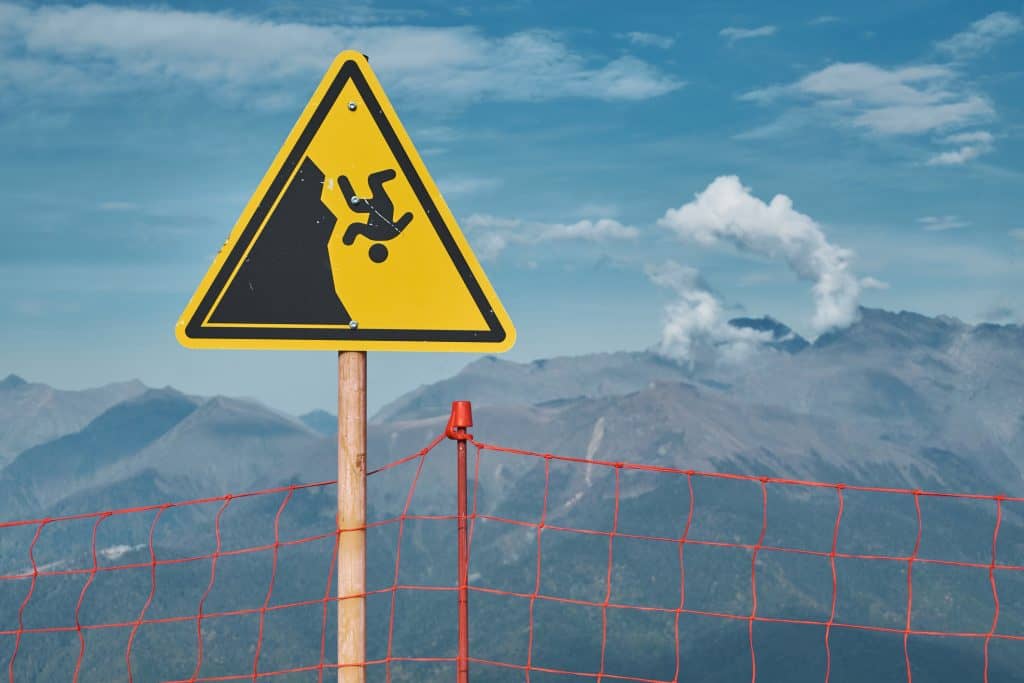
Brogden reminded the audience of an 1895 poem by Joseph Malins which discusses the prevention of harm through the analogy of putting a fence at the cliff edge to stop people falling rather than having an ambulance at the bottom of the cliff to collect the dead and injured. It is unlikely that Malins was thinking of workplace safety with this poem but, as a temperance activist, it is certain he was thinking about health. Regardless, the imagery is a useful and simple illustration of the advantages in the prevention of harm, and not just in relation to mental health.

Subscribe to SafetyAtWorkBlog to continue reading.
Subscribe Help
Already a member? Log in here

Long commute times need to be factored into OHS structures

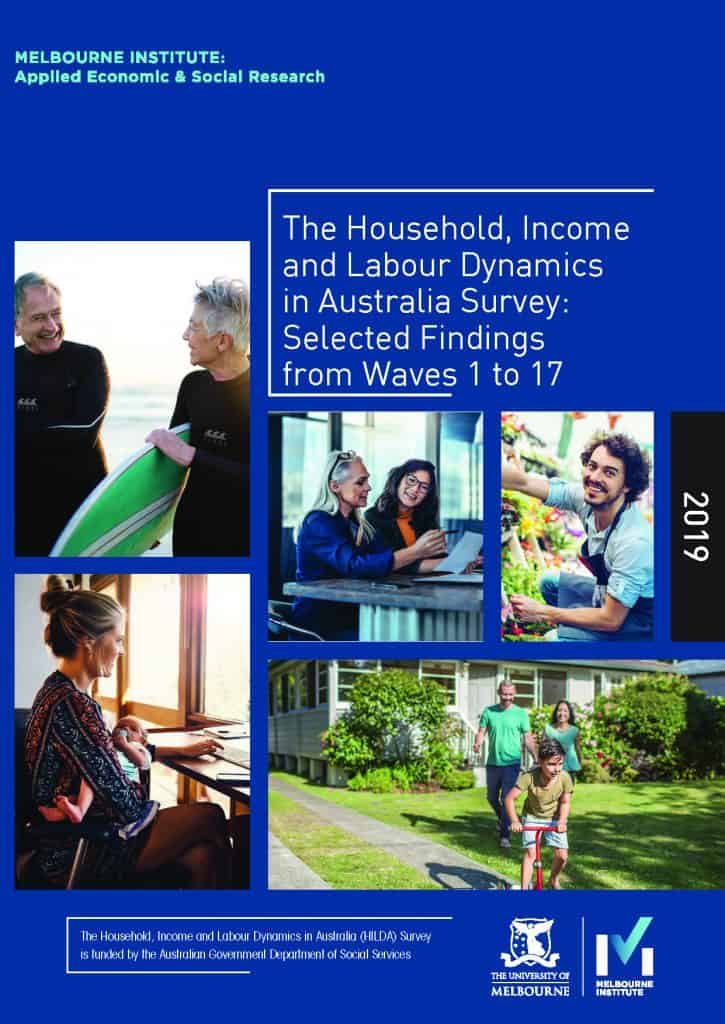
The mainstream media reported on the release of new demographic statistics from the latest HILDA survey (Household, Income and Labour Dynamics in Australia). Most of the attention is on the increasing commuting times to and from work in the urban centres. Traffic is not usually an occupational health and safety (OHS) issue but traffic congestion reduces the effectiveness of our social recuperation and recovery structures and work/life balance initiatives.

Subscribe to SafetyAtWorkBlog to continue reading.
Subscribe Help
Already a member? Log in here

Grab bag of OHS issues – politics, dust, occupational violence and international HR

Workforce lifecycle framework

Over the last week or so, as the Australian Parliament resumes operating, the Liberal/National Government is trying to reduce the influence of “militant” unions through its “Ensuring Integrity” Bill but opponents say this may affect the management of occupational health and safety (OHS).


The Federal Department of Health has established a National Dust Disease
Taskforce
to develop a national approach to the prevention, early identification, control and management of dust diseases in Australia largely, it seems in response to silicosis but Black Lung had to have some influence.


Subscribe to SafetyAtWorkBlog to continue reading.
Subscribe Help
Already a member? Log in here

Queensland’s ‘Safety Reset’

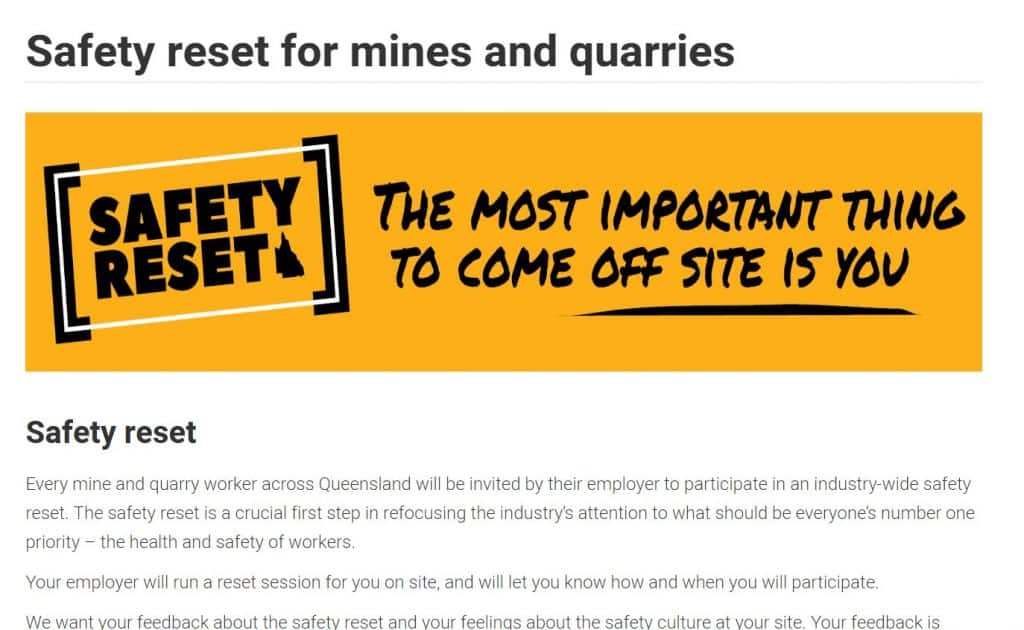
Queensland is undertaking a “safety reset” following several recent deaths in the mining and quarry industry. This government initiative has the backing of the resources sector and has collated a good amount of safety resources in support of what is a mandatory exercise.

What is a little different in this initiative is that it reinforces that the primary responsibility for occupational health and safety (OHS) rests with the employers and company owners. In the past, government initiatives have tended to take on the responsibility for the OHS changes or imply that it is the government’s job to fix the situation and the relative safety cultures, as if it was government (in)activity that caused the problem.

Subscribe to SafetyAtWorkBlog to continue reading.
Subscribe Help
Already a member? Log in here
Concatenate Web Development
© Designed and developed by Concatenate Aust Pty Ltd