
Share Solutions could be resurrected

Some readers have asked for more information about the “Share Solutions” program mentioned in a previous article. The initiative started in 1988 but this article is based on the second edition from 1995.

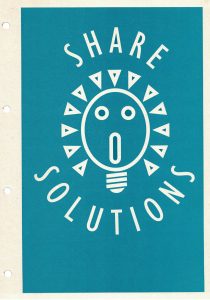
In 1995, pre-internet, the precursor to WorkSafe Victoria, the Health and Safety Organisation Victoria produced a Share Solutions manual (with an unfortunate sex doll-like graphic).  This hard copy folders included single page solutions to common workplace hazards.  These solutions were submitted usually by those workers or Health and Safety Representatives who had developed a solution to a hazard particular to their workplace.  The solutions were shared with the program participants with acknowledgement of the origin. Continue reading “Share Solutions could be resurrected”
Misunderstanding sleep – Part 2

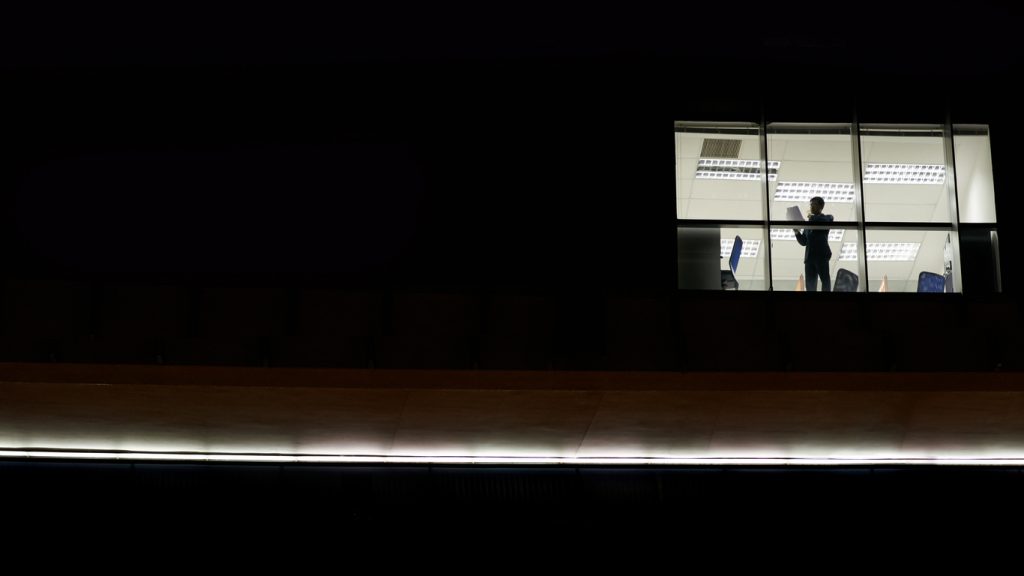
Most non-transport industries do not look for the lack of sleep or fatigue as a factor in their investigations.  Unless a formal investigation is undertaken, fatigue is rarely mentioned and, if it is, it is categorised as a “contributory factor”, which often means it is given such a low priority that nothing will be done about it.  This is partly a legacy of silo thinking that sleep is a non-work personal activity, which it is, but is still one that can affect work and all the relationships and decisions made at work.  But it is also partly due to the enormous disruption that could result if the lack of sleep and fatigue were taken seriously and effective control measures were introduced.

The most effective control for fatigue may be human-friendly shifts and “reasonable” working hours but that might not fit the shift rosters which are required to satisfy clients.  We know that night shift has higher health and physical risks than day shift so logically, get rid of night shift ….

Subscribe to SafetyAtWorkBlog to continue reading.
Subscribe Help
Already a member? Log in here

Misunderstanding sleep – Part 1

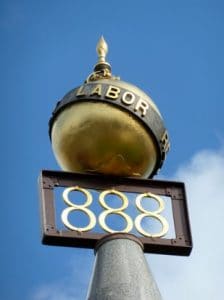
On the corner of Lygon and Victoria Streets in Melbourne is a monument to the 8 Hour Day.  This represents a social structure of work that equates to

  • Eight hours of work,
  • Eight hours of recreation,
  • Eight hours of sleep,

The concept started in Australia in the mid-1800s and was intended to reduce exploitation and abuse of workers, many of whom were children.

The intent was to establish, what we would now call, a work/life balance structure with the recognition that work is required to earn a living, sleep is required to rejuvenate the body, preparing it for work, and recreation was social time, time with one’s family, exercise, all sorts of personal and social activities.

Today that structure is an “ideal” rather than a reality. 

Subscribe to SafetyAtWorkBlog to continue reading.
Subscribe Help
Already a member? Log in here

New OHS toolkit for small business

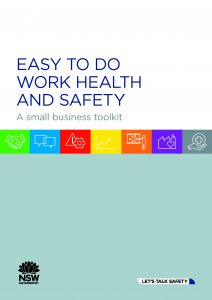
October is the peak month for promoting occupational health and safety (OHS) in Australia. “OSHtober” as some on social media are saying. SafeWorkNSW has released a handbook designed to help small businesses, in particular, to assess their own workplace hazards.

The “toolkit” employs the traffic light format to prioritise hazards.  That format

Subscribe to SafetyAtWorkBlog to continue reading.
Subscribe Help
Already a member? Log in here

Structural v Individual approaches to preventing psychological harm persist

At the end of September 2018 the Australian Psychological Society held its 2018 Congress.  As conferences do, various media statements are released to generate interest in the speakers.  One caught the attention of this blog.  It was released on September 25 2018, and was called:

“Resilience isn’t enough to combat the effects of burnout, world renowned psychology expert says”

This sounded like it may look closely at the prevention of harm and SafetyAtWorkBlog was able to interview that world-renowned psychology expert,

Subscribe to SafetyAtWorkBlog to continue reading.
Subscribe Help
Already a member? Log in here

When guidance is unhelpful

Some organisations struggle to understand the prevention of harm.  In September 2018 the Chartered Institute of Personnel and Development (CIPD) released its “People Managers’ Guide to Mental Health“. The guide is intended to address
“…the whole lifecycle of employment, from recruitment, through keeping people well and managing a disability or ill health at work, to supporting people to return to work after a period of absence.” (page 3)

It includes the prevention of psychological harm but in words and phrases that are very unhelpful. 

Subscribe to SafetyAtWorkBlog to continue reading.
Subscribe Help
Already a member? Log in here

The jury remains out on standing desks but maybe we are asking the wrong questions

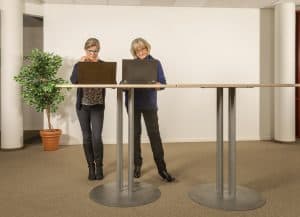
The 20th Congress of the International Ergonomics Association in Florence Italy recently concluded.  Australia’s Professor David Caple attended and brought the latest research into the benefits of sit/stand desks to the September meeting of the Central Safety Group in Melbourne.  Caple said that evidence remains confusing on this increasingly popular piece of office furniture and echoed the modern approach to occupational health and safety (OHS) matters – look at what the work involves and how and where people do it.

Caple explained how large companies are moving away from open-plan offices to those designed around “activity-based work or

Subscribe to SafetyAtWorkBlog to continue reading.
Subscribe Help
Already a member? Log in here
Concatenate Web Development
© Designed and developed by Concatenate Aust Pty Ltd