2006 interview with Dr Jukka Takala of EU-OSHA

In October 2006, I interviewed Dr Jukka Takala for the SafetyAtWork podcast.  Jukka had just taken over as director of the European Agency for Safety and Health at Work from Hans-Horst Konkolewsky.

The agency has continued its important work but seems since 2006 to focus more on the EU internal requirements rather than reaching out globally as before.  This is understandable given the influx of new EU member states over that time but it is disappointing when an OHS “regulator’s” website has so many dead links to its former international partners.

The 2006 podcast is available for download.

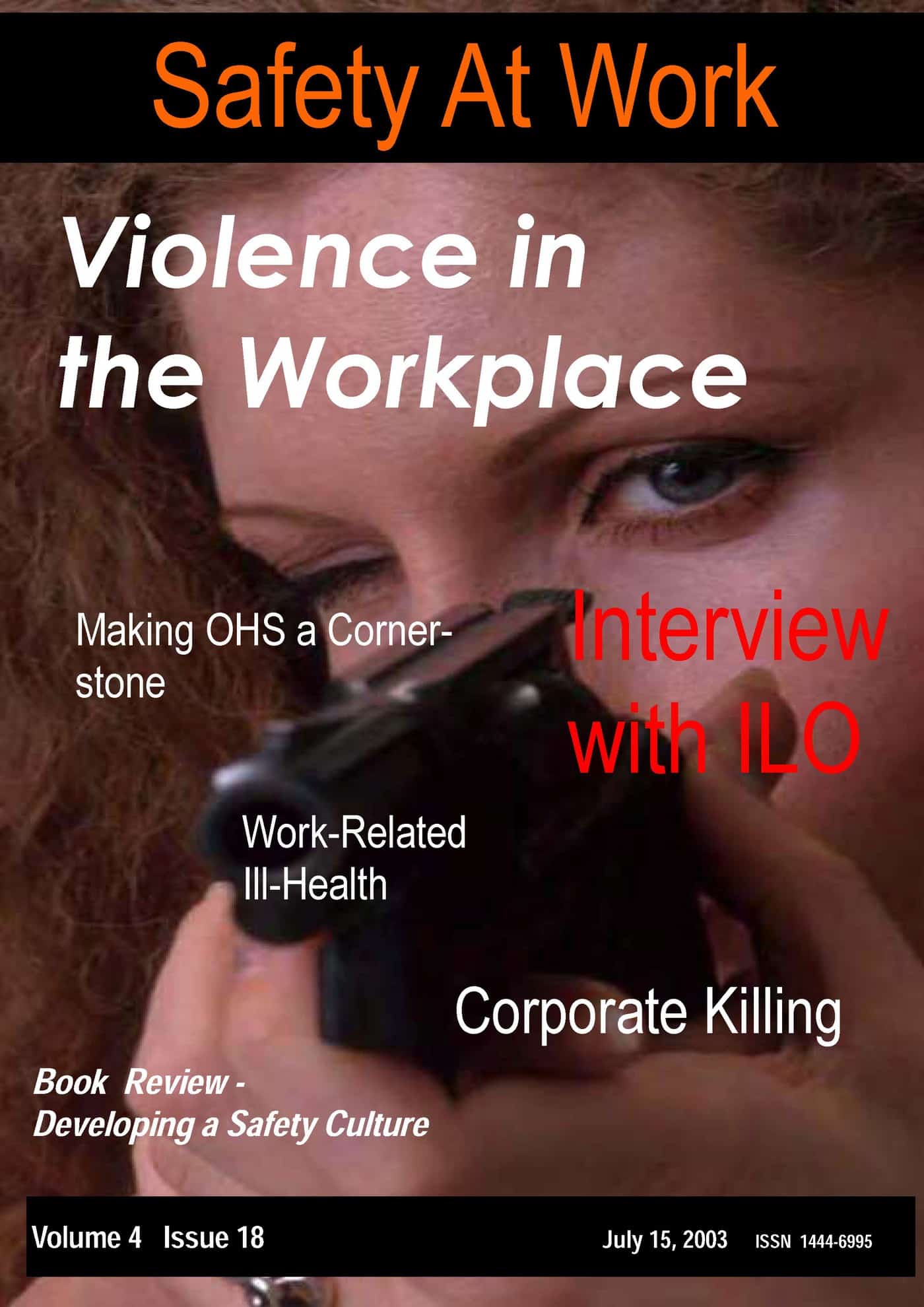
The transcript of an earlier interview I conducted with Jukka in his ILO days is available by clicking the cover image below.

Kevin Jones

4i18 cover

Corporate health adviser’s recommendations on swine flu

Recently SafetyAtWorkBlog wondered why the ACT OHS Commissioner referenced a commercial website instead of a government authority.  The commercial website was www.fluthreat.com operated by HSA Group which since early April 2009 is part of Medibank Private.

Fluthreat.com.au provides information on its Flu At Work page that is very flimsy and seems to be  intended to generate further enquiries to its commercial advisory service.  We’re not comfortable with that or the lack of badging from the parent company but…….

SafetyAtWorkBlog put some questions to HSA Group/Medibank and received the following responses from their media advisor over a week later.  We could be picky but we have decided to let the responses speak for themselves.

The questions were based on the bulletpoints listed on the Flu At Work page in order to flesh out the advice to a more practical level.

What does HSA Group recommend for basic personal respiratory hygiene methods?

HSA’s fluthreat website covers basic respiratory hygiene considerations.  Personal habits that we all should adopt include covering mouths when coughing and sneezing, using tissues and disposing of them properly, and regularly washing of hands.

In this time of swine flu, is the old way of throwing tissues in a waste basket no longer the right option?

Using a waste basket is fine.  The important thing is the waste is disposed of appropriately, and the waste basket does not require excessive handling in the disposal process.

Handwipes and gel have issues of their own – should they be applied after handwashing or instead of, should they be used after each sneeze or cough? What does HSA recommend?

Considerations of personal  hygiene should be a regular occurrence – not just simply after each sneeze or  cough.  Handwipes and gels are for occasions when you can’t wash your hands – it is not necessary to use both.  Handwipes and gels should be alcohol based, which has been shown to be effective in killing influenza type viruses.

Regarding adequate cleaning of surfaces and equipment, should this be undertaken by the users of the equipment or should cleaning contractors be contacted in order to upgrade their processes?

Unfortunately there is no one simple answer to this question.  Every business operates differently, and therefore will require a different response to a pandemic.  We encourage all businesses to have a pandemic plan, which will guide the business wide response.

Certainly cleaning of surfaces and equipment should be considered in the context of an organisation’s pandemic plan, and may include having staff take additional care for hygiene and cleaning, or having cleaning contractors upgrade their processes.  The appropriateness of such considerations are linked to the pandemic phase & an organisation’s response strategy in the context of their pandemic plan.

Regarding telephones, which are the closest item most office workers have to their mouths, years ago there were phone cleaners who  physically came to the office to clean and disinfect  handsets. Would HSA recommend this service be reinstated?

These services are still available for businesses who want them.  Alternatively staff can be trained to do it themselves with alcohol based wipes.  Again the specific needs of businesses will vary, and cleaning of telephone handsets should be set out in the pandemic plan.

In a closed environment, such as an office, where possible, should ventilation be increased by opening a window?  Some office buildings turn off they ventilation overnight even when nightshift workers are in the building.  Does HSA believe that nightshift workers could be at increased risk of contracting influenza?

Ventilation is important in workplaces, and not just due to swine flu. Where windows can be opened without affecting the air-conditioning flow this will help with ventilation. Air conditioning should remain on if people are present in the building.  However there is no evidence that nightshift workers are at an increased risk of contracting influenza – it is the behaviour of workers and their levels of personal hygiene that are the strongest influence on this.

Regarding encouraging sick persons to stay at home, why only “encourage”, when  employers have the legislative obligation to not place their employees at risk? What if the employee has shown no symptoms of influenza but may be infectious due to contact with a family member who is sick?

Employers should have policies in place that articulate how staff should  behave in such circumstances, and ideally a plan that covers pandemics specifically.  There is only a very small risk of people being infectious prior to symptoms appearing.

Sending workers home after the illness has appeared is an acknowledgement that illness is already present in the workplace.  In this instance, what would HSA advise the employer to do?

Employers should continue to activate their pandemic plan, which will trigger workplace specific staff communications and contingency plans.

Does HSA recommend the wearing of facemasks as a suitable control measure for anyone who may come to work sneezing (for whatever reason)?

Facemasks can be very helpful in controlling the spread of respiratory diseases.  However it should be noted that a sneeze does not necessarily equate to H1N1 or seasonal influenza.  A diagnosis of suspected H1N1 or seasonal influenza requires consideration of a number of other factors.

Regardless of the further information from HSA Group/Medibank, SafetyAtWorkBlog still recommends that the best advice is available from the relevant health authorities in your State or country.

Kevin Jones

Lack of restraint – Australian approach, Singapore deaths

sa0200906[1]_Page_1The Northern Territory OHS  authority issued a guidance this week about unrestrained travel in work vehicles, a practice many of us stopped some time ago.  Obviously not everyone has.

The NT guidance is a curious document as it strongly advocates that employers assess the hazards of unrestrained travel and decide the appropriate control measures.  This advice is in line with legislative requirements and safety management protocols but clearly the authority has much clearer advice.  The document is headed 

“No seat – No belt – No ride”

The assessment has been done and the heading gives the best advice.  In OHS profession speak – if there is no seat for a passenger and/or no seat belt then NT OHS says allowing someone to travel on or in the vehicle is not acceptable.

Australia can often be glib about workplace incidents as it always looks past its region for comparisons from the US or Europe rather than looking at its immediate neighbourhood.  

Singapore’s Strait-Times reported in May 2009 about the real consequences of unrestrained travel after

“…three foreign workers sitting in the back of a lorry died after it crashed into the back of a trailer. A fourth man in the front seat also died.”

The article goes on to list the law changes that Singapore has introduced but, more interestingly, tells how much more complicated the issue is than in Australia due to the level of foreign labour.

Kevin Jones

Should OHS regulators be involved in the competence of professionals?

WorkSafe and the Safety Institute of Australia are at the forefront of pushing for a defined level of competence for the safety professional.  WorkSafe identified this need many years ago and has been working on establishing alliances with safety professions since then to achieve its aims.

Significantly similar issues have been discussed in the United Kingdom over a similar period however, in that process the WorkSafe equivalent, the Health & Safety Executive (HSE), have chosen not to participate.  According to a recent article in HEALTH AND SAFETY AT WORK, the HSE has stated its position

“Speaking at IOSH’s recent conference, HSE chief executive Geoffrey Podger was adamant that the general description of competence in the Management of Health and Safety at Work Regulations 1999 (MHSW) Approved Code of Practice (ACoP) is sufficient. “I don’t think it helps the whole health and safety system if HSE tries to over-define the area,” he said, adding that there is still a “huge opportunity” for the professional bodies to work on their own definition.”

This position is considerably different from that in Australia where WorkSafe is now closely working (some would say too closely) with the SIA in developing standards and protocols that it and its partners want to operate nationally. Its aim seems to be similar to one the HSE and Health & Safety Commission established in 2007 – “Mapping Occupational Safety and Health (OSH) Professional Body Activities in Scotland”.  It is worth looking at the page to see the list of safety professional bodies who are listed, the services offered and the membership databases.

Pages from externalproviders[1]A crucial HSE document is the “HSE statement to the external providers of health and safety assistance”.  Its statement that competence should be a goal rather than a benchmark should worry the Australian competence lobbyists.  In the Ponting article above, IOSH calls for more clarity but, as discussed elsewhere in SafetyAtWorkBlog, OHS legislation clearly states it is the employers’ ultimate responsibility to establish a safe and healthy work environment.  They may choose assistance from competent people but why should it be the regulator that establishes this?  The professional bodies such as IOSH and SIA have existed for decades.  Have they not determined levels of competency for their own members by now?

Geoff Hooke of the British Safety Industry Federation says

“when you ask how you measure competence, the simple answer is: with great difficulty”.

In general, shouldn’t the response from OHS professional associations be along the lines of

“we believe that all members of the XXX Association are competent within their fields and we would not hesitate in recommending our professional members in providing competent advice to companies…”?

These organizations who are calling for a clear definition are often the same organizations that are in support of “as far as is reasonably practicable”, a vague management concept that can be defined and re-defined depending on which judge hears which OHS prosecution. – the antithesis to the prevention principles of OHS.  One cannot call for certainty in one area while advocating flexibility in another.

The UK Works and Pensions Committee was right in saying that more control is required on external consultants and clearly lobbed the responsibility on the professional bodies.

Ponting’s article concludes that it is the job of the professional bodies to organize accreditation and the maintenance of that accreditation but acknowledges that it is politically fraught.  That is not enough reason to look to the regulator to solve the problem as it only makes the regulator the target of criticism over the process and the results.  The professional bodies themselves must work to a commonality of purpose and relinquish years of demarcation and, sometimes, schism.

The Australian safety professions would ultimately gain far more credibility for themselves and their professions if they too took it upon themselves to define accreditation, audit their members’ competencies and assist in the maintenance of skills.  In that way Australia may gain a safety profession of which everyone can be proud.

Kevin Jones

New Youth@Work website

The South Australian government has launched a website focusing on young people at work, not surprisingly called Youth@Work.  

South Australia has a habit of marching to a slightly different beat to the dominant Australian States on OHS.  They did not follow WorkSafe Victoria’s “Homecomings” ads and they have been well ahead of anyone in researching and explaining the relevance of wellness as an OHS issue.

Kevin JonesposterA3v6 (2)

Influenza – dilemma for OHS regulators

SafetyAtWorkBlog has no expertise in the control of infectious diseases.  Any enquiries received on the issue are directed to the official information on government websites such as Australia’s Dept for Health & Ageing or the US Centre for Disease Control, or international authorities such as WHO.

vwa-pandemic-cover1

But this creates a dilemma for OHS regulators.  If the regulator does nothing, it is seen as inactive – a bad thing.  Or the regulator can issue its own guidance on infection control – a good or bad thing.  It is an unenviable choice.

WorkSafe Victoria took the latter choice and issued their “OHS preparedness for an influenza pandemic: A guide for employers” in early May 2009.  The guide is not intended to be definitive and may be useful in the future but infectious outbreaks can move rapidly and, to some extent, this document is shutting the door after the horse has bolted, in expectation of the next “door”.

The guide mentions the following sources but it could be asked what is gained by contextualising these Australian documents? Why not just direct companies to the  raw documents?

pandemicinal-7091883e-236bready1The trap for producing localised guides is that recommendations may be made that are out-of-place, difficult to implement and, ultimately, question the credibility of the document.  WorkSafe fell for this trap by specifying some recommendations for the legitimate control measure of “social distancing”.

In its employers guide it makes the following recommendations:

“A primary transmission control measure is social distancing, that is reducing and restricting physical contact and proximity. Encourage social distancing through measures such as:

  • allowing only identified, essential employees to attend the workplace
  • utilising alternative work options including work from home
  • prohibiting handshaking, kissing and other physical contact in the workplace
  • maintaining a minimum distance of one metre between employees in the workplace (person-to-person droplet transmission is very unlikely beyond this distance)
  • discontinuing meetings and all social gatherings at work including informal spontaneous congregations
  • closing service counters or installing perspex infection control barriers 
  • using telephone and video conferencing.”

nap-cover1The guide does recommend social distancing as part of a risk management process but “prohibiting handshaking, kissing and other physical contact in the workplace”? “Discontinuing … informal spontaneous congregations”?

How is a business expected to police these sorts of measures?  Have someone walking the workplace reminding workers of the new “no touchy” policy?

The Australian Health Management Plan for Pandemic Influenza talks repeatedly about social distancing in workplaces, the community and families but never goes to the extent WorkSafe has.

The National Action Plan for Human Influenza Pandemic (NAP) defines social distancing as:

“A community level intervention to reduce normal physical and social population mixing in order to slow the spread of a pandemic throughout society. Social distancing measures include school closures, workplace measures, cancellation of mass gatherings, changing public transport arrangements and movement restrictions.”

NAP does not mention kissing, nor does the Business Continuity Guide For Australian Businesses .

WorkSafe WA has not issued anything specific on pandemic influenza, nor has SafeWorkSA,  WorkCover NSW defers to NSW Health (which has a lot of information and a reassuring video from the health officer), and Queensland’s OHS regulator defers to its State health department.    

Social distancing is an appropriate hazard control measure amongst other measures in an influenza risk management plan but the current WorkSafe Victoria guidance seems to be an unnecessary duplication, and on the matter of kissing, silly. Why, oh why did WorkSafe Victoria think it necessary to publish anything?

Kevin Jones


Handwashing as a risk control

Everyone knows that we are cleaner for the washing of our hands.  The childhood fibs of our parents that potatoes will grow behind our ears if we don’t wash there regularly have been pretty much dismissed.  There was little evidence for the benefits of washing behind our ears other than the authority and wisdom of parents but for most of one’s life that’s enough (or at least till we turn and mistrust everything our parents say).

In Australia, OHS has been pushing for evidence-based decision making.  Some have twisted this noble aim into short-term empire building on concepts such as a “body of knowledge” (- the more important question should be why do particular people want to control this knowledge in the first place).  But evidence is important and over the last few years some researchers have been seeking the evidence for the safety benefits of hand-washing in infection control, particularly during times of epidemics or pandemics.

The current swine flu scare (it remains a “scare” in many parts of the world) is generating recommendations on personal hygiene, as reported in SafetyAtWorkBlog on yesterday, but is there evidence or is hand-washing a comforting distraction?

Earlier this year Jody Lanard and Peter Sandman wrote:

The “Cover Your Cough” page on the CDC’s seasonal flu website begins this way:

Serious respiratory illnesses like influenza, respiratory syncytial virus (RSV), whooping cough, and severe acute respiratory syndrome (SARS) are spread by: 

  •  
    • Coughing or sneezing
    • Unclean hands….

If you don’t have a tissue, cough or sneeze into your upper sleeve, not your hands.

We have been unable to find a single study that supports this recommendation with regard to influenza. The World Health Organization Writing Group report on “Nonpharmaceutical Interventions for Pandemic Influenza” makes the same recommendation for flu specifically, but concedes that it has been made “more on the basis of plausible effectiveness than controlled studies.”

As for hand-washing, a Mayo Clinic publication on hand-washing includes flu on a list of infectious diseases “that are commonly spread through hand-to-hand contact.” The Government of Alberta’s “Influenza Self-Care” publication advises: “Wash Your Hands to Prevent Influenza…. Next to immunization, the single most important way to prevent influenza is to wash your hands often.”

But here’s what the World Health Organization Writing Group report says: “Most, but not all, controlled studies show a protective effect of handwashing in reducing upper respiratory infections…. Most of the infections studied were likely viral, but only a small percentage were due to influenza…. No studies appear to address influenza specifically.” 

The Lanard/Sandman article discusses at length the way that hand-washing may be affecting our approaches to other control measures such as vaccination.  It tries to cut through the hyperbole on influenza and if you are a health care worker, the full article is strongly recommended.

At the moment there is no clear evidence of the benefits of hand-washing and if this swine flu scare remains a scare for most people, one of the areas for further research should be the effectiveness, and role, of hand-washing in the control of pandemic infections.  It just may be that “universal precautions” should not be so unquestioningly universal.

Kevin Jones

Concatenate Web Development
© Designed and developed by Concatenate Aust Pty Ltd