Work hazards generated by the Prime Minister

An employment dispute over working hours has entered the mainstream media as it relates to the office of one of the crossbench independent members of parliament, a favourite target of some of the media. The dispute over the meaning of additional reasonable working hours illustrates several occupational health and safety (OHS) issues.

Subscribe to SafetyAtWorkBlog to continue reading.
Subscribe Help
Already a member? Log in here

Excellent (and free) Australian guide on psychosocially healthy workplaces

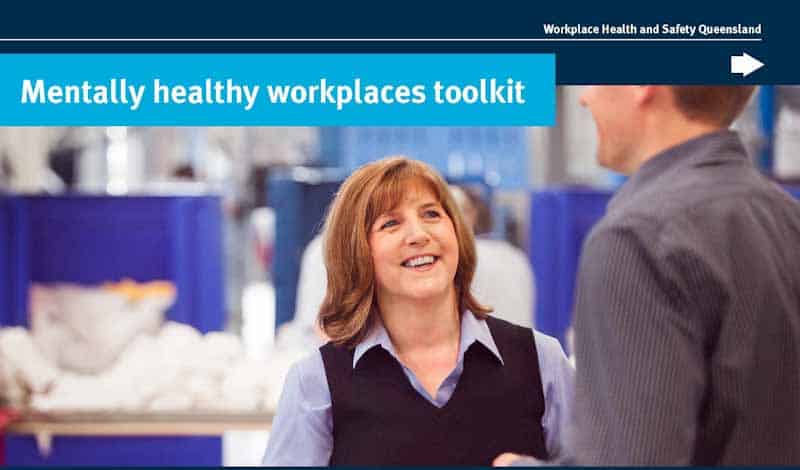
Readers have shown considerable interest in the EU-OSHA e-guide for psychosocial health at work. A similarly formatted document has been released by Workplace Health and Safety Queensland in support of the new “Managing Psychosocial Hazards at Work Code of Practice 2022“. The Mentally Healthy Workplaces Toolkit is an interactive PDF slightly more sophisticated than the EU document through its extensive use of hyperlinks to external information sources.

Subscribe to SafetyAtWorkBlog to continue reading.
Subscribe Help
Already a member? Log in here

Plain psychosocial health guide has great potential

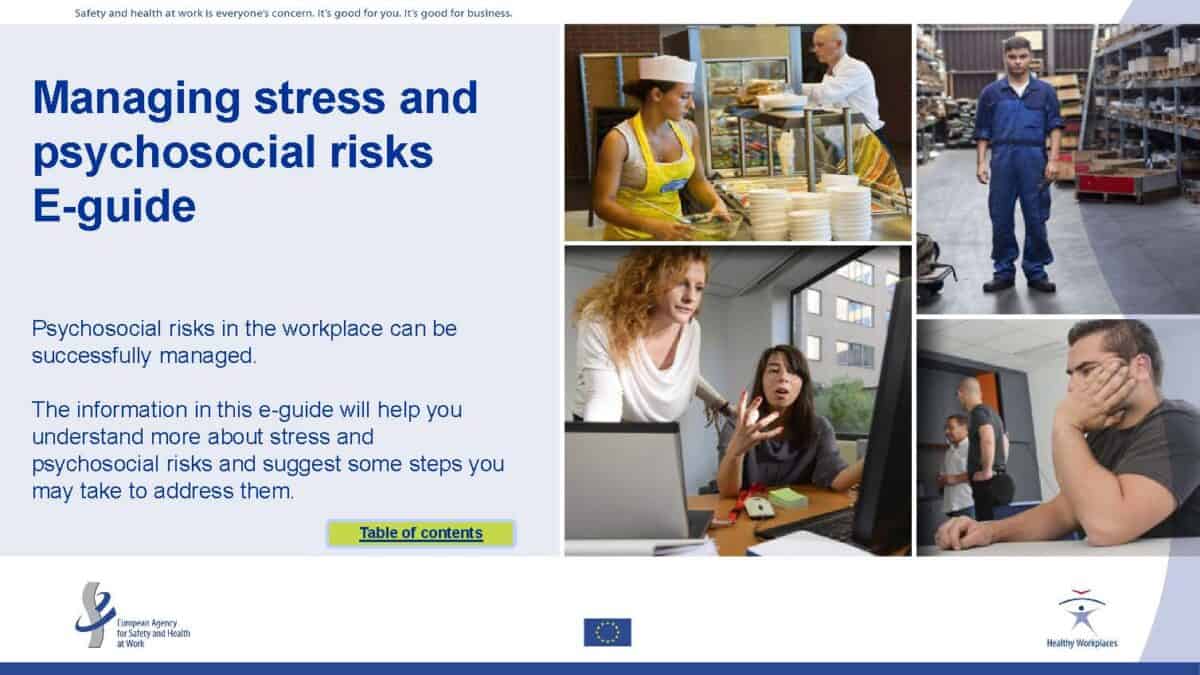
Recently the European Agency for Safety and Health at Work released an “e-guide” on managing stress and psychosocial risks at work. It offers a radical contrast to some of the information on risks and burnout that originate from the United States.

The e-guide is really a PDF file that uses the software’s features to establish links between the table of contents and relevant pages of information. This is a little “old school” but the Agency often does this, I think, to allow for wide distribution and easy application.

Subscribe to SafetyAtWorkBlog to continue reading.
Subscribe Help
Already a member? Log in here

Another burnout book from the US that ignores OHS duties

Advisory books about how to manage Burnout continue to be published. Another one that, due to the format and publisher, could be influential is Burnout for Dummies by Eva Selhub. Sadly, Selhub consciously downplays the occupational health and safety (OHS) role in preventing Burnout. Her choice sidelines OHS, the organisational context and the employer’s duty of care, but that seems typical for Burnout authors from the United States.

Subscribe to SafetyAtWorkBlog to continue reading.
Subscribe Help
Already a member? Log in here

ChatGPT article on psychosocial hazards at work

I am uncertain about using Artificial Intelligence (AI), like ChatGPT, to produce articles related to occupational health and safety (OHS), but thought I better familiarise myself with the process. So, I asked ChatGPT to

“Create a 400-word document discussing psychosocial hazards in the workplace and the most effective methods to prevent them happening.”

Below is the article and a discussion of its deficiencies:

Continue reading “ChatGPT article on psychosocial hazards at work”

Organisational and self-help advice on burnout

One of the best books about burnout is Jennifer Moss‘ “The Burnout Epidemic“, which this blog wrote about in April last year. A recent book on burnout and self-help caused me to revisit Moss’ book, and one of the chapters that I missed last year seems to explain the popularity of the self-help approach.

Moss writes about the organisational and structural workplace factors that create and perpetuate workplace stress and related poor mental health. However, one of the last chapters is titled “Take Care of Yourself, Too”. Moss writes:

“Self-care won’t fix broken organizational systems, but it’s the part we can control in a world full of the uncontrollable.”

page 213
Subscribe to SafetyAtWorkBlog to continue reading.
Subscribe Help
Already a member? Log in here

Don’t mention profit

The primacy of profit to employers is an accepted truth. However, the size of the profit and the pathway to those profits are not absolutes, and it is in this latter context that occupational health and safety (OHS) lives.

Even though profit is a business truth, it is often a word that business representatives seem to fear. They speak of profit through synonyms like “productivity” and “competitiveness”. An example of this timidity or wariness was displayed recently by prominent businessman Michael Angwin in an opinion piece in the Australian Financial Review (paywalled) that contained many other cautious words of business jargon. Angwin misses the harm to workers and others generated by the world as he sees it.

Subscribe to SafetyAtWorkBlog to continue reading.
Subscribe Help
Already a member? Log in here
Concatenate Web Development
© Designed and developed by Concatenate Aust Pty Ltd