Michalak’s evidence should change the wellbeing and OHS industries

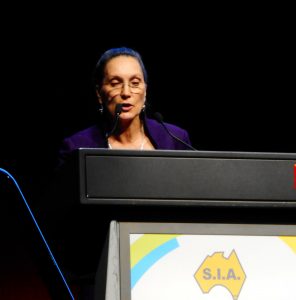
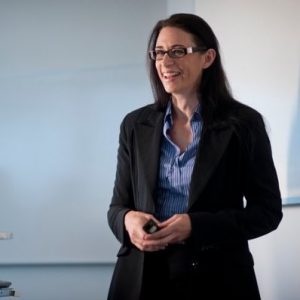
Dr Rebecca Michalak has only recently come to my attention, mainly through challenging some of my statements on social media.  I was able to meet her and watch her presentation at the Safety Institute of Australia’s National Health and Safety Conference in May 2018.  It is likely her voice will become heard more broadly in coming years as she challenges elements of the Establishment.

Many elements of Michalak’s conference presentation can also be heard in the Fit For Work Podcast of Sally McMahon but there were a couple of statements that were notable.

Coping Strategies

“I had a theory that it’s not either/or – it’s an “it depends” thing and what I found across all well-being outcomes, six coping strategies and two samples – that’s 48 mediations – it makes no difference and in fact, most coping strategies make well-being worse.” (emphasis added)

Subscribe to SafetyAtWorkBlog to continue reading.
Subscribe Help
Already a member? Log in here

Lessons in integrity and discipline

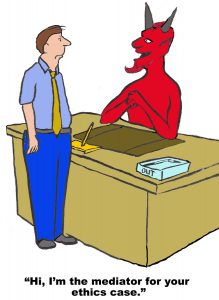
Australia’s occupational health and safety (OHS) profession was late to the process of certifying its members.  The Safety Institute of Australia (SIA) has been running its certification program for a couple of years so it is difficult to assess the benefit to members and the community but a critical element in any certification is the treatment of members who breach the Code of Ethics or Code of Conduct.  The revelations of corruption and misconduct from Australia’s Royal Commission into Misconduct in the Banking, Superannuation and Financial Services Industry provide important lessons in integrity and fairness to all professions.
Subscribe to SafetyAtWorkBlog to continue reading.
Subscribe Help
Already a member? Log in here

Why don’t employers pay attention to psychological harm?

The Safety Institute of Australia (SIA) is an active supporter of Safe Work Australia‘s (SWA) recent attention to the risks of psychosocial hazards in the workplace.  On 10 April 2018, the SIA reiterated this support and its anticipation of a new SWA guide on the issue but the media release  includes a statement that may be a little too polite towards employers and not sufficiently inquisitive about the safety professional’s role.

The CEO of the SIA,

Subscribe to SafetyAtWorkBlog to continue reading.
Subscribe Help
Already a member? Log in here

Sexual harassment Code developed in isolation

Screen Australia has released its sexual harassment code of conduct.  If any film project in Australia desires government funding it will need to comply with this Code.  The Code is a good starting point and will need support from a broad range of elements of the entertainment industry but this Code is indicative of problems with many such codes that see the issue as a legal one rather than a safety and cultural one.

Subscribe to SafetyAtWorkBlog to continue reading.
Subscribe Help
Already a member? Log in here

Change needed NOW, but don’t rush it

Australia has received its own local focus for the #MeToo concerns about sexual harassment in the workplace.  www.now.org.au is the result of a greatly increased concern in Australia, predominantly from the Weinstein issues and the Australian versions.  There seems to be enough interest and expertise behind this organisation that it will move beyond awareness raising to participating in policy decision. However, there is a risk in responses to workplace sexual harassment and mental health that was summarised well by Martin McKenzie-Murray in The Saturday Paper (paywalled) on March 24 2018 and echoes WorkSafe Victoria’s workplace bullying concerns of seven years ago.

NOW.org.au

Subscribe to SafetyAtWorkBlog to continue reading.
Subscribe Help
Already a member? Log in here

Business Bullshit – and how this relates to workplace health and safety

This is an edited version of my presentation to delegates at the inaugural NSW Regional Safety Conference & Expo in Newcastle, Australia on March 17, 2018.

The current approach to occupational health and safety (OHS) is that we shouldn’t separate it from business operations. One of the motivations for achieving success in business is to build a strong organisational culture that integrates safety.

Companies often start this task by developing Mission Statements or Pledges.  Quite often these are done by talking to a lot of different people in the organisation.  And I don’t know of any mission statement that hasn’t been already run through Legal and Marketing – they don’t always get run through Safety.  What happens is that these statements can become more florid and more inexact, and more unclear.  Some of them descend into Business Bullshit.

Subscribe to SafetyAtWorkBlog to continue reading.
Subscribe Help
Already a member? Log in here

#MeToo, #TimesUp and #OHS

Being International Women’s Day, the media is awash with articles about pay rates, gender equality and sexual harassment.  One of those articles is written by Sarah Ralph of Norton Rose Fullbright. Ralph provides a good summary of the current gender issues and recent media attention (may require registration but it’s free).  She makes several recommendations for how to reduce the risk of sexual harassment and unwanted media attention.  Below those recommendations are looked at from the occupational health and safety (OHS) perspective to see how OHS can help reduce the psychological harm. Continue reading “#MeToo, #TimesUp and #OHS”

Concatenate Web Development
© Designed and developed by Concatenate Aust Pty Ltd