New reporting standard reflects the social licence

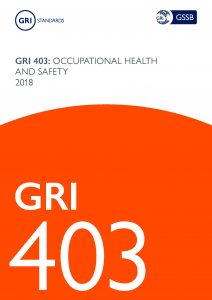
Inaccurate or insufficient data about occupational health and safety (OHS) plagues the decision-making of governments and business, and OHS professionals.  Technology has provided some hope on better datasets but only for the analysis of data, not necessarily the quality of that data. Workplace incidents and issues continue to be under-reported, especially non-traumatic incidents. The Global Reporting Initiative (GRI) offers a framework for better reporting of OHS issues and incidents which also improves the credibility of companies, helping to regain the trust of the community.

Recently, GRI released its latest

Subscribe to SafetyAtWorkBlog to continue reading.
Subscribe Help
Already a member? Log in here

The risks of having an OHS policy

If you ask a lawyer for advice about any issue related to occupational health and safety (OHS) their first piece of advice is likely to be “write a policy”.  There are good legal reasons for advocating a policy, but policies can also create major problems.  Policies are both a reflection of a workplace and the base on which improvements can be created.

Search for OHS policy guidance from the Victorian Government  and it takes you to a page that describes an OHS policy as

“Laws, regulations and compliance codes which set out the responsibilities of employers and workers to ensure that safety is maintained at work.”

NO it’s not.  The page also directs you to a WorkSafe page about insurance!

WorkSafe Tasmania

Subscribe to SafetyAtWorkBlog to continue reading.
Subscribe Help
Already a member? Log in here

The jury remains out on standing desks but maybe we are asking the wrong questions

The 20th Congress of the International Ergonomics Association in Florence Italy recently concluded.  Australia’s Professor David Caple attended and brought the latest research into the benefits of sit/stand desks to the September meeting of the Central Safety Group in Melbourne.  Caple said that evidence remains confusing on this increasingly popular piece of office furniture and echoed the modern approach to occupational health and safety (OHS) matters – look at what the work involves and how and where people do it.

Caple explained how large companies are moving away from open-plan offices to those designed around “activity-based work or

Subscribe to SafetyAtWorkBlog to continue reading.
Subscribe Help
Already a member? Log in here

What Boland’s Independent Review has been hearing

On July 19 2018, Marie Boland, who is conducting an independent review into Australia’s work health and safety (WHS) laws, spoke at the Closing The Loop conference, hosted by the Self Insurers of South Australia (SISA).   Boland’s inquiry has been a little quiet as it undertakes its consultation and investigation but Boland provided some insight at the SISA conference.

According to Boland’s presentation (not available online),

Subscribe to SafetyAtWorkBlog to continue reading.
Subscribe Help
Already a member? Log in here

OHS outcomes of ACTU Congress 2018

Below is the list of occupational health and safety (OHS) issues for the next three years, put to the Australian Council of Trade Unions and passed, at its Congress on 18 July 2018.  Some were expected but others will cause concern, primarily, for business owners.  Perhaps the major concern is that these commitments are to be rolled out nationally.

Subscribe to SafetyAtWorkBlog to continue reading.
Subscribe Help
Already a member? Log in here

Trade unions need to look for change beyond legislation

Danny Glover addressing the ACTU Congress on July 16 2018

The 2018 Congress of the Australian Council of Trade Unions (ACT) is happening in the middle of a campaign to “Change the Rules”.  These “Rules” are largely concerning with industrial relations, of which Occupational Health and Safety (OHS) is a subset, or complementary, element. Legislation constantly needs challenging and review; much legislation, like Australian Standards, misses their expiry dates and persists too long,  becoming increasingly seen as irrelevant.

OHS has the “luxury” of having been reviewed nationally within the last decade.  For some Australian States this change was progressive but for most it was a catch up to contemporary standards and expectations.  OHS laws have not progressed since and a lot of hope is placed on the current Independent Review of Work Health and Safety (WHS) laws to enliven the discussions, yet that report is not due until 2019.

Trade unions have a great deal of faith in legislation to achieve change.  

Subscribe to SafetyAtWorkBlog to continue reading.
Subscribe Help
Already a member? Log in here
Concatenate Web Development
© Designed and developed by Concatenate Aust Pty Ltd