If all you have is a hammer, everything looks like a nail

The trade union movement has often been instrumental in affecting and sometimes creating government policy on occupational health and safety (OHS).  The latest generation of hazards – psychosocial – can be traced back to a survey late last century of workplace stress conducted by the Australian Council of Trade Unions (ACTU).  This week the ACTU released its survey into sexual harassment at work.

The current survey should not be seen as representative of any social group other than trade union members even though the survey was completed by 10,000 of them.  Also, this survey is far less likely to be as newsworthy as last century’s surveys as the agenda on workplace sexual harassment has already been established by reports from groups like Universities Australia and, especially, the current work by the Sexual Discrimination Commissioner and the Australian Human Rights Commission.  It is also likely to be covered, probably as a secondary issue, in the various mental health inquiries scheduled for 2019.

The ACTU survey provides additional information to our understanding of sexual harassment at work but certainly not the whole picture.

Subscribe to SafetyAtWorkBlog to continue reading.
Subscribe Help
Already a member? Log in here

Share Solutions could be resurrected

Some readers have asked for more information about the “Share Solutions” program mentioned in a previous article. The initiative started in 1988 but this article is based on the second edition from 1995.

In 1995, pre-internet, the precursor to WorkSafe Victoria, the Health and Safety Organisation Victoria produced a Share Solutions manual (with an unfortunate sex doll-like graphic).  This hard copy folders included single page solutions to common workplace hazards.  These solutions were submitted usually by those workers or Health and Safety Representatives who had developed a solution to a hazard particular to their workplace.  The solutions were shared with the program participants with acknowledgement of the origin. Continue reading “Share Solutions could be resurrected”

Bunnings knows their onions

“The Aussie sausage sizzle safety scandal suggests safety is simply something that some citizens are certain starts slips in store and on cement. A safety source says that some stores are succumbing to scurrilous suggestions that makes safety sound silly.” (Copyright: Kevin Jones)

Some Australia occupational health and safety (OHS) professionals have been frothing up about the controversy (?) over the decision of Bunnings Warehouse to encourage the charities who run the sausage sizzles to place the cooked onions between the sausage and the slice of bread to reduce the risk of slips from  onions falling off the top of the sausage in bread (a form of snack that some Australians call a “dog in a blanket”).

The issue that gained

Subscribe to SafetyAtWorkBlog to continue reading.
Subscribe Help
Already a member? Log in here

A new statistical perspective on work-related injuries and illnesses

In late October 2018, the Australian Bureau of Statistics (ABS) released a summary of the latest work-related injury and illness data, although it was easy to miss as few, if anyone, reported on it. On first view, that mental health is barely mentioned in the Summary is surprising and the workers compensation data raises interesting policy questions.

Subscribe to SafetyAtWorkBlog to continue reading.
Subscribe Help
Already a member? Log in here

Misunderstanding sleep – Part 1

On the corner of Lygon and Victoria Streets in Melbourne is a monument to the 8 Hour Day.  This represents a social structure of work that equates to

  • Eight hours of work,
  • Eight hours of recreation,
  • Eight hours of sleep,

The concept started in Australia in the mid-1800s and was intended to reduce exploitation and abuse of workers, many of whom were children.

The intent was to establish, what we would now call, a work/life balance structure with the recognition that work is required to earn a living, sleep is required to rejuvenate the body, preparing it for work, and recreation was social time, time with one’s family, exercise, all sorts of personal and social activities.

Today that structure is an “ideal” rather than a reality. 

Subscribe to SafetyAtWorkBlog to continue reading.
Subscribe Help
Already a member? Log in here

Bad bosses

Benjamin ArtzAmanda H. Goodall  and Andrew J. Oswald determined that

“There are no published papers — to our knowledge — that assess in an internationally consistent way the rarity or commonness of ‘bad bosses’.”

So they undertook there own research, published under the title “

Subscribe to SafetyAtWorkBlog to continue reading.
Subscribe Help
Already a member? Log in here

ACCI on silicosis

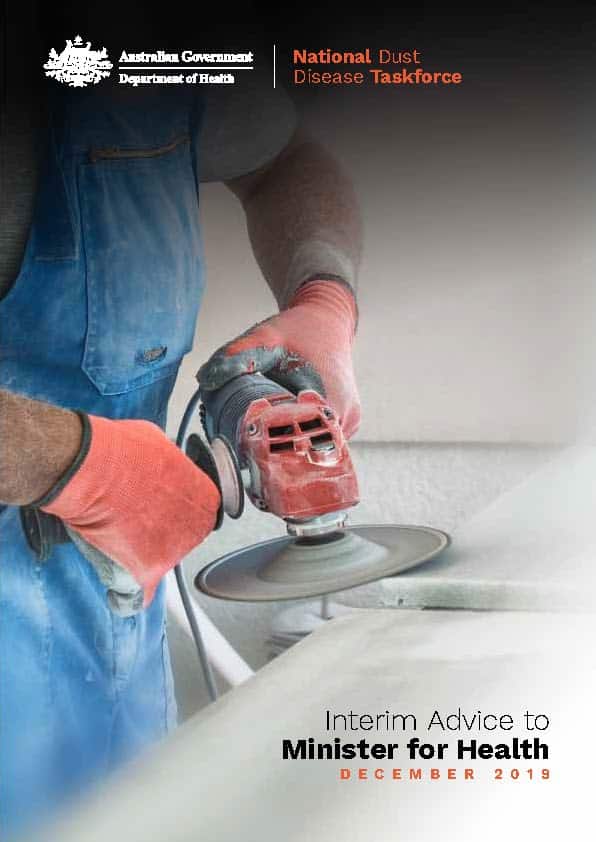
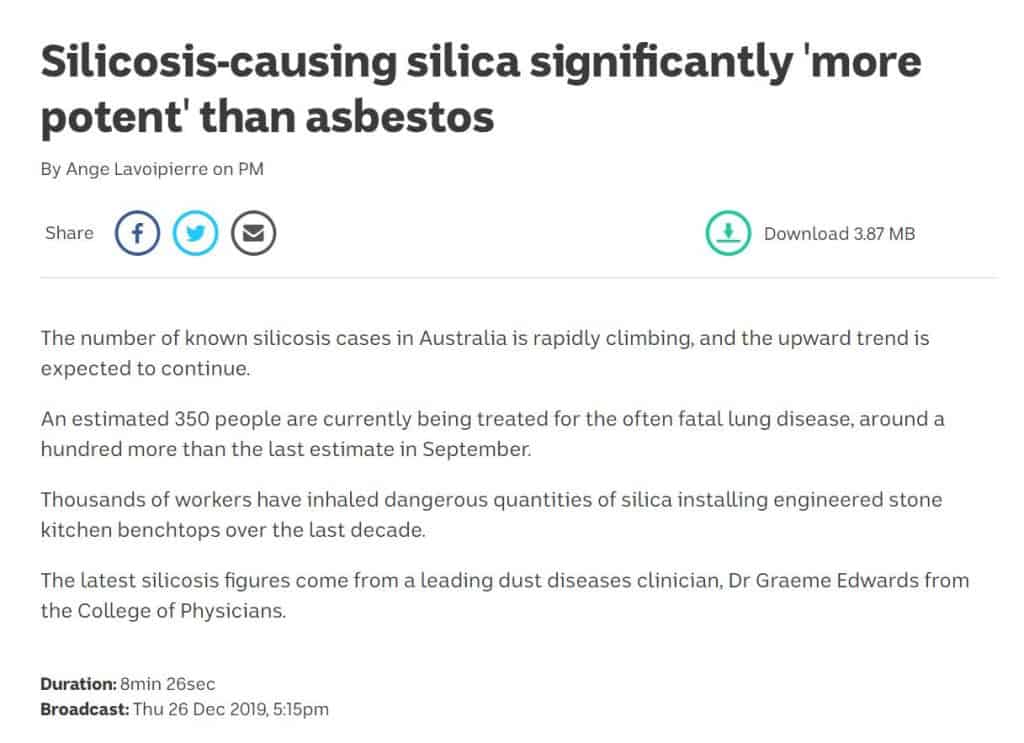
The business sector of Australia has been remarkably quiet on the recent media attention given to hazard of silicosis in, particularly, the synthetic stone commonly used as kitchen benchtops.  However the Australian Chamber of Commerce and Industry (ACCI) did make a media statement.

It largely emphasised its role as a member of Safe Work Australia and the action taken on silicosis matters through that mechanism.  However membership of a tripartite consultative mechanism does not mean that that is the only pathway for change.  SafetyAtWorkBlog put some questions to ACCI about silicosis and its Associate Director, Work Health & Safety and Workers’ Compensation Policy, Jennifer Low, responded:

SAWB: The media statement says that ACCI will continue to be active through its representation on Safe Work Australia.  Are there any specific dust-related initiatives that ACCI is recommending to its members?  Perhaps in relation to supply chain safety on high silica-content products? Continue reading “ACCI on silicosis”

Concatenate Web Development
© Designed and developed by Concatenate Aust Pty Ltd