
The evolution of Broken Windows

One year ago, this blog included an article about possibly applying “broken windows” theory to occupational health and safety (OHS) as both involve the enforcement of rules. The article said:

“The principal OHS lessons from Broken Windows Theory are that one needs to scratch the surface of any new OHS approach, that these theories need time to mature and to be verified or questioned and that it remains an important exercise to look beyond our own experiences, but to look with an analytical eye.”

The theory is evolving according to the architect of the theory, William J Bratton in an audio report in  NPR’s All Things Considered for 4 May 2015.  According to that article:

“Bratton says he’s open to some revisions of the city’s broken windows philosophy, including more warnings for first-time offenders. But his larger message seems to be: If it ain’t broke, don’t fix it.”

All theories require adjustment to make sure they remain practical and relevant.

OHS professionals who correct the workplace hazards, particularly worker behaviours, that are the “low hanging fruit” seem to be following Broken Windows, theory to some extent. But to continue to do this, without addressing hazards higher up the hierarchy of controls,  the organisational structure and the managerial prerogatives will devalue the original intention of enforcing worker behaviours and improving the work environment.

Mark Griffith illustrates the risk of devaluing the enforcement effort when he says, in the NPR article:

“We all want a better quality of life…. What we’re saying is the approach to it — the tactics that are used to arrive at that — are overly aggressive, and are ultimately on some level counterproductive to the very goals you’re trying to achieve.”

This seems equally valid to workplace safety management.
Kevin Jones

Standing workstations – useful, fad or salesmanship?

Over the last week Australian media has been reporting on office workers using standing workstations. Given sedentary working has been shown to have negative health effects, standing seems sensible as it increases mobility but is it enough to stand?  Or is this recent media attention just another example of shallow writing on occupational health and safety matters, or even media manipulation?

An article in the Canberra Times (which appeared in other Fairfax publications around 17 April 2015) states that:

“…health and ergonomics experts say the benefits to overall health for standing-up workers is irrefutable..”

and

“Some also believe it makes workers more productive…”

The article then quotes the head of office supplies and furniture from an office furniture retailer, Jim Berndells of Officeworks.  Its next expert is another retailer of furniture, Office Workstations and its managing director Jovan Vucetic.  The attention granted to these retailers along with a mention of the price of a standing workstation and the companies that Vucetic has supplied, seems to imply that the article is less about OHS than about product information.

(It may be relevant that

Subscribe to SafetyAtWorkBlog to continue reading.
Subscribe Help
Already a member? Log in here

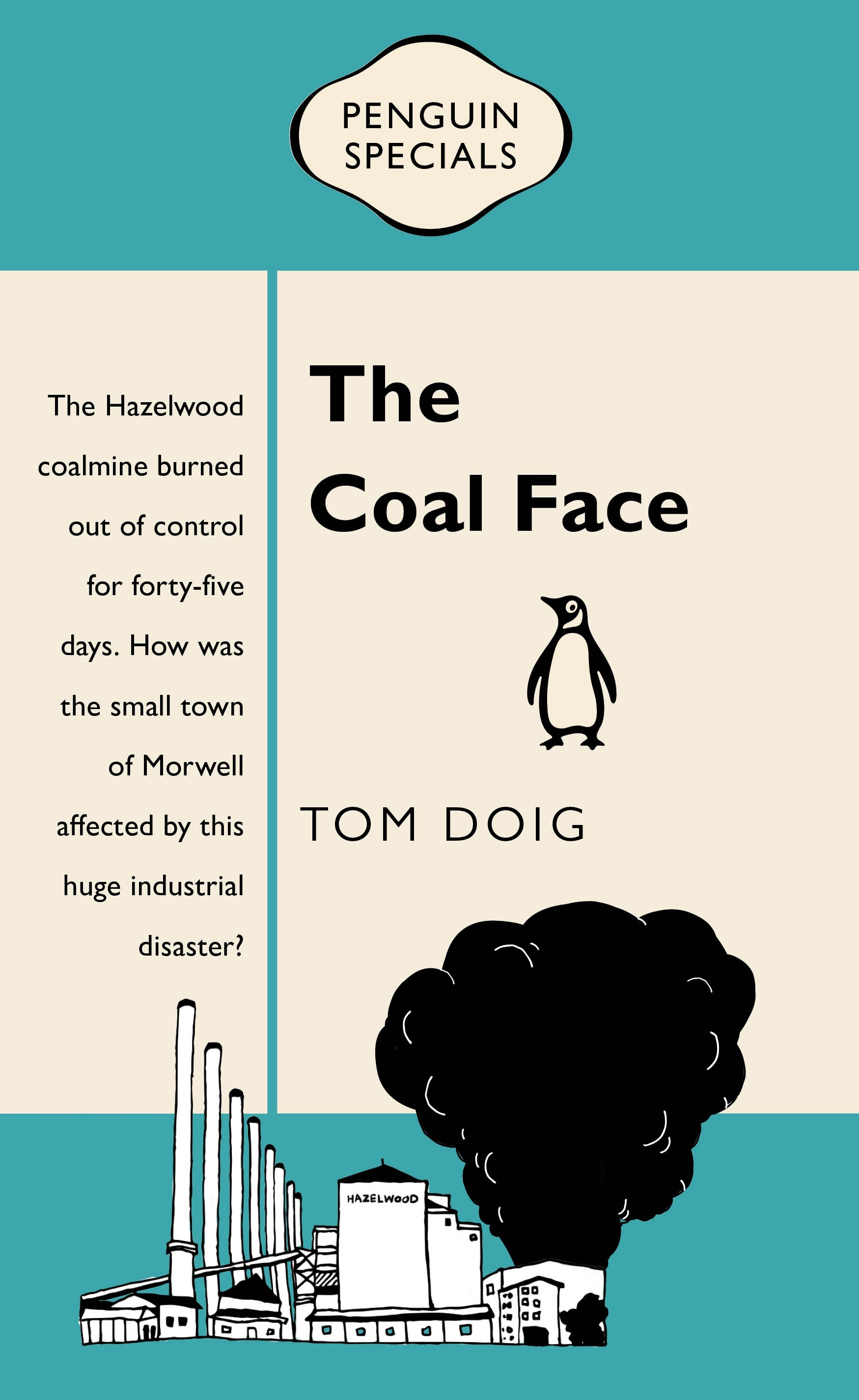
OHS and public health at The Coal Face

The Hazelwood mine fire has faded from the memory of most Victorians following the Parliamentary inquiry but not so for those who continue to live in the Latrobe Valley and with the health consequences of the fire.  Tom Doig has written a short book on the incident and its consequences that will put pressure on the Andrews (Labor) Government to honour its election promise and reopen the inquiry.

Doig’s book, The Coal Face, summarises many of the issues raised by the inquiry by looking at a selection of personal stories from residents, neighbours and firefighters.  It is a short book of just over 100 pages but it is an important reminder that the consequences of the mine fire are still being felt. Continue reading “OHS and public health at The Coal Face”

OHS professionals should be more politically active

Occupational health and safety (OHS) is inextricably linked to everyday life and everyday politics but it is treated as somehow separate, even by those who are experts in OHS.  This is not the case with industrial relations which is much more grounded in the political realities.

Industrial relations has been pushed by the trade union movement that has always seen workers’ rights as a social issue.  The OHS profession and its associations have been content, largely, to live within the factory fence.  Until recently OHS laws related solely to the workplace and OHS professionals had the luxury of a clear demarcation for its operations.

But new OHS laws acknowledge the responsibility for the effects of work on those other than workers, and those who are neighbours to workplaces.  Australian OHS professionals have been slow to embrace the social role that has been foisted on them.  There seems no excuse for this.

Recently, a

Subscribe to SafetyAtWorkBlog to continue reading.
Subscribe Help
Already a member? Log in here

Master guide or handbook

In 2012, SafetyAtWorkBlog reviewed the first edition of the Australian Master Work Health and Safety Guide. CCH Wolters Kluwer has released its second edition and, sadly, it repeats many of the criticisms in the 2012 review.

The title of Australian Master Work Health and Safety Guide (2nd ed) seems inaccurate if one considers a book with “master ” in its title to be a “masterwork”. This is not a masterwork and the publishers have emphasised to SafetyAtWorkBlog that the book was never intended to be.  The book is intended to be a brief outline of the most important contemporary occupational health and safety (OHS) issues in Australia and to provide practical advice, checklists and templates.  In fact, the word that should be focussed on in the title is “guide”.

The publishers advised that “master” is in the title to indicate it is part of its “Master Series“, a “brilliant” series described as

“Australia’s premium range of professional books, widely accepted as the leaders in their fields.”

SafetyAtWorkBlog looked at a couple of chapters to assess the quality of the content.  As workplace bullying is such a contentious issue. the Bullying and Violence chapter was a focus. There were a surprising number of omissions in this chapter.

Subscribe to SafetyAtWorkBlog to continue reading.
Subscribe Help
Already a member? Log in here
Concatenate Web Development
© Designed and developed by Concatenate Aust Pty Ltd