
Abolition of Construction Code is a return to the past on OHS

The new Andrews Government in Victoria has followed through on its election pledge to abolish the Construction Compliance Code Unit (CCCU) of the Department of Treasury and Finance. It announced this in a peculiar manner within a media release on whooping cough, a process that Senator Abetz went to town on. But Premier Andrews’ decision raises the question of, if the Code is gone, what replaces it? The simply answer is nothing.

A spokesperson for the Premier advised SafetyAtWorkBlog that

“The Andrews Labor Government has delivered on its election commitment to scrap the Victorian Code of Practice for the Building and Construction Industry and its monitoring body the Construction Code Compliance Unit (CCCU).

Contractors bidding for Victorian Government work and applying for pre-qualification on construction registers will still need to meet safety and industrial relations management criteria. Contractors must also have occupational health and safety policies and procedures to meet legislative and regulatory requirements.”

Continue reading “Abolition of Construction Code is a return to the past on OHS”
Research project opportunity

SafetyAtWorkBlog believes that the following research project may be of interest to readers.

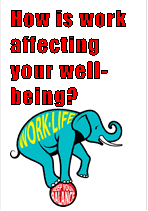
Underhill graphicA research team from the Faculty of Business & Law at Deakin University, led by Drs. Elsa Underhill & Melissa Parris, are conducting a research project to:

  • Develop a better understanding of how health, safety and well-being outcomes differ between types of workers (ie. permanents, casuals & labour hire) within the same workplace; and
  • Develop an understanding of how employment status impacts on work/life balance.

Their findings are intended to better inform HRM and WHS practitioners on the development of evidence based strategies and policies to improve the health, safety and wellbeing of all employees.

 They are seeking organisations which will allow them to survey their employees including, where appropriate, labour hire workers placed with organisation.  Responses will be anonymous and respondents will have the chance to win 1 of 10 mini Ipads. Participating organisations will receive a report specific to their organisation, as well as the full project report.

 Is your organisation interested in participating?  If so, please contact Elsa.Underhill@deakin.edu.au for further information.

Impairment argument fails to convince Fair Work Commission over unfair dismissal

On 16 January 2015 the Australian newspaper (paywall) reported on a Fair Work Commission (FWC) decision involving an unfair dismissal claim by a worker who, as a result of a random drug test, was found to have methylamphetamine in her system “at levels four times above the minimum detection level”.  The company, Downer EDI Mining, sacked the worker, Leah Cunningham, as she presented a hazard to her work colleagues. The newspaper article was called “CFMEU slammed for drugs defence” and the FWC decision is Tara Leah Cunningham v Downer EDI Mining Pty Limited (U2014/1457) (14 January 2015).

The Australian, a newspaper with no love for the trade union movement and the CFMEU in particular, focussed on the apparent absurdity of a trade union, that places such a high priority on workplace safety,  contesting the dismissal of a worker who presented a hazard to herself and others at work.  The newspaper quotes Commissioner Ian Cambridge:

““It was highly regrettable to observe during the hearing that an organisation, which apparently conducts campaigns which strongly advocate safety in the workplace, could contemplate a proposition which, in effect, would countenance a person driving a 580-tonne truck whilst having methylamphetamine in their body at a level four times the reportable cut-off figure,” he said in his decision this week.

“Any realistic and responsible pursuit of the case on behalf of the applicant should have been confined to the development of evidentiary support for the applicant’s explanation for the presence of the methylamphetamine. Indeed, much greater energy and focus should have been devoted to such an evidentiary position rather than any attempt to defend the indefensible.”

Subscribe to SafetyAtWorkBlog to continue reading.
Subscribe Help
Already a member? Log in here

Sniping in social media raises issues about hydration

A spat has recently emerged on one of the safety discussion forums in Linkedin.  The catalyst was a statement that

The source of this data, not disclosed at the time of the original post, was a company that sells

“…a great tasting, scientifically proven mix of cutting-edge branch chain amino acids and low Gi carbohydrates for sustained energy release, combined with a formulated blend of electrolytes for optimum hydration in harsh Australian conditions”.

The discussion quickly refocused from the original safety concern to one of unreliability of statements; sadly the discussion also became personal and abusive. but the discussion raised two discussion points:

  • The reliability of statements on the internet, and
  • the issue of hydration and work performance.

Continue reading “Sniping in social media raises issues about hydration”

Australia’s OHS Body of Knowledge project grows

The recent launch of several new chapters of the OHS Body of Knowledge (OHSBoK), associated with the Safety Institute of Australia, did not allow for questions from the audience but I was able to catch up with the coordinator of the project, Pam Pryor, and put my questions directly.  (My thanks go to Pam for her honesty and time.)

One of the intentions of the OSHBoK has been to maintain currency and relevance. Was there a plan to review and revise the existing chapters?  Pryor advised that there is a seven-year review schedule for all chapters.  Some chapters may need reviewing earlier, particularly if there are references to specific legislation and that legislation has changed.

Is there a plan to establish an index or to improve searchability?

Subscribe to SafetyAtWorkBlog to continue reading.
Subscribe Help
Already a member? Log in here

What if “reasonably practicable” was applied to a disease outbreak?

There seems to be an increasing trend for the principles of occupational health and safety (OHS) to be applied to matters outside the workplace.  OHS principles were created to reflect the values of society in the 1970s and 80s and, although the laws have changed to reflect economic needs, the principles remain basically the same.  A major legal change has been the move away from preventing harm “at the source” to one of reasonable practicability and this can reduce the overall level of safety available to workers and others.

It is interesting to note that statements on the current Ebola outbreak argue the sense in dealing with the outbreak “at the source”.  Why do we accept a reasonably practicable control measure for harm at work but expect a stronger preventative measure for public health threats?  Shouldn’t we be aiming to reduce all harm “at the source” regardless of the type of harm? Continue reading “What if “reasonably practicable” was applied to a disease outbreak?”

Lack of progress on Safe Work Method Statements shows immaturity

On 27 October 2014 the Safety Institute of Australia, with the support of RMIT University conducted a seminar on safety in the construction industry.  As with the event last year the issue of Safe Work Method Statements (SWMS) dominated the conversation.  The same frustrations were expressed as last year – SWMS are too big and complex, they are demanded for tasks they are not legislatively required for, they are rarely read, they are rarely reviewed and they are written only in English.  What was missing was an indication of  who is (over)demanding SWMS and why.

The seminar contained one client representative experienced in major construction projects who said that he was not directly involved with SWMS as the contract demands only that work is undertaken safely with predetermined levels of risk and reward.  That level of safety may or may not involve the use of SWMS – SWMS were not prescribed.

He did not review SWMS unless there was a specific reason and most of the time there was not.  It could be argued that too much involvement by the client in how the project is to be completed implies a shared OHS responsibility with the client, changing the client/contractor relationship.

One construction industry representative said that they have been able to reduce the number of SWMS to around twenty types for each of the active construction projects.  This has been achieved by limiting the SWMS to the 19 high risk tasks identified in safety legislation.  It was significant that this perspective came from the top-level of construction companies, the Tier Ones.

Subscribe to SafetyAtWorkBlog to continue reading.
Subscribe Help
Already a member? Log in here
Concatenate Web Development
© Designed and developed by Concatenate Aust Pty Ltd