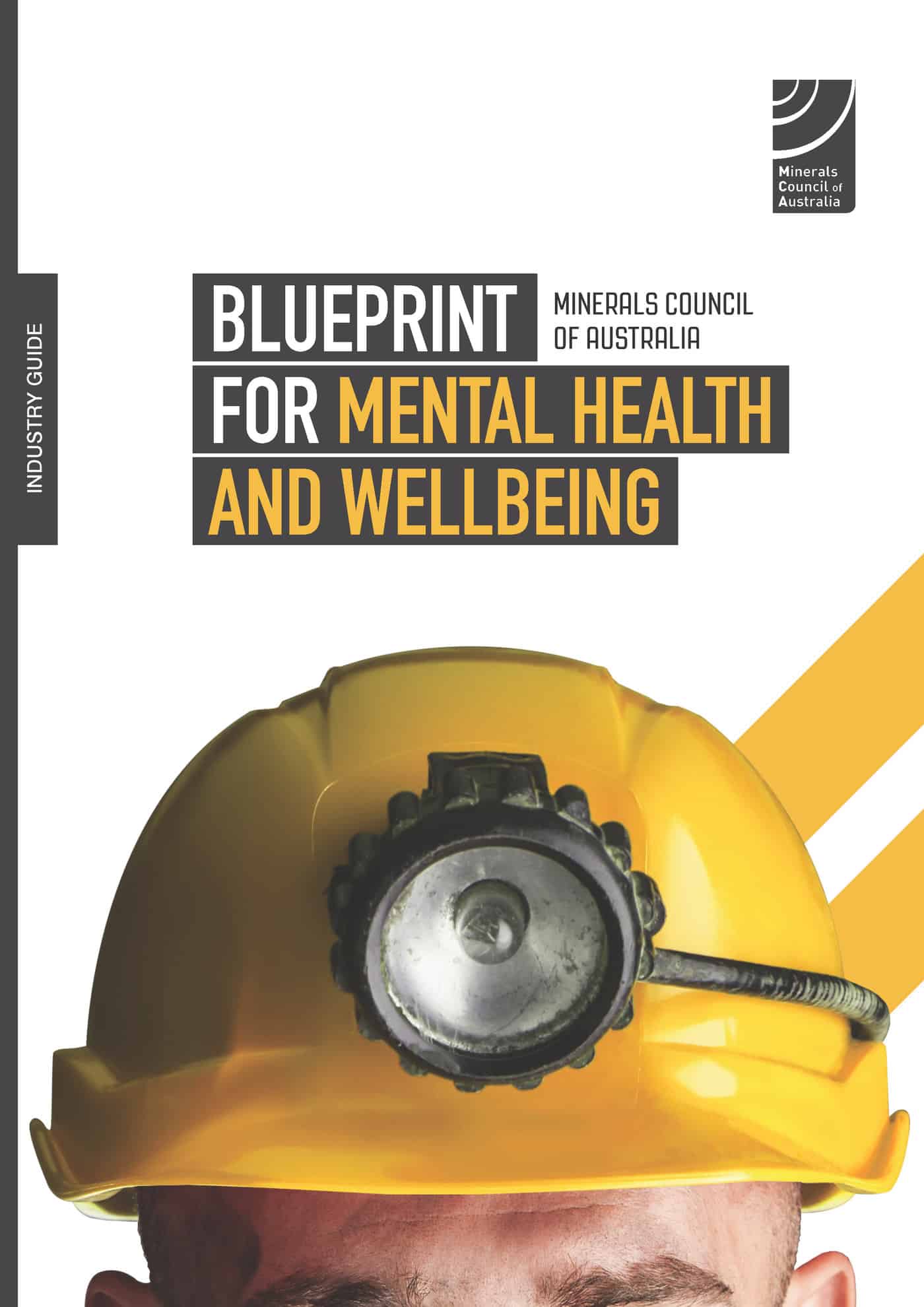
Network Rail’s wellbeing program

At the recent Safety Asia Summit in Kuala Lumpur, there were several presentation illustrating the importance and the application of wellbeing programs as part of a broad health and safety strategy.  One speaker was Chris Jones, the Health and Wellness Strategy Head for Network Rail.

Chris started a wellness strategy in Network Rail from scratch less than three years ago.  Significantly an integral part of the strategy was to measure the effect of the strategy, a practice that should be an automatic inclusion with any contracts and the introduction of a new strategy.

SafetyAtWorkBlog was invited to attend and speak at the summit and had the chance to ask Chris Jones about some of the issues raised in his presentation.

Subscribe to SafetyAtWorkBlog to continue reading.
Subscribe Help
Already a member? Log in here

New analysis of deaths at work

Cover of Deaths at Work 2014Barry Naismith has followed up his first report into WorkSafe with a second that analyses the workplace deaths in Victoria since 1985.

One of the attractions of Naismith’s analyses is that he considers the broader context to the data.  His first report looked at WorkSafe Victoria’s actions and policies in relation to the executive and board complexion.  In this report he looks at the frequency of deaths with WorkSafe campaigns and enforcement response.

The analysis may not have the authority of a fully-funded research program from an academic institution but the level of detail he has collected from official sources is impressive, and in the absence of any other analysis, Naismith’s work deserves serious attention.

Kevin Jones

Master guide or handbook

In 2012, SafetyAtWorkBlog reviewed the first edition of the Australian Master Work Health and Safety Guide. CCH Wolters Kluwer has released its second edition and, sadly, it repeats many of the criticisms in the 2012 review.

The title of Australian Master Work Health and Safety Guide (2nd ed) seems inaccurate if one considers a book with “master ” in its title to be a “masterwork”. This is not a masterwork and the publishers have emphasised to SafetyAtWorkBlog that the book was never intended to be.  The book is intended to be a brief outline of the most important contemporary occupational health and safety (OHS) issues in Australia and to provide practical advice, checklists and templates.  In fact, the word that should be focussed on in the title is “guide”.

The publishers advised that “master” is in the title to indicate it is part of its “Master Series“, a “brilliant” series described as

“Australia’s premium range of professional books, widely accepted as the leaders in their fields.”

SafetyAtWorkBlog looked at a couple of chapters to assess the quality of the content.  As workplace bullying is such a contentious issue. the Bullying and Violence chapter was a focus. There were a surprising number of omissions in this chapter.

Subscribe to SafetyAtWorkBlog to continue reading.
Subscribe Help
Already a member? Log in here

Productivity Commission looks at workplace bullying – not really

The Australian Government has announced an inquiry into workplace relations through the Productivity Commission (PC). The most obvious occupational health and safety (OHS) element of this inquiry relates to workplace bullying which is discussed in the fourth of five issues papers released in January 2015. However the purposeful separation of workplace bullying actions through the Fair Work Commission (FWC) from actions in other sectors, such as OHS regulators, limits the potential impact of the inquiry on this issue.

The PC issues paper acknowledges the lack of the anticipated avalanche of anti-bullying applications and accepts that the structure of the FWC process may be partially responsible.  This lack of applications, an issue discussed

Subscribe to SafetyAtWorkBlog to continue reading.
Subscribe Help
Already a member? Log in here

Research project opportunity

SafetyAtWorkBlog believes that the following research project may be of interest to readers.

Underhill graphicA research team from the Faculty of Business & Law at Deakin University, led by Drs. Elsa Underhill & Melissa Parris, are conducting a research project to:

  • Develop a better understanding of how health, safety and well-being outcomes differ between types of workers (ie. permanents, casuals & labour hire) within the same workplace; and
  • Develop an understanding of how employment status impacts on work/life balance.

Their findings are intended to better inform HRM and WHS practitioners on the development of evidence based strategies and policies to improve the health, safety and wellbeing of all employees.

 They are seeking organisations which will allow them to survey their employees including, where appropriate, labour hire workers placed with organisation.  Responses will be anonymous and respondents will have the chance to win 1 of 10 mini Ipads. Participating organisations will receive a report specific to their organisation, as well as the full project report.

 Is your organisation interested in participating?  If so, please contact Elsa.Underhill@deakin.edu.au for further information.

Sniping in social media raises issues about hydration

A spat has recently emerged on one of the safety discussion forums in Linkedin.  The catalyst was a statement that

The source of this data, not disclosed at the time of the original post, was a company that sells

“…a great tasting, scientifically proven mix of cutting-edge branch chain amino acids and low Gi carbohydrates for sustained energy release, combined with a formulated blend of electrolytes for optimum hydration in harsh Australian conditions”.

The discussion quickly refocused from the original safety concern to one of unreliability of statements; sadly the discussion also became personal and abusive. but the discussion raised two discussion points:

  • The reliability of statements on the internet, and
  • the issue of hydration and work performance.

Continue reading “Sniping in social media raises issues about hydration”

What if “reasonably practicable” was applied to a disease outbreak?

There seems to be an increasing trend for the principles of occupational health and safety (OHS) to be applied to matters outside the workplace.  OHS principles were created to reflect the values of society in the 1970s and 80s and, although the laws have changed to reflect economic needs, the principles remain basically the same.  A major legal change has been the move away from preventing harm “at the source” to one of reasonable practicability and this can reduce the overall level of safety available to workers and others.

It is interesting to note that statements on the current Ebola outbreak argue the sense in dealing with the outbreak “at the source”.  Why do we accept a reasonably practicable control measure for harm at work but expect a stronger preventative measure for public health threats?  Shouldn’t we be aiming to reduce all harm “at the source” regardless of the type of harm? Continue reading “What if “reasonably practicable” was applied to a disease outbreak?”

Concatenate Web Development
© Designed and developed by Concatenate Aust Pty Ltd